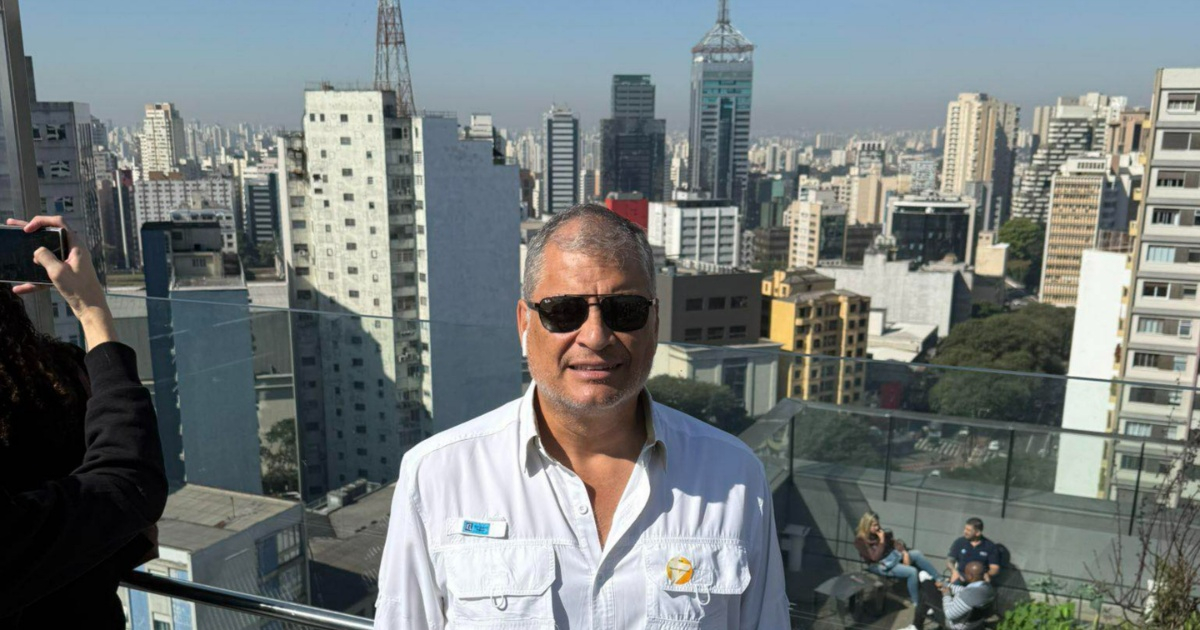
London, United Kingdom – Former Ecuadorian President Rafael Correa has warned that a U.S. Invasion of Cuba would risk becoming another protracted and costly conflict, drawing parallels to the Vietnam War. The comments come amid escalating tensions and recent statements from former U.S. President Donald Trump regarding a potential “friendly and controlled takeover” of the island nation. Correa’s assessment, delivered to EFE, too sharply criticizes the ongoing economic pressures faced by Cuba, particularly what he describes as a “criminal” oil blockade imposed by the Trump administration.
The specter of Vietnam, a conflict that deeply divided American society and resulted in significant loss of life, is a potent warning. Correa argues that the geopolitical realities of Cuba, coupled with the resilience of its people, would make a successful invasion and occupation exceedingly difficult for the United States. This assessment reflects a broader concern within Latin American political circles about the potential for increased U.S. Interventionism in the region, particularly following recent events in Venezuela.
Correa’s remarks are particularly pointed regarding the economic impact of U.S. Policy on Cuba. He contends that blocking Cuba’s access to essential hydrocarbons is a deliberate act of harm, given the island’s historical dependence on imported energy resources. The former president highlighted the current struggles faced by the Cuban population, including widespread electricity shortages, as a direct consequence of these policies. He described a people “who have always known how to move forward,” but are now facing immense hardship due to external pressures.
Trump’s “Friendly Takeover” and Concerns Over Regional Stability
The catalyst for Correa’s latest comments appears to be former President Trump’s recent pronouncements regarding Cuba. On Friday, Trump stated his administration would initiate a “friendly and controlled takeover” of Cuba, as reported by correspondents David Alandete and Juan Esteban Silva on X (formerly Twitter).
Trump afirma que su administración iniciará una “toma amistosa y controlada” de Cuba. https://t.co/wJq9q9q999
— David Alandete (@alandete) February 28, 2026
Although the specifics of this “friendly and controlled takeover” remain unclear, Trump reportedly described Cuba as a “failed nation” and suggested the island “needs the help of the United States.” According to Silva’s reporting, Trump indicated that Secretary of State Marco Rubio is engaged in high-level discussions with the Cuban regime. These statements have raised concerns among observers about the potential for a significant shift in U.S. Policy towards Cuba, potentially leading to increased political and economic pressure, or even direct intervention.
Correa’s warning about a potential invasion echoes historical anxieties about U.S. Involvement in Latin America. The Bay of Pigs invasion in 1961, a failed attempt to overthrow Fidel Castro’s government, remains a stark reminder of the risks associated with interventionist policies. The current situation, however, is complicated by the evolving geopolitical landscape and the potential for broader regional instability. The former Ecuadorian president also expressed concern regarding the removal of Nicolás Maduro from power in Venezuela, stating that such an event “should concern everyone” due to the significant technological military advantage held by the United States.
The Oil Blockade and its Impact on Cuba
The oil blockade imposed by the Trump administration has had a demonstrably negative impact on Cuba’s energy sector and overall economy. In January 2026, the U.S. Effectively halted the flow of Venezuelan oil to Cuba and threatened sanctions against any country continuing to supply the island with crude oil. Cuba Headlines reports that only one oil tanker has docked in Cuba since the implementation of these measures. This disruption has led to severe electricity shortages, impacting essential services and daily life for Cuban citizens.
The lack of access to reliable energy sources has cascading effects on various sectors of the Cuban economy, including healthcare, transportation, and agriculture. The situation is further exacerbated by Cuba’s limited domestic energy production capacity and its reliance on imports. Critics of the blockade argue that it constitutes a form of collective punishment, disproportionately affecting the Cuban population and hindering its economic development. The blockade is also seen as a violation of international law, particularly the principles of sovereignty and non-interference in the internal affairs of other states.
Historical Context: U.S.-Cuba Relations
U.S.-Cuba relations have been fraught with tension since the Cuban Revolution in 1959, which brought Fidel Castro to power. The U.S. Imposed a comprehensive trade embargo on Cuba in 1962, which remains in effect today, although with some modifications over the years. The embargo has been a major point of contention between the two countries, with Cuba consistently calling for its unconditional lifting. The Obama administration initiated a period of rapprochement with Cuba in 2014, re-establishing diplomatic relations and easing some travel and trade restrictions. However, the Trump administration reversed many of these policies, tightening the embargo and increasing pressure on the Cuban government.
The current situation represents a potential turning point in U.S.-Cuba relations. Trump’s talk of a “friendly takeover,” coupled with the ongoing economic pressures, raises concerns about a more assertive U.S. Policy towards the island. Whether this will lead to a full-scale invasion, as Correa warns, remains to be seen. However, the potential for escalation is undeniable, and the consequences could be far-reaching for both countries and the wider region.
Correa’s Warning: A Repeat of Vietnam?
Correa’s comparison to Vietnam is a deliberate attempt to highlight the potential costs and complexities of a military intervention in Cuba. The Vietnam War was a protracted and costly conflict that resulted in the deaths of over 58,000 American soldiers and millions of Vietnamese civilians. It also deeply divided American society and eroded public trust in the government. Correa argues that Cuba, while lacking the natural resources of Venezuela, possesses a strong national identity and a resilient population that would resist any attempt at foreign occupation.
He further contends that the U.S. Military, despite its technological superiority, would face significant challenges in Cuba, including a geographically complex terrain and a determined adversary. Correa believes that the U.S. Would be unable to destabilize the Cuban regime from within, and that any attempt to do so would likely result in a prolonged and bloody conflict. This assessment aligns with the views of some analysts who argue that Cuba’s strong social cohesion and its history of resistance to foreign intervention would make it a difficult target for military conquest.
The situation is further complicated by Cuba’s close ties with other countries in the region, including Venezuela, Nicaragua, and Bolivia. Any U.S. Intervention in Cuba could potentially trigger a broader regional crisis, drawing in other actors and escalating tensions. The potential for such a scenario underscores the importance of a cautious and diplomatic approach to resolving the current impasse.
As of today, March 1, 2026, the situation remains fluid. The extent to which Trump will follow through on his rhetoric regarding a “friendly takeover” remains uncertain. However, Correa’s warning serves as a stark reminder of the potential consequences of a more aggressive U.S. Policy towards Cuba. The coming weeks and months will be crucial in determining the future of U.S.-Cuba relations and the stability of the region. The next key development to watch will be any official announcements from the Trump administration regarding specific plans for Cuba, as well as any responses from the Cuban government and the international community.
What we have is a developing story. Check back for updates.
Related reading
- Hunter Biden Reveals Joe Biden’s Prostate Cancer Has Spread
- Perez Hilton Hospitalized in Serious Condition After Livestreaming Self-Harm, Family Says
- Taylor Swift Folklore Track Removed From Trump-Affiliated Account Over Copyright (world-today-news.com)
- Michael Johnson: Athletes Paid Following Grand Slam Track Bankruptcy (time.news)