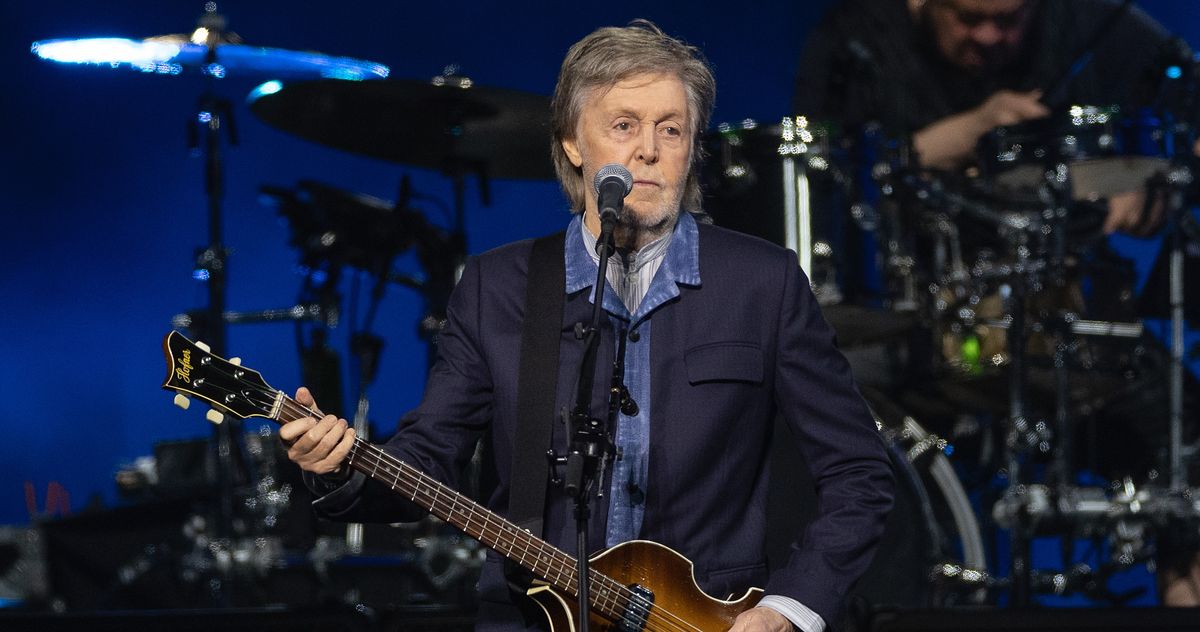
Los Angeles, CA – For decades, Paul McCartney has been celebrated as a musical icon, a songwriter of unparalleled influence, and a cornerstone of popular culture. Yet, despite the accolades and enduring legacy, a quiet resentment has lingered within the legendary Beatle regarding his recognition by the Rock & Roll Hall of Fame. A recently resurfaced 2015 interview with Vanity Fair, published in full for the first time, reveals McCartney’s long-held frustration over the timing of his and John Lennon’s inductions, and a perceived slight from former Rolling Stone editor-in-chief Jann Wenner.
The Rock & Roll Hall of Fame, established in 1983, aims to recognize the contributions of artists who have had a significant impact on the development of rock music. While the honor is highly coveted by many, it’s clear that its weight varies among musicians. Some, like Todd Rundgren, have openly dismissed its importance, while others, like McCartney, harbor complex feelings about the process. The annual nomination cycle for the Hall of Fame is currently underway, with the class of 2026 soon to be announced, adding another layer of scrutiny to the institution and its selections.
A Matter of Timing and Recognition
At the heart of McCartney’s discontent lies the sequence of events surrounding the inductions of himself and John Lennon. The Beatles were collectively inducted into the Rock & Roll Hall of Fame in 1988, a fitting tribute to the band’s revolutionary impact on music. However, Lennon’s solo career wasn’t formally recognized until 1994, the first year he was eligible. According to McCartney, Wenner personally asked him to induct Lennon, a request he readily accepted. “I said, ‘Yeah, sure.’ Then I put the phone down,” McCartney recounted in the Vanity Fair interview. “I thought, Well, what about me? I’m not inducted.”
This perceived oversight struck a nerve with McCartney, who felt a sense of inequity. He and Lennon were, as he put it, “always equal” as songwriting partners within The Beatles. However, following Lennon’s tragic murder in 1980, a narrative began to emerge that cast Lennon as a martyr figure, influencing public perception and, in McCartney’s view, the Hall of Fame’s priorities. “Once John got murdered, he became the martyr — the Buddy Holly, the James Dean character — because of the atrocity,” McCartney explained. “So a revisionism started to go on … so that naturally colored my thinking.”
Yoko Ono and Shifting Narratives
McCartney also pointed to the role of Yoko Ono, Lennon’s widow, in shaping the narrative surrounding their creative partnership. He alleges that Ono often emphasized Lennon’s sole contributions, downplaying McCartney’s role in their collaborative songwriting process. “Yoko would be saying things like, ‘Oh, Paul only booked the studio,’” McCartney stated. He acknowledged that many have praised his contributions, but maintained that historical records and songwriting credits clearly demonstrate his significant involvement.
Following the 1994 induction of Lennon, McCartney directly addressed the issue with Wenner, seeking clarity on his own solo induction. Wenner reportedly promised McCartney that he would be inducted the following year. However, that promise was broken, and McCartney remained without individual recognition from the Hall of Fame until 1999. “I bought the deal,” McCartney said, expressing his frustration with Wenner’s broken commitment. “Fucking bastards.” He recounted that his daughter, Stella, famously wore a t-shirt proclaiming “About fucking time” when he was finally inducted as a solo artist.
A Champion for His Bandmates
Despite his personal grievances, McCartney demonstrated a willingness to advocate for his fellow Beatles. He actively campaigned for the induction of Ringo Starr, who was finally recognized by the Rock & Roll Hall of Fame in 2015 as a solo artist with his All-Starr Band. This followed the 2004 induction of George Harrison. McCartney’s efforts highlight a sense of loyalty and a desire to ensure that all members of The Beatles received the recognition they deserved.
McCartney acknowledges that he was eventually inducted, and the initial sting of the delay has lessened over time. “So as far as Jann is concerned — they did induct me. It was ‘about fucking time’ and all that,” he conceded. “But it was later and it wasn’t when I was promised it. A verbal contract was not worth the paper it was written on.” Despite his lingering frustration, McCartney maintains that he isn’t a particularly vindictive person, preferring to move forward rather than dwell on past grievances.
The Wings Question and Future Recognition
The conversation also touched upon the possibility of McCartney receiving a third induction for his work with Wings, the band he formed after The Beatles disbanded in 1970. Wings achieved considerable success throughout the 1970s and early 1980s, producing numerous hit singles and albums. McCartney playfully pondered whether it was time to revisit that possibility, quipping, “Or should we live and let that one die?”
The Rock & Roll Hall of Fame has faced criticism over the years regarding its selection process and perceived biases. The debate over who deserves induction and when continues to fuel discussion among music fans and industry professionals. The Hall of Fame’s 2021 class included Jay-Z, Foo Fighters, and Carole King, demonstrating a commitment to recognizing diverse contributions to rock music, as reported by The Latest York Times. The 2021 induction ceremony, which also featured performances by Paul McCartney and LL Cool J, was held in Cleveland, Ohio, and highlighted the enduring power of rock music to unite generations, as detailed by Billboard.
Paul McCartney’s story serves as a reminder that even the most celebrated artists can experience moments of frustration and disappointment. His willingness to openly discuss his feelings about the Rock & Roll Hall of Fame provides a fascinating glimpse into the complexities of fame, recognition, and the enduring power of musical legacy. As the Hall of Fame continues to evolve, it will undoubtedly face ongoing scrutiny and debate regarding its selections and its role in preserving the history of rock music.
The Rock & Roll Hall of Fame Foundation will announce its nominees for the class of 2026 in the coming months. Fans can participate in the fan vote, which carries weight in the selection process, on the official Rock & Roll Hall of Fame website. What are your thoughts on the Rock & Roll Hall of Fame? Share your opinions in the comments below, and don’t forget to share this article with your fellow music lovers.
Related reading
- Beyond the Gates Weekly Spoilers August 3-7: Bill Hits Rock Bottom as Eva Faces Grim Tidings
- Nana Eikura and Eiji Akaso Star in New Love-Suspense Drama ‘Ani Imouto
- Phil Collins Reveals Near-Fatal Organ Failure After Years of Alcohol Abuse (time.news)
- Virginia Tech Study Reveals New Patterns in Storm Surge Behavior (newsdirectory3.com)