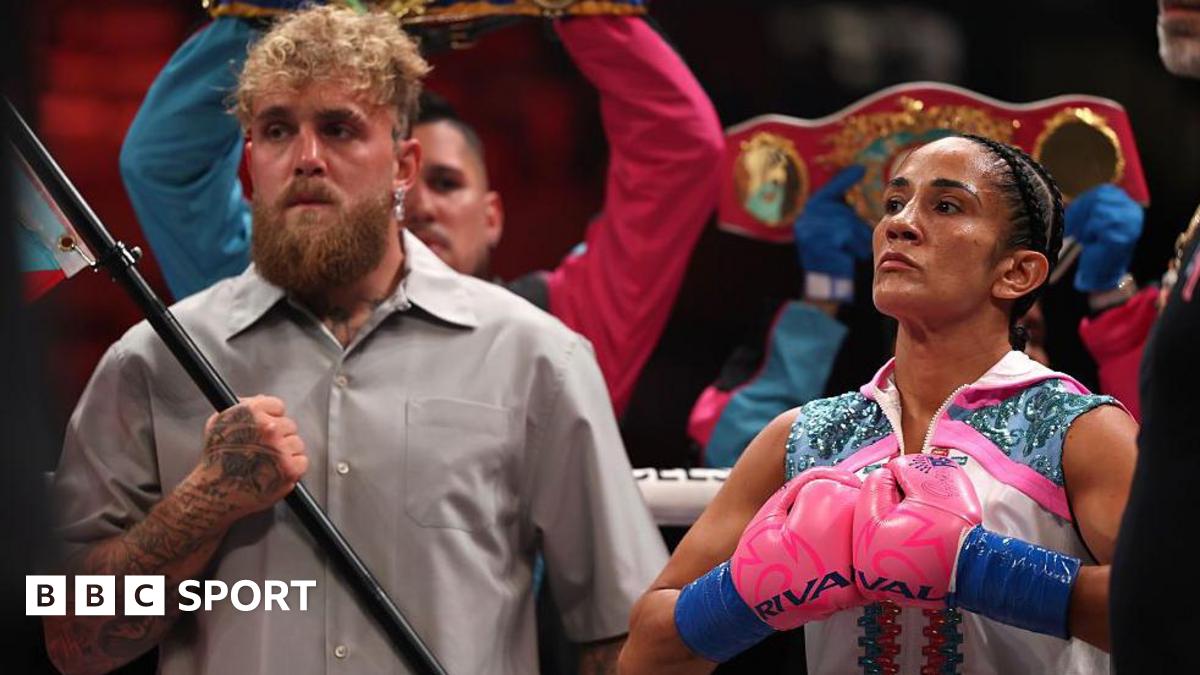
Serrano Challenges Paul’s Criticism of Bad Bunny Following Super Bowl Performance
The fallout from Super Bowl LVIII continues, extending beyond the gridiron and into the world of boxing and music. Amanda Serrano, a seven-weight world champion and the first fighter signed to Jake Paul’s Most Valuable Promotions (MVP), has publicly disagreed with Paul’s characterization of Puerto Rican music superstar Bad Bunny as a “fake American” following the artist’s halftime show performance. The exchange highlights ongoing debates about national identity, cultural representation, and the intersection of sports and social commentary. Bad Bunny’s performance, the first Super Bowl halftime show performed entirely in Spanish, took place at Levi’s Stadium in California on February 9, 2026, as the Seattle Seahawks defeated the New England Patriots.
The controversy began when Paul took to X (formerly Twitter) to express his disapproval of Bad Bunny’s performance. He urged his 4.4 million followers to boycott the halftime show, citing the artist’s past outspokenness on U.S. Immigration policy and labeling him a “fake American citizen who publicly hates America.” This prompted a swift and direct response from Serrano, who, despite her professional relationship with Paul, felt compelled to defend both her own heritage and the contributions of Puerto Ricans to the United States. The incident underscores the complexities of navigating public opinion and personal beliefs within the often-polarized landscape of social media.
A Champion’s Response: Defending Puerto Rican Identity
Serrano’s response, delivered via her own X account, was a powerful statement of pride in her Puerto Rican identity and her American citizenship. She emphasized that Puerto Ricans are not “fake Americans,” but rather citizens who have made significant contributions to the United States across various fields, including military service, sports, business, science, and the arts. “Puerto Ricans are not ‘fake Americans’. We are citizens who have contributed to this country in every field,” Serrano wrote. She acknowledged her gratitude for the opportunities provided by Paul and MVP, which began in 2021 and culminated in a “lifetime” contract in 2025, but firmly stated her disagreement with his assessment of Bad Bunny.
Serrano’s statement resonated with many, sparking a broader conversation about the rights and recognition of Puerto Rican citizens. Puerto Rico’s unique political status as an unincorporated territory of the United States often leads to questions about the full extent of its citizens’ rights and representation. While Puerto Ricans are U.S. Citizens, they cannot vote in presidential elections and do not have full representation in Congress. Britannica provides a detailed overview of Puerto Rico’s political status and history.
Paul’s Shifting Stance and Subsequent Clarification
Following Serrano’s rebuke, Paul appeared to attempt to clarify his initial remarks. He initially claimed his use of the term “fake” had been misinterpreted, stating that Bad Bunny is, of course, a citizen by virtue of being Puerto Rican and that he loves Puerto Rico. However, he then doubled down on his criticism, suggesting that Bad Bunny’s “values and criticism of our great country” were the core of his issue. This back-and-forth further fueled the controversy and drew criticism from those who viewed his initial statement as insensitive and nationalistic.
The situation took another turn when Paul posted “I love Bad Bunny” and “what happened on my Twitter last night?” suggesting a possible regret or confusion over his earlier comments. This series of statements highlights the challenges of navigating public discourse in the age of social media, where impulsive reactions can quickly escalate into larger controversies. The rapid evolution of Paul’s position also raises questions about the sincerity of his initial criticism and the influence of public pressure.
MVP’s Response and the Importance of Representation
Most Valuable Promotions (MVP) also weighed in on the matter, releasing a statement on X affirming its support for all its fighters, regardless of their national origin. “MVP stands for one thing and one thing only: our fighters,” the statement read. “Whether you’re from Puerto Rico or anywhere else in the world, we proudly stand behind you and will always work to elevate you and the pride you bring into the ring.” This statement aimed to distance the organization from Paul’s controversial remarks and reaffirm its commitment to inclusivity and diversity.
Bad Bunny’s Super Bowl halftime show itself was a landmark moment for Latin music and cultural representation. As the first artist to perform the halftime show entirely in Spanish, he broke down barriers and celebrated the richness of Latin American culture on a global stage. The performance featured a medley of his hit songs and showcased the vibrant energy of Puerto Rican music and dance. The show’s success underscored the growing influence of Latin music in the mainstream and the importance of providing platforms for diverse voices and perspectives. NPR’s review of the performance highlighted its cultural significance and artistic merit.
The Complexities of Citizenship and National Identity
The debate sparked by Jake Paul’s comments touches upon broader questions about citizenship, national identity, and the responsibilities of public figures. While Paul’s initial statement was widely criticized for its perceived insensitivity, it also reflects a growing trend of nationalist sentiment and the politicization of cultural events. The incident serves as a reminder that discussions about national identity are often fraught with complexity and can be deeply personal for those who identify with multiple cultures or nations.
The case of Puerto Rico is particularly nuanced, as its citizens enjoy U.S. Citizenship but lack the full rights and privileges afforded to citizens residing in the 50 states. This unique status has fueled ongoing debates about Puerto Rico’s future and its relationship with the United States. The island has held several non-binding referendums on its political status, with varying results, but a clear path forward remains elusive. The debate over Puerto Rico’s status is deeply intertwined with issues of economic inequality, political representation, and cultural identity.
Looking Ahead
As of March 3, 2026, Jake Paul has not issued a further public statement on the matter. Amanda Serrano is currently preparing for her next bout, details of which are expected to be announced by MVP in the coming weeks. The incident is likely to continue to be discussed in the context of broader conversations about cultural representation and the responsibilities of public figures. The ongoing debate highlights the importance of respectful dialogue and a nuanced understanding of the complexities surrounding national identity and citizenship.
The next scheduled event related to this story will be the announcement of Amanda Serrano’s next fight, anticipated by Most Valuable Promotions before the end of March 2026. We encourage readers to share their thoughts on this issue and engage in constructive dialogue in the comments section below.
Related reading