The Complex Funding of Germany’s Churches: Beyond the Collection Plate
The financial landscape of Germany’s churches is often misunderstood. Even as many associate church funding with weekly collections, the reality is far more intricate, involving a blend of historical contributions, state support, and the controversial church tax. This system allows churches to maintain a significant presence in German society, operating a vast network of institutions – from hospitals and schools to kindergartens and social care facilities. But as church membership declines, questions are mounting about the long-term sustainability of this funding model and its impact on vital social services. The Kirchensteuer, or church tax, remains a central pillar, but its future is increasingly uncertain, prompting difficult decisions about resource allocation and institutional viability.
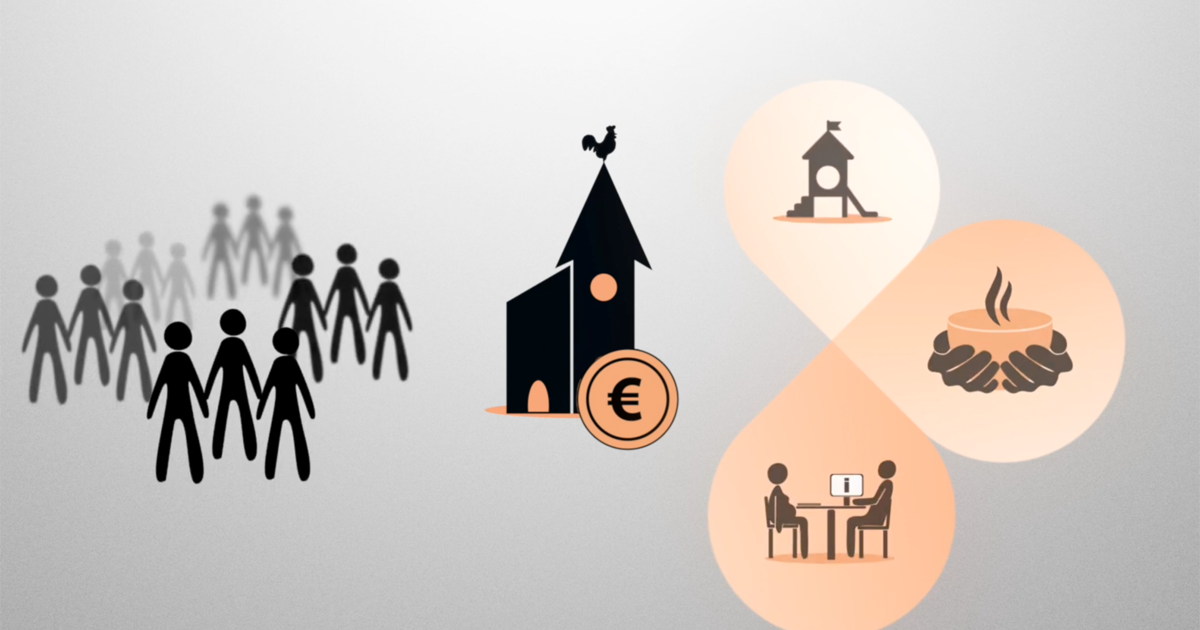
The role of the church in Germany extends far beyond religious practice. For centuries, these institutions have played a crucial role in providing social and educational services, often filling gaps left by the state. This historical involvement has created a complex web of financial dependencies, where churches rely on a combination of sources to operate. According to a recent report from evangelisch.de, the Kirchensteuer is not simply used for internal church operations like maintaining buildings or paying clergy; it’s also channeled into a wide range of societal benefits, including support for kindergartens, social function, and cultural preservation. This multifaceted approach underscores the church’s self-perception as an integral part of the social fabric, rather than a purely religious entity.
How Germany’s Churches are Financed: A Multi-Pronged Approach
The financial foundation of Germany’s churches rests on several key pillars. The most significant is the Kirchensteuer, a levy collected from registered church members. This tax, typically around 8-9% of income, is automatically deducted from salaries and paid directly to the respective church. However, the Kirchensteuer isn’t the sole source of funding. Churches also benefit from historical state payments, known as Staatsleistungen, which originated in the early 19th century as compensation for church properties seized during the secularization period. These payments, while controversial, continue to provide a substantial income stream for some churches. Churches generate revenue through donations, capital investments, and the operation of various businesses and facilities.
The financing of individual church institutions, such as schools and hospitals, is particularly complex. While these institutions often receive public funding, they also rely heavily on contributions from the church itself. The Finanzierung kirchlicher Einrichtungen website highlights that public subsidies are a crucial component, but the church’s own financial resources are essential for maintaining quality and expanding services. This interplay between public and private funding creates a system where churches are simultaneously accountable to both the state and their own members. The allocation of these funds varies between different Landeskirchen (regional churches), reflecting differing priorities and financial situations.
The Impact of Declining Membership and the Rise of Church Exits
Recent years have witnessed a steady decline in church membership in Germany, accompanied by a corresponding increase in the number of people formally leaving the church – a process known as Kirchenaustritt. This trend poses a significant threat to the financial stability of the church, as fewer members translate directly into lower Kirchensteuer revenue. As reported by Zeit Online, the financial strain is already forcing churches to make difficult decisions, including closing community centers and even kindergartens. The closure of the Kita Wiedenhof and Sternstraße in Solingen, as detailed in the article, serves as a stark example of the real-world consequences of declining membership and dwindling funds.
The situation is particularly acute in areas with high rates of church exit. The loss of revenue forces churches to prioritize essential services and cut back on less critical programs. This can lead to a reduction in social services, such as childcare and elder care, which disproportionately affects vulnerable populations. The closure of church-run institutions can exacerbate existing shortages in these areas, placing additional strain on state-funded services. The long-term implications of this trend are far-reaching, potentially leading to a significant restructuring of the social safety net in Germany.
Where Does the Money Go? A Breakdown of Church Spending
While the exact allocation of funds varies between Landeskirchen, a general pattern emerges. According to evangelisch.de, the Kirchensteuer is distributed across ten broad areas. These include supporting religious activities like worship services, providing pastoral care, funding educational programs, and maintaining historical and cultural landmarks. A significant portion of the funds is also dedicated to social work, both domestically and internationally. This encompasses a wide range of initiatives, from supporting refugees and homeless individuals to providing disaster relief and promoting sustainable development.
Beyond these core areas, the Kirchensteuer also supports initiatives focused on youth ministry, music and the arts, and interfaith dialogue. The church also invests in its own administrative infrastructure, including salaries for clergy and staff, as well as the maintenance of church buildings and facilities. The breadth of these expenditures reflects the church’s commitment to serving a diverse range of needs within the community. However, the increasing financial pressures are forcing churches to re-evaluate their priorities and make difficult choices about where to allocate limited resources.
The Future of Church Funding in Germany
The long-term sustainability of the current church funding model is increasingly uncertain. The continued decline in membership and the rising number of church exits pose a significant threat to the Kirchensteuer revenue. While some churches are exploring alternative funding sources, such as increased fundraising efforts and the development of revenue-generating businesses, these measures are unlikely to fully offset the loss of income from the Kirchensteuer. The debate over the future of Staatsleistungen also continues, with some arguing that these historical payments should be abolished altogether.
The potential consequences of a significant reduction in church funding are far-reaching. It could lead to the closure of more church-run institutions, a reduction in social services, and a weakening of the church’s role in German society. However, it could also create an opportunity for the church to reinvent itself and focus on its core mission of providing spiritual guidance and fostering community. The coming years will be critical in determining the future of church funding in Germany and its impact on the country’s social and cultural landscape.
As of March 3, 2026, the debate surrounding the Kirchensteuer and the financial health of Germany’s churches remains ongoing. The next key development to watch will be the upcoming discussions between church leaders and government officials regarding the future of Staatsleistungen, scheduled for late 2026. Readers interested in learning more about this complex issue are encouraged to follow the reporting of reputable news organizations and to engage in constructive dialogue about the role of the church in modern society.
Worth a look