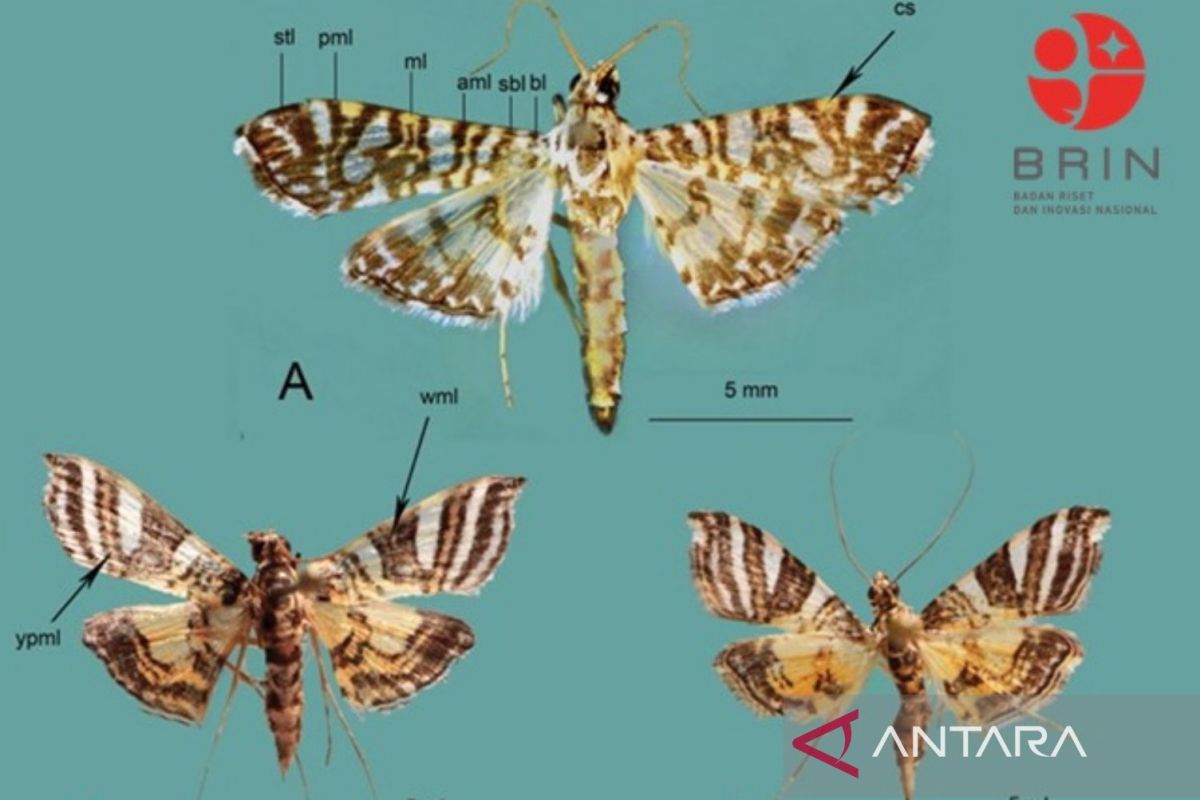
Indonesia’s remarkable biodiversity has expanded with the identification of two recent moth species, both endemic to the archipelago. Researchers from the National Research and Innovation Agency (BRIN) have formally described Glyphodella fojaensis and Chabulina celebesensis, adding to the growing catalog of insect life found within the nation’s borders. This discovery underscores the importance of continued research and conservation efforts in regions like Papua and Sulawesi, which harbor unique and vulnerable ecosystems.
The identification of these new species, belonging to the genera Glyphodella and Chabulina, is the culmination of extensive fieldwork conducted between 2002 and 2017. Researchers Hari Sutrisno and Rosichon Ubaidillah, from BRIN’s Center for Biosystematics and Evolution Research, meticulously surveyed areas in Papua and Sulawesi, alongside a detailed examination of specimens housed at the Museum Zoologicum Bogoriense (MZB) in Bogor. The work highlights the crucial role of museum collections in taxonomic research and biodiversity documentation. Indonesia, an archipelago of over 17,000 islands, is recognized as a global biodiversity hotspot and discoveries like these reinforce that status.
Distinctive Morphology: Identifying the New Species
The classification of these moths as new species hinged on distinct morphological characteristics, particularly patterns on their wings and the structure of their genitalia. These features are critical in moth identification, serving as reliable indicators of species boundaries. According to Rosichon Ubaidillah, Glyphodella fojaensis is characterized by circular yellow markings on its forewings, coupled with unique features in the male genitalia that differentiate it from closely related species. Chabulina celebesensis, is distinguished by specific patterns of lines on its wings and a distinctive genital structure. These subtle yet significant differences provided the basis for establishing them as scientifically novel species.
The process of identifying new species relies heavily on comparative morphology, a field that involves detailed anatomical study. Researchers carefully analyze the physical characteristics of specimens, comparing them to existing descriptions and known species. The genitalia, in particular, are often used as a definitive diagnostic feature in moth taxonomy, as they exhibit significant variation even between closely related species. This meticulous approach ensures the accuracy and reliability of species classifications.
Habitat and Ecology of the New Moths
Glyphodella fojaensis has been found inhabiting primary tropical forests within the Foja Mountains of Papua, a region known for its exceptional biodiversity and relative isolation. The Foja Mountains, located in the Indonesian province of Papua, are part of the Mamberamo River Basin and represent one of the most pristine rainforest ecosystems in the country. Chabulina celebesensis, conversely, has been discovered in secondary tropical forests in Sulawesi. Both species are nocturnal, meaning they are active primarily during the night. This behavior is common among moths, which often avoid daytime predators and utilize darkness for foraging and reproduction.
The differing habitats of these two species suggest adaptations to specific environmental conditions. Primary forests, like those in the Foja Mountains, are characterized by their old growth, high structural complexity, and relatively undisturbed ecosystems. Secondary forests, are areas that have been previously disturbed, often through logging or agriculture, and are undergoing regeneration. The presence of Chabulina celebesensis in a secondary forest highlights the ability of some moth species to adapt to altered landscapes, although the long-term implications of habitat change remain a concern.
Conservation Concerns and the Importance of Ecosystem Protection
Researchers emphasize that the limited geographic range of these endemic species makes them particularly vulnerable to environmental changes, including deforestation and habitat degradation. Endemic species, by definition, are found only in a specific geographic area, making them highly susceptible to localized threats. The ongoing loss of forest cover in Indonesia, driven by factors such as agricultural expansion, logging, and mining, poses a significant risk to the survival of these and other endemic species. World Wildlife Fund reports that Indonesia has lost a substantial amount of forest cover in recent decades, impacting biodiversity and ecosystem services.
Rosichon Ubaidillah stressed the need for proactive ecosystem protection in Papua and Sulawesi to ensure the continued survival of these newly identified species. Effective conservation strategies require a multifaceted approach, including the establishment of protected areas, sustainable forest management practices, and community-based conservation initiatives. Protecting the habitats of these moths is not only crucial for their own survival but likewise for maintaining the overall health and resilience of the ecosystems they inhabit. The preservation of biodiversity is essential for maintaining ecosystem services, such as pollination, nutrient cycling, and climate regulation.
Research Methodology and Publication Details
The research team employed light traps to collect specimens for analysis, a common technique used in insect surveys. Light traps utilize ultraviolet light to attract nocturnal insects, allowing researchers to efficiently sample moth populations. Detailed observations were then made using microscopes to examine the morphological characteristics of the collected specimens. All specimens are now preserved and documented at the Museum Zoologicum Bogoriense, serving as a valuable resource for future research. The MZB plays a vital role in preserving Indonesia’s biological heritage and providing access to taxonomic information.
The findings of this research were published in the February 2026 edition of the international journal Raffles Bulletin of Zoology, Volume 74, pages 87–94, under the title “Description of two new endemic species of the closely related genera, Glyphodella and Chabulina from Indonesia.” Publication in a peer-reviewed scientific journal is a critical step in validating new species descriptions and making the information accessible to the broader scientific community. The Raffles Bulletin of Zoology is a well-respected publication focusing on zoological research in Southeast Asia and the Indo-Pacific region.
Expanding Indonesia’s Biodiversity Data
This discovery contributes to the growing body of knowledge regarding Indonesia’s insect diversity, particularly within the Crambidae family of moths. The Crambidae, commonly known as grass moths, are a large and diverse family of moths found worldwide, with a significant presence in tropical regions. Indonesia is considered a global center of biodiversity, and ongoing research continues to reveal new species and expand our understanding of the country’s rich natural heritage. The identification of these new moth species reinforces Indonesia’s position as a critical area for biodiversity conservation.
The ongoing exploration of Indonesia’s biodiversity is essential for informing conservation strategies and ensuring the sustainable management of the country’s natural resources. Continued research efforts, coupled with effective conservation policies, are crucial for protecting the unique and irreplaceable ecosystems that define Indonesia’s biological wealth. The discovery of Glyphodella fojaensis and Chabulina celebesensis serves as a reminder of the hidden biodiversity that remains to be uncovered and the importance of preserving these natural treasures for future generations.
As research continues, scientists will undoubtedly uncover more of Indonesia’s hidden biodiversity. The next steps involve further study of the newly identified moths, including their life cycles, ecological roles, and genetic relationships to other species. Understanding these aspects will be crucial for developing effective conservation strategies and ensuring the long-term survival of these unique and vulnerable creatures.
What are your thoughts on this exciting discovery? Share your comments below, and don’t forget to share this article with your network to raise awareness about the importance of biodiversity conservation.
- iPhone 18 Pro Max Rumored to Feature Exclusive Upgrades Over Pro Model
- Unlocking Universe Mysteries: Latest Revolutionary Space Discoveries and Telescope Insights
- Indonesia Proposes Limited Dual Citizenship to Attract Global Talent (news-usa.today)
- Rare Dark Bordered Beauty Moth Discovered at Wallington Estate (archyworldys.com)