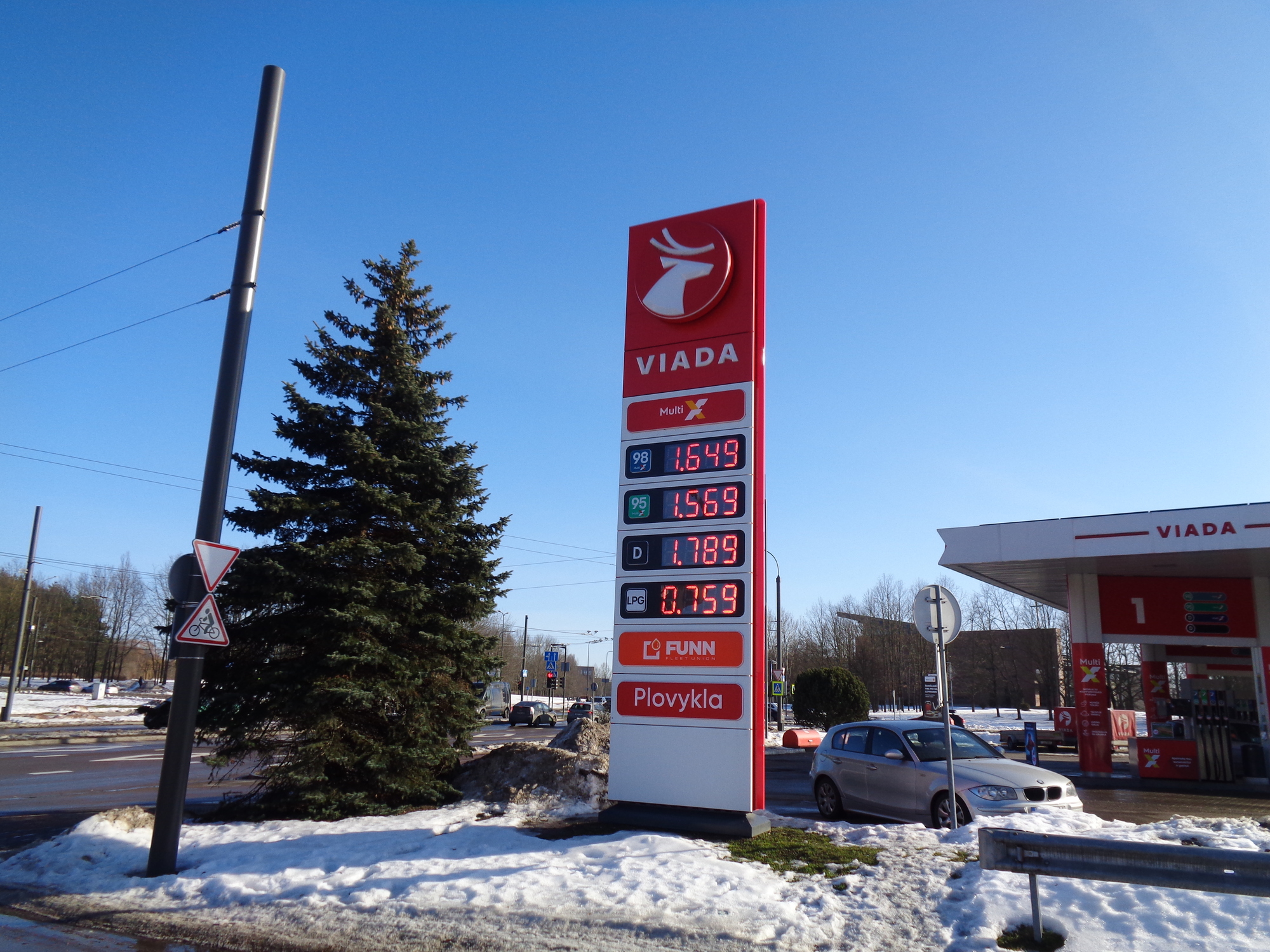
Fluctuations in fuel prices are a constant concern for consumers worldwide, and Lithuania is no exception. Recent observations suggest a dynamic shift in costs at the pump, with gasoline prices experiencing a slight decrease while diesel prices saw a marginal increase. This comes amid broader anxieties about potential disruptions to global oil supplies stemming from escalating tensions in the Middle East. While the immediate impact appears modest, experts warn that a prolonged conflict could lead to more substantial price hikes.
The price of fuel is a sensitive indicator of geopolitical stability and economic health. Shifts in crude oil prices, influenced by factors ranging from production levels to political events, directly translate to changes at the gas station. For Lithuanian drivers, understanding these dynamics is crucial for budgeting and planning. The current situation, characterized by a slight divergence in gasoline and diesel prices, reflects a complex interplay of market forces and regional factors.
Recent Price Trends in Lithuania
Data from March 3, 2026, indicates a varied landscape of fuel prices across Lithuania. According to Degalukaina.lt, a website providing daily updates on fuel costs, the average price of 95 gasoline ranged from 1.509 to 1.779 euros per liter, while diesel prices varied between 1.54 and 1.779 euros per liter. These figures highlight the price differences between various fuel networks operating within the country.
Specifically, Baltic Petroleum stations in Klaipėda offered diesel at 1.639 euros per liter and 95 gasoline at 1.509 euros. In Raseiniai, the same network priced diesel at 1.689 euros and 95 gasoline at 1.509 euros. Circle K stations showed a similar range, with prices in Alytus at 1.679 euros for 95 gasoline and 1.529 euros for diesel. However, observations from earlier in the week revealed a more volatile picture. On March 2nd, at Viada gas stations on P. Lukšio and Statybininkų streets in Kaunas, 95 gasoline was priced at 1.629 euros per liter, while diesel cost 1.779 euros. Later that day, after 3:00 PM, the price of 95 gasoline at the Viada station on P. Lukšio Street had decreased to 1.569 euros, while diesel increased slightly to 1.789 euros.
The Circle K station near McDonald’s on Savanorių Avenue mirrored Viada’s prices, selling 95 gasoline and diesel at the same rates. Meanwhile, EMSI stations offered slightly lower prices, with 95 gasoline at 1.549 euros and diesel at 1.709 euros at their Savanorių Avenue location. Neste stations also offered competitive pricing, with 95 gasoline at 1.549 euros and diesel at 1.739 euros.
Geopolitical Influences and Potential Price Increases
The recent fluctuations in fuel prices are occurring against a backdrop of heightened geopolitical tensions in the Middle East. According to Kauno Diena, a Lithuanian news outlet, a potential conflict involving Iran could significantly impact oil prices. Experts predict that a prolonged conflict could lead to an increase in fuel prices of 6 to 8 euro cents in the short term, with the possibility of increases exceeding 10 euro cents if the situation escalates. This assessment aligns with broader concerns about supply disruptions in a region critical to global oil production.
The impact of these events on Lithuania, a country heavily reliant on imported energy resources, is particularly noteworthy. While the immediate effect has been relatively contained, the potential for larger price increases looms large. TV3.lt reports that fuel station representatives anticipate a potential price increase within one to two weeks, though the initial rise is expected to be modest, in the range of a few cents per liter. However, they caution that a protracted conflict could trigger a more substantial surge in prices.
Understanding the Factors Driving Price Changes
Several factors contribute to the volatility of fuel prices. Crude oil prices, which account for a significant portion of the final cost at the pump, are heavily influenced by global supply and demand dynamics. Political instability, production cuts by major oil-producing nations, and unexpected disruptions to supply chains can all lead to price increases. Exchange rate fluctuations also play a role, as oil is typically traded in US dollars. A stronger dollar can build oil more expensive for countries using other currencies, including Lithuania.
local taxes and levies contribute to the overall cost of fuel. Lithuania, like many European countries, imposes excise duties and value-added tax (VAT) on gasoline and diesel. Changes to these tax rates can directly impact prices at the pump. Competition among fuel retailers also influences pricing, with stations often adjusting their prices to attract customers.
Impact on Lithuanian Consumers and Businesses
Rising fuel prices have a ripple effect throughout the Lithuanian economy, impacting both consumers and businesses. For individuals, higher fuel costs translate to increased expenses for transportation, commuting, and everyday goods and services. This can strain household budgets, particularly for those with limited incomes. Businesses, especially those reliant on transportation and logistics, face increased operating costs, which may be passed on to consumers in the form of higher prices.
The transportation sector is particularly vulnerable to fuel price fluctuations. Trucking companies, delivery services, and public transportation providers all rely heavily on fuel, and increases in costs can significantly impact their profitability. Farmers and agricultural businesses also face higher expenses for fuel used in machinery and transportation of goods. The impact extends to other sectors as well, including tourism, retail, and manufacturing.
Mitigating the Impact of Rising Fuel Prices
While consumers and businesses have limited control over global oil prices, there are steps that can be taken to mitigate the impact of rising fuel costs. For individuals, strategies include reducing driving, using public transportation, carpooling, and adopting fuel-efficient driving habits. Businesses can explore options such as optimizing logistics, investing in fuel-efficient vehicles, and implementing energy-saving measures.
Government policies can also play a role in mitigating the impact of rising fuel prices. Reducing excise duties or providing subsidies to fuel retailers can help to lower prices at the pump, although these measures may have budgetary implications. Investing in renewable energy sources and promoting energy efficiency can reduce Lithuania’s reliance on imported fossil fuels and enhance its energy security.
The situation remains fluid, and ongoing monitoring of geopolitical developments and market trends is essential. Lithuanian authorities and industry stakeholders are closely watching the situation in the Middle East and assessing the potential impact on fuel prices. Consumers and businesses should stay informed about price changes and adjust their behavior accordingly.
The next key development to watch will be the release of the official fuel price statistics for the week of March 10th, 2026, by Degalukaina.lt. This data will provide a clearer picture of the extent to which geopolitical tensions are impacting prices at the pump in Lithuania. We encourage readers to share their experiences and perspectives on rising fuel costs in the comments below.
Worth a look