Celebrations Erupt in New York as Iranian Americans Mark the Finish of Khamenei’s Reign
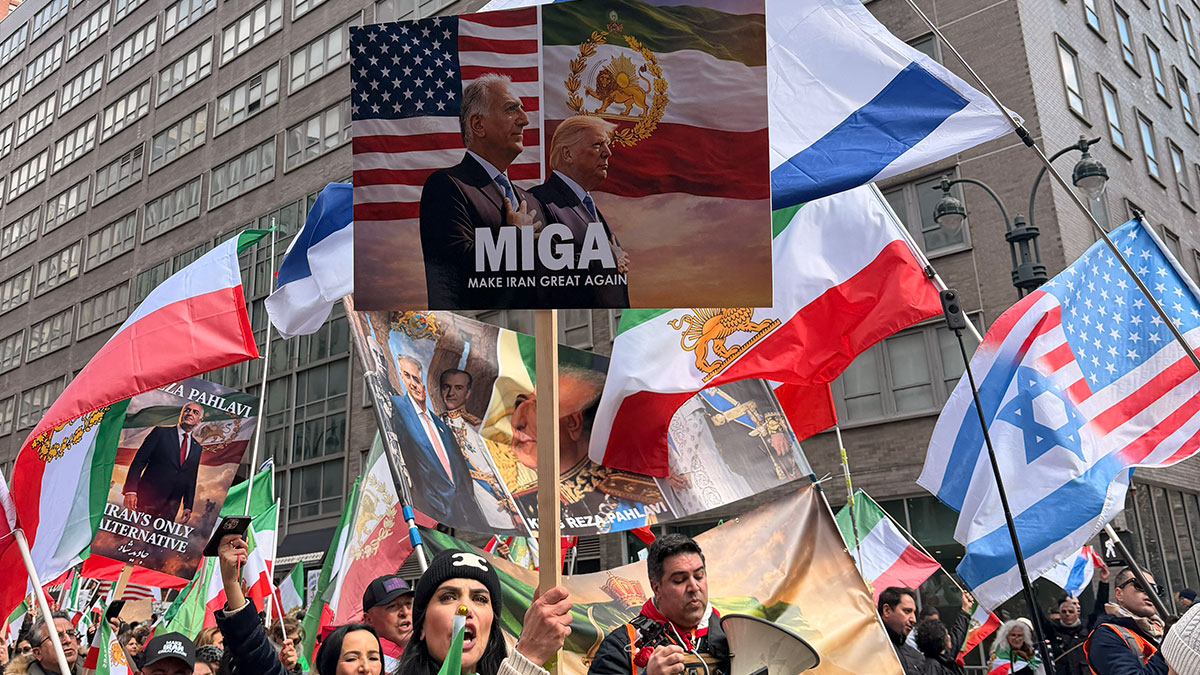
A wave of jubilation swept through New York City this past Sunday as Iranian Americans gathered near the United Nations to celebrate the death of Ayatollah Ali Khamenei, Iran’s Supreme Leader. The outpouring of emotion, a mixture of joy and remembrance, followed confirmation of Khamenei’s death on March 1st, 2026, after he was killed in an Israeli airstrike on February 28th, a joint operation with the United States, according to reports. For many, the moment represented a symbolic end to decades of oppression and a glimmer of hope for a future free from the hardline rule that defined Khamenei’s 36-year leadership. The atmosphere was markedly different from previous gatherings outside the UN, where protestors had focused on other issues, such as the release of hostages. This time, the focus was squarely on the demise of a leader many viewed as a tyrant.
The celebrations weren’t simply spontaneous displays of relief; they were a direct acknowledgement of the strategic alliance that made this moment possible. Demonstrators openly thanked both former U.S. President Donald Trump and Israeli Prime Minister Benjamin Netanyahu for their roles in the operation, recognizing the military action as a catalyst for change. This expression of gratitude underscores the complex geopolitical dynamics at play and the deep-seated desire for a different future among many within the Iranian diaspora. The death of Khamenei, who assumed the position of Supreme Leader in 1989 following the death of Ayatollah Ruhollah Khomeini, marks a significant turning point in Iranian history.
A City Divided, a Community United
While the celebrations unfolded, New York City Mayor Zohran Mamdani issued a statement on February 29th, 2026, describing the military strikes as a “catastrophic escalation.” He assured Iranian New Yorkers of their safety and inclusion within the city, stating they were an integral part of the community. The full statement is available on the NYC government website. However, many Iranian Americans present at the demonstration expressed a feeling that reassurance wasn’t what they needed; they sought decisive action, a sentiment reflected in their enthusiastic support for the military operation. This divergence in perspective highlights the complex emotions and political viewpoints within the city regarding the events in Iran.
The mood was deeply emotional, a blend of jubilation and grief. Attendees shared stories of loss, holding photographs of friends and relatives who had been killed during protests in Iran earlier in the year. Reports indicate that more than 30,000 people were killed in Iran during protests, according to senior officials as reported by Time magazine, a stark reminder of the human cost of dissent under Khamenei’s rule. The celebrations, were not merely expressions of joy, but also acts of remembrance and solidarity with those still struggling for freedom within Iran.
Symbols of Hope and Remembrance
The demonstration itself was a powerful display of cultural identity and political expression. Participants carried a diverse array of flags – American, Israeli and the pre-revolutionary “Lion and Sun” flag of Iran – symbolizing a shared desire for a new Iran. Many signs were homemade, a departure from professionally produced protest materials, and conveyed a range of messages, from calls for the liberation of Iran to support for exiled Crown Prince Reza Pahlavi. Some demonstrators carried symbolic representations of their opposition to Khamenei, including stuffed toy rats, while others displayed more provocative imagery, such as a graphic photo of the Ayatollah with the inscription “RIP—Rest in Piss.”
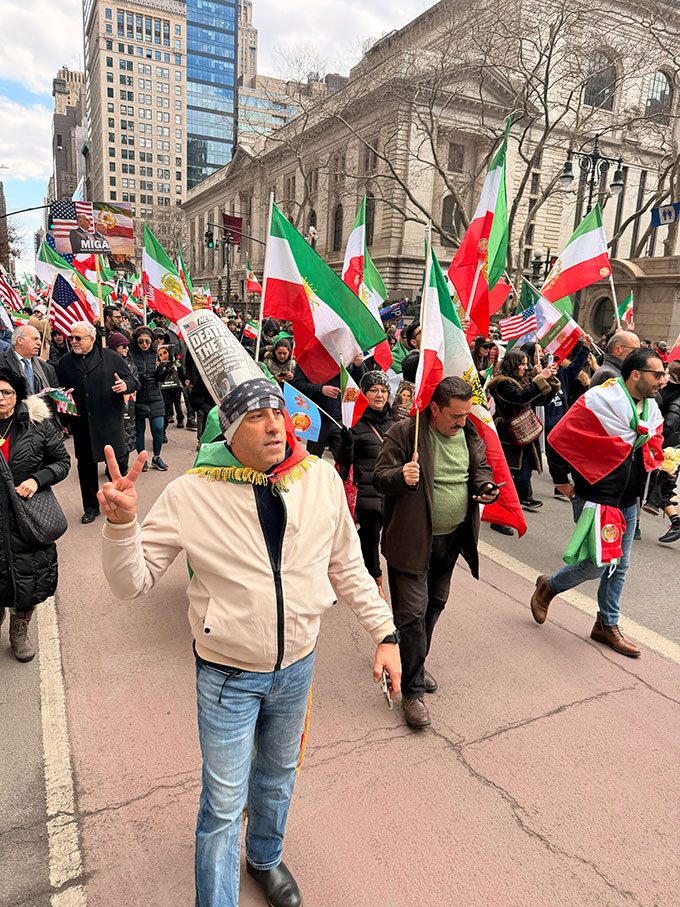
The march towards Times Square, secured by the New York Police Department, drew a mixed reaction from onlookers. While some expressed support, others voiced dissent, highlighting the diverse opinions within the city regarding the events in Iran. The demonstrators’ enthusiastic chants of “Thank you Trump!” and “Bibi, Bibi, thank you!” underscored their gratitude towards the leaders they credited with taking decisive action. This display of appreciation, despite potential political differences on other issues, demonstrated a unified front in celebrating the end of Khamenei’s rule.
A Legacy of Hostility and Repression
Ayatollah Ali Khamenei’s death brings to a close a 36-year period of leadership marked by staunch opposition to the United States and Israel, and a brutal suppression of internal dissent. He ascended to the position of Supreme Leader in 1989, succeeding Ayatollah Ruhollah Khomeini, and quickly consolidated his power, overseeing Iran’s continued pursuit of a nuclear program and its expansion of influence throughout the Middle East. Khamenei’s legacy is one of unwavering ideological commitment and a willingness to employ forceful tactics to maintain control. According to the Wikipedia entry on his assassination, the operation was a joint effort between the United States and Israel, utilizing strategic intelligence from the US. He was 86 years old at the time of his death.
The assassination, carried out by the Israeli Air Force on February 28th, 2026, was part of a wider series of strikes targeting high-ranking Iranian officials. The Iranian government confirmed Khamenei’s death on March 1st, 2026, and announced 40 days of mourning. The event has triggered a period of uncertainty and potential instability within Iran, as the country prepares for a new Supreme Leader election. The NPR report on Khamenei’s death details how President Trump joined Israeli leaders in calling for the overthrow of Khamenei’s authoritarian regime.
Khamenei’s rule was characterized by a consistent anti-Western rhetoric and a firm grip on Iran’s political and social life. He faced increasing challenges in recent years, including widespread protests against economic hardship and political repression. The Times of Israel article on his death highlights his role in championing uranium enrichment and his efforts to maintain a hardline stance against reform. His death leaves a void in Iranian leadership and raises questions about the future direction of the country.
Looking Ahead: Uncertainty and Transition
The death of Ayatollah Ali Khamenei marks a pivotal moment for Iran and the wider region. The coming weeks and months will be critical as Iran navigates the transition to a new Supreme Leader and grapples with the political and economic consequences of this seismic event. The international community will be closely watching developments, assessing the potential for both positive change and further instability. The focus will likely be on whether the new leadership will pursue a more conciliatory approach towards the West or continue Khamenei’s hardline policies. The outcome of this transition will have far-reaching implications for regional security and global politics.
The immediate next step is the selection of a new Supreme Leader, a process that will be closely monitored by both domestic and international observers. The Iranian constitution outlines the procedures for selecting a new leader, involving the Assembly of Experts, a body of clerics responsible for choosing the Supreme Leader. The selection process is expected to be complex and potentially contentious, reflecting the deep divisions within Iranian society.
As the dust settles, the celebrations in New York City serve as a powerful reminder of the hopes and aspirations of the Iranian diaspora and their unwavering desire for a free and democratic Iran. The events of February 28th, 2026, have undoubtedly altered the course of Iranian history, and the world will be watching closely to see what the future holds.
Stay tuned to World Today Journal for continued coverage of developments in Iran and the ongoing geopolitical implications of Ayatollah Khamenei’s death. Share your thoughts and perspectives in the comments below.
Related reading