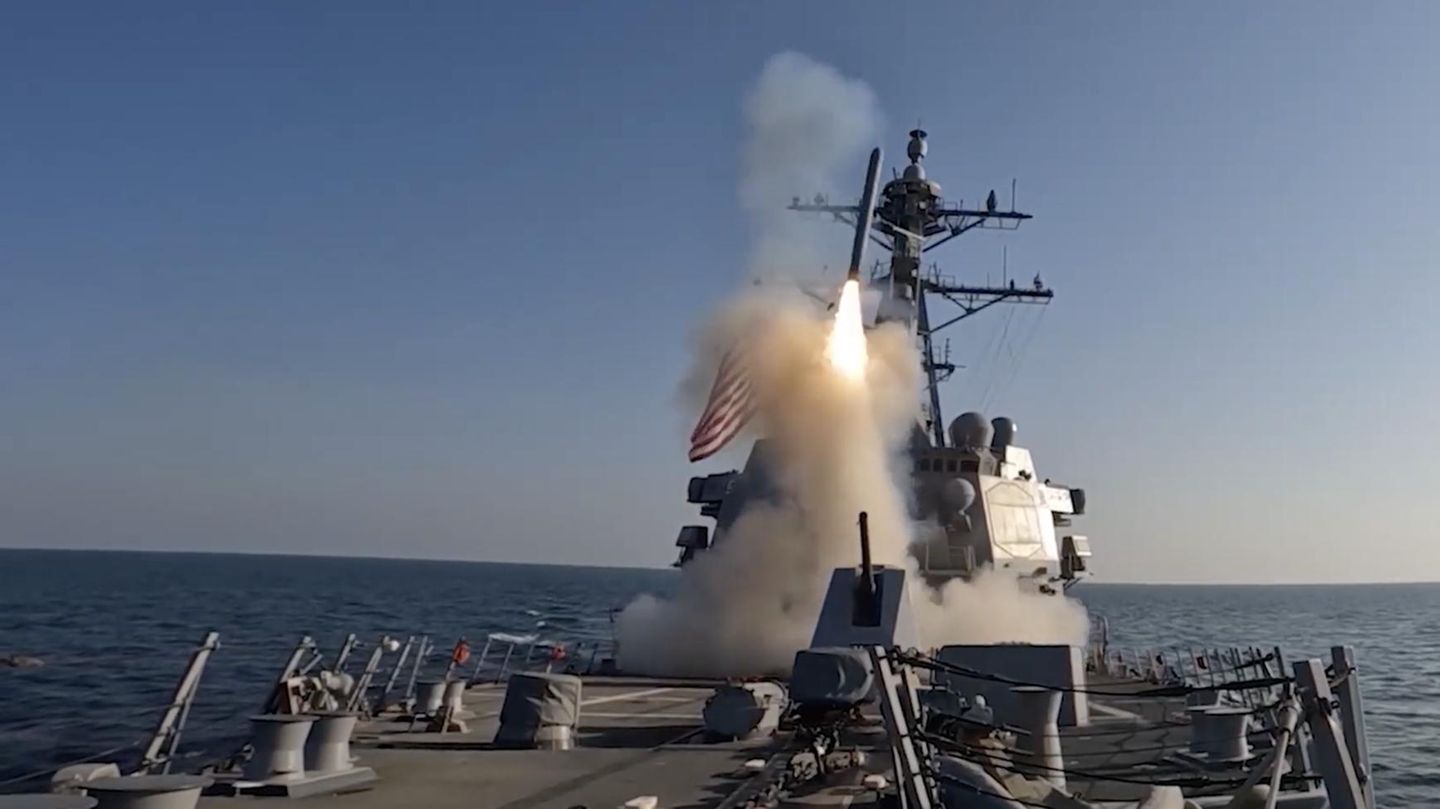
The escalating conflict between the United States and Iran, triggered by recent military strikes, is unfolding with a shifting narrative from the Trump administration. While initial reports suggested a swift and decisive operation, the rationale behind the attacks and the potential for further escalation remain fluid, prompting concern from both domestic and international observers. The situation has been further complicated by the release of dramatic footage by the U.S. Military, reminiscent of scenes from action films, showcasing naval assets and military readiness.
President Donald Trump authorized military strikes against Iran on Saturday, March 1, 2026, following the death of Iran’s Supreme Leader Ayatollah Ali Khamenei in a joint U.S.-Israeli military operation. The attacks, described by Trump as “major combat operations,” were initially framed as a response to an “imminent threat” to American forces in the region. However, subsequent explanations have varied, ranging from preventing Iran from developing nuclear weapons to supporting protestors within Iran and eliminating a regime accused of backing terrorism. This inconsistency has drawn criticism from members of Congress, who are demanding greater clarity regarding the objectives and scope of the military intervention. According to CNN, “We have seen the goal for this operation change now, I believe, four or five times,” said Virginia Senator Mark Warner, the top Democrat on the Senate Intelligence Committee.
Shifting Justifications and Contradictory Statements
The Trump administration’s explanations for the attacks on Iran have evolved significantly in the weeks leading up to and following the strikes. Prior to the operation, officials reportedly overstated Iran’s capabilities and the imminence of its nuclear program, according to sources cited by CNN. Following the initial wave of strikes, the administration claimed to be responding to potential preemptive attacks by Iran, a claim that was later contradicted by Pentagon briefings to Capitol Hill. These briefings indicated that Iran was not planning an attack unless provoked. This discrepancy has fueled accusations of misleading the public and Congress regarding the justification for military action.
The initial rationale presented by President Trump included protecting demonstrators who protested in Iran in January, defending the U.S. Against the risk of Iran developing nuclear weapons, and eliminating a regime that has allegedly supported terrorism for decades. However, administration officials have similarly stated that the war is not about regime change, creating further confusion about the ultimate goals of the operation. As reported by HuffPost, Trump has claimed the attack was to stop Iran’s nuclear weapons program – a program he previously insisted he had “obliterated” last June. He stated, “We warned Iran not to make any attempt to rebuild at a different location because they were unable to use the ones we so powerfully blew up,” but offered no concrete evidence to support this claim.
Military Operations and Released Footage
The U.S. Military has released footage of its warships and military operations in the region, a move that some observers have likened to scenes from action films. This imagery, intended to demonstrate American military strength and resolve, has been widely circulated in the media. President Trump announced the commencement of “major combat operations in Iran” on Saturday, stating the objective is “to defend the American people by eliminating imminent threats from the Iranian regime.” He described the regime as a “vicious group of very hard, terrible people” and accused them of supporting terrorism for 47 years, referencing events such as the 1983 Marine barracks bombing in Beirut and the 2000 attack on the USS Cole. CBS News published the full transcript of Trump’s statement, detailing these accusations.
Trump’s statement also highlighted Iran’s alleged support for Hamas and its role in the October 7 attacks on Israel, which resulted in the deaths of over 1,000 people, including 46 Americans, and the taking of 12 American hostages. He characterized the attacks as “brutal” and “something like the world has never seen before.” The administration has emphasized that the military action is a response to decades of Iranian aggression and a commitment to protecting American interests and allies.
Potential for Ground Troops and Escalation
While the initial focus of the military operation was on air strikes, President Trump has indicated that the deployment of U.S. Ground troops to Iran remains a possibility. This shift in stance, reported by sources, raises concerns about a potential escalation of the conflict and a prolonged military engagement. The potential for a ground war in Iran would significantly increase the risks and costs of the conflict, both for the United States and the region. The administration has not provided a clear timeline for the operation or a definitive statement regarding the deployment of ground troops, leaving the situation highly uncertain.
International Response and Congressional Concerns
The U.S. Military action in Iran has drawn a mixed reaction from the international community. Some allies have expressed support for the U.S. Response to Iranian aggression, while others have called for restraint and a diplomatic solution. The European Union has urged de-escalation and a return to negotiations, while Russia and China have condemned the U.S. Strikes as a violation of international law. The United Nations Security Council is scheduled to meet to discuss the situation, but a consensus on a resolution is unlikely given the divisions among its members.
Within the United States, the military action has sparked a debate in Congress. Democrats have criticized the Trump administration for its lack of transparency and its shifting justifications for the attacks. Senator Mark Warner, the top Democrat on the Senate Intelligence Committee, has demanded clarity and consistency from the administration, stating, “The decision to put American servicemembers in harm’s way demands clarity, consistency, and honesty with Congress and the public. So far, we’ve got none of those things.” Some Republicans have expressed support for the President’s actions, while others have called for a clear strategy and a defined exit plan.
Key Takeaways
- The U.S. Military has initiated “major combat operations” in Iran following the death of Ayatollah Ali Khamenei.
- The Trump administration’s rationale for the attacks has been inconsistent, ranging from preventing nuclear proliferation to supporting protestors and combating terrorism.
- The potential for the deployment of U.S. Ground troops to Iran remains a possibility, raising concerns about escalation.
- The international community is divided on the U.S. Military action, with some allies expressing support and others calling for restraint.
- Congress is demanding greater clarity and transparency from the administration regarding the objectives and scope of the operation.
As the situation continues to evolve, the focus remains on preventing further escalation and protecting American interests and allies. The coming days and weeks will be critical in determining the future course of the conflict and its impact on the region and the world. The next key event will be the United Nations Security Council meeting, scheduled for March 8, 2026, where international leaders will discuss potential resolutions and diplomatic solutions. Readers are encouraged to share their thoughts and perspectives on this developing story in the comments below.
Keep reading