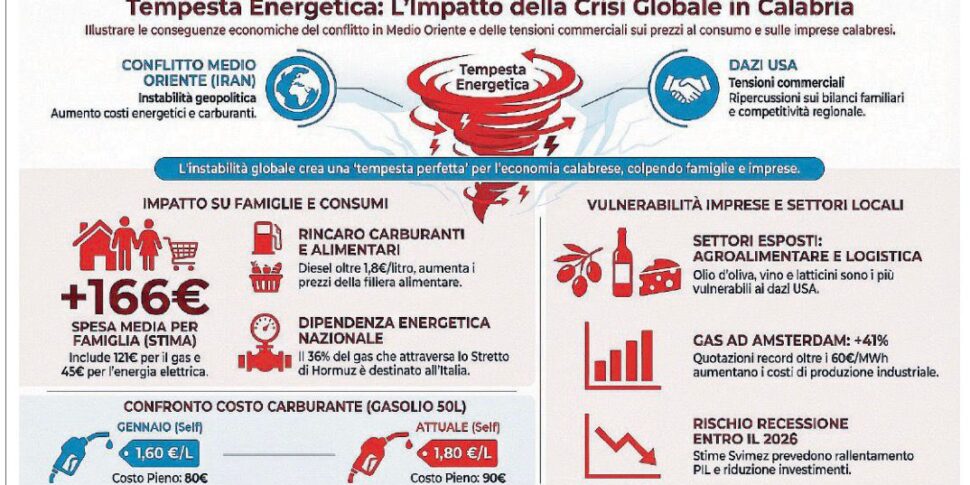
The escalating tensions in the Middle East, following recent military actions involving Iran, are sending ripples through global markets, with energy prices surging and economic anxieties mounting. While the immediate focus is on geopolitical stability, the economic fallout is already being felt, particularly in regions heavily reliant on energy imports like Italy and, specifically, the Calabria region. The situation presents a complex challenge, potentially triggering a “perfect storm” of rising costs for consumers and businesses alike.
The initial shockwaves were felt on Monday, March 3rd, 2026, as crude oil prices climbed sharply. Brent crude, the global benchmark, rose by 10% to surpass $82 a barrel, according to reporting from the BBC on March 2nd, 2026. Simultaneously, natural gas prices experienced a significant increase, jumping as much as 25%. This surge in energy costs is directly linked to concerns over potential disruptions to supply through the Strait of Hormuz, a critical waterway for global oil and gas transportation. Iran has warned ships against traversing the strait, raising fears of a complete blockade.
Impact on Energy Markets and Global Trade
The Strait of Hormuz is a chokepoint of immense strategic importance, facilitating approximately 20% of the world’s oil and gas supply. Any prolonged disruption to traffic through this vital passage could have severe consequences for global energy markets. The UK Maritime Trade Operations (UKMTO) reported that at least two ships were struck during the weekend of March 1st-2nd, 2026, with a third ship narrowly avoiding a projectile. These incidents have heightened anxieties among shipping companies and insurers, leading to increased premiums and rerouting of vessels.
The impact extends beyond oil and gas. The price of Brent crude initially fell back to $79 a barrel, while US crude rose to $72.20, demonstrating the volatility and uncertainty gripping the markets. As reported by EFE on March 2nd, 2026, the conflict followed the death of Iran’s Supreme Leader, Ayatollah Ali Khamenei, escalating tensions throughout the region. The potential for further escalation and wider conflict remains a significant concern for traders and analysts.
Calabria and Italy: A Region Vulnerable to Price Shocks
The economic repercussions are already being felt in Italy, and particularly in regions like Calabria, which are heavily reliant on imported energy. Rising fuel costs are directly impacting household budgets, leading to higher bills for heating, transportation, and electricity. Businesses, especially small and medium-sized enterprises (SMEs) without robust financial buffers, are facing increased operating costs and uncertainty. The situation is exacerbating existing economic challenges and raising concerns about potential job losses.
The situation is particularly acute given the region’s dependence on gas supplies that transit through the Strait of Hormuz. According to reports, approximately 36% of the gas flowing through the strait ultimately reaches Italy, making it particularly vulnerable to disruptions. The fear is that a blockade or significant reduction in exports from Qatar, a major LNG supplier, could further tighten supply and drive prices even higher. As UnoTV reported on March 3rd, 2026, gas prices in Europe surged by over 20%, reaching €38.885 per megawatt-hour, levels not seen since August 2022.
Gas Prices Soar in Europe
The surge in European gas prices is a direct consequence of the heightened geopolitical risk in the Middle East. The Amsterdam gas market saw prices climb to €63.49 per megawatt-hour, a 41% increase, reflecting the growing anxiety among traders. This increase is compounded by concerns about potential disruptions to LNG exports from the Gulf region, adding further pressure on an already volatile energy market. The West Texas Intermediate (WTI) crude oil price also saw a significant increase, rising around 12% in early trading on March 3rd, 2026, before settling at around 9% higher.
The impact on Calabria is multifaceted. Increased energy costs translate directly into higher prices for goods and services, eroding purchasing power for consumers. Businesses face difficult choices – absorbing the higher costs, passing them on to consumers, or reducing production. The uncertainty surrounding the conflict is also discouraging investment and hindering economic growth. The shortening of forward contracts and cautious inventory management among businesses are indicative of the prevailing climate of risk aversion.
Broader Economic Implications
The ripple effects of the Middle East conflict are extending beyond energy markets. Global stock markets experienced declines on Monday, March 3rd, 2026, with the FTSE 100 in London opening nearly 1% lower and airline stocks particularly hard hit due to airspace closures in the region. The CAC-40 in France fell by 1.6%, while the Dax in Germany dropped by 1.7%. These declines reflect the broader economic uncertainty and the potential for a prolonged period of instability.
The disruption to maritime transport in the Strait of Hormuz is also having a significant impact on global trade. Analysts warn that a prolonged conflict could lead to further increases in fuel prices and exacerbate supply chain disruptions. The potential for a sustained increase in oil prices above $100 a barrel is a growing concern, as this would have far-reaching consequences for the global economy.
The Risk of Escalation and Prolonged Disruption
The situation remains highly fluid and unpredictable. The potential for further escalation of the conflict, either through direct military confrontation or through proxy conflicts, is a significant risk. A prolonged disruption to oil and gas supplies could trigger a global recession, particularly if it coincides with other economic headwinds. The international community is urging restraint and calling for a diplomatic solution, but the prospects for a quick resolution remain uncertain.
The impact on Italy, and specifically Calabria, will depend on the duration and intensity of the conflict. If the situation stabilizes quickly and supply disruptions are limited, the economic impact may be manageable. However, if the conflict escalates and persists, the region could face a prolonged period of economic hardship. The Italian government is closely monitoring the situation and considering measures to mitigate the impact on consumers and businesses, but the challenges are significant.
Key Takeaways:
- Rising oil and gas prices are a direct consequence of escalating tensions in the Middle East.
- The Strait of Hormuz is a critical chokepoint for global energy supplies, and any disruption to traffic through this waterway could have severe consequences.
- Italy, and particularly Calabria, is vulnerable to price shocks due to its reliance on imported energy.
- The broader economic implications of the conflict include declines in stock markets and disruptions to global trade.
- The situation remains highly fluid and unpredictable, and the potential for further escalation is a significant risk.
The coming weeks will be crucial in determining the trajectory of the conflict and its impact on the global economy. Continued monitoring of the situation and proactive measures to mitigate the risks are essential. The next key development to watch will be any further statements from Iran regarding the Strait of Hormuz and potential negotiations with international powers. We will continue to provide updates as the situation evolves. Share your thoughts and concerns in the comments below.
- Netherlands Wildfire Crisis: Emergency Services Warn of Capacity Limits and Hard Choices
- How Urban Trees and Green Infrastructure Cool Cities and Prevent Floods
- Crude Oil Prices Plunge Over 5 Percent Amid US-Iran Diplomacy and Middle East Tensions (world-today-news.com)
- WTO: Global Trade Remains Resilient in Q1 2026 Despite Middle East Conflict (newsdirectory3.com)