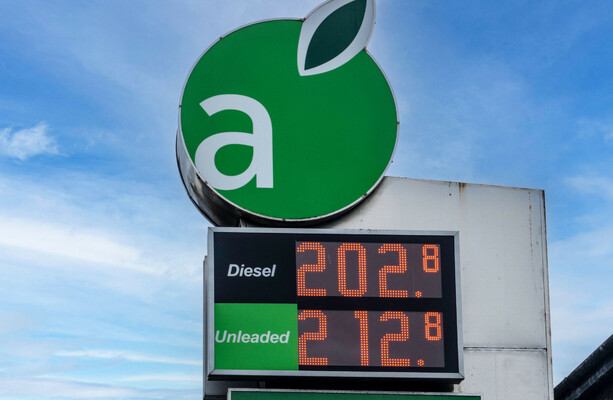
London, UK – Geopolitical tensions in the Middle East are sending ripples through global energy markets, with oil prices climbing steadily as the conflict involving Iran escalates. The recent exchange of strikes between Iran and Israel, following an attack on an Iranian consulate in Damascus earlier this month, has ignited fears of a wider regional war that could severely disrupt oil supplies. This surge in uncertainty is prompting analysts to reassess price forecasts, with some warning of potentially significant increases in the coming weeks and months. Understanding the dynamics at play – and the potential for further escalation – is crucial for businesses and consumers alike.
The immediate driver of the price increase is the heightened risk to oil production and transportation in the region. The Strait of Hormuz, a narrow waterway through which approximately 20% of the world’s oil supply passes, is particularly vulnerable. Any disruption to shipping through this critical chokepoint would have a dramatic impact on global oil flows. Concerns are also focused on oil infrastructure within Iran, Iraq and Saudi Arabia, all potential targets in a broader conflict. Brent crude, the international benchmark, has already surpassed $90 a barrel, a level not seen in several months, and West Texas Intermediate (WTI), the US benchmark, is following suit. The situation is further complicated by existing supply constraints stemming from production cuts by the Organization of the Petroleum Exporting Countries (OPEC) and its allies, a group known as OPEC+.
The Current Landscape: Assessing the Risks
The current conflict stems from an airstrike on the Iranian consulate in Damascus, Syria, on April 1st, which Iran has blamed on Israel. While Israel has not officially confirmed responsibility, the attack resulted in the deaths of several Iranian military officials. Iran responded with a barrage of drones and missiles aimed at Israel on April 13th, most of which were intercepted by Israel and its allies, including the United States and the United Kingdom. The tit-for-tat nature of these attacks raises the specter of further escalation, and the potential for miscalculation is high. The United States has repeatedly urged de-escalation and is working to mediate between the parties, but the situation remains volatile.
Several factors are contributing to the sensitivity of the oil market. Global oil inventories are relatively tight, leaving little room for absorbing a significant supply shock. Demand, while showing some signs of slowing in certain regions, remains robust particularly in Asia. The upcoming peak driving season in the Northern Hemisphere typically leads to increased demand for gasoline and diesel fuel, adding further upward pressure on prices. The International Energy Agency (IEA) is closely monitoring the situation and has warned that This proves prepared to release emergency oil reserves if necessary, but the effectiveness of such a measure would depend on the scale and duration of any supply disruption.
How High Could Prices Go? Expert Analysis
Predicting the future trajectory of oil prices is inherently difficult, especially in the face of geopolitical uncertainty. However, analysts are offering a range of scenarios. A limited escalation, contained within the current framework of retaliatory strikes, might notice prices stabilize around $90-$100 per barrel. However, a more significant escalation – such as direct military conflict between Iran and Israel, or a disruption to oil flows through the Strait of Hormuz – could push prices well above $100 per barrel, potentially reaching $120 or even $150.
Ryan Knutson and Jessica Mendoza, hosts of *The Journal* podcast, recently discussed the complexities of the US relationship with Iran, noting the shifting justifications for potential military action. Their reporting highlights the intelligence challenges facing the Trump administration as it considers its options. Listen to their analysis on Apple Podcasts.
The Wall Street Journal reported on April 13th that the US’s war with Iran had entered its fourth day, with the Trump administration offering several reasons for initiating attacks. The intelligence underpinning these justifications is facing scrutiny.
“The market is currently pricing in a risk premium, reflecting the heightened geopolitical tensions,” explains Dr. Iman Al-Nowais, a senior energy analyst at Stratfor. “The extent to which prices will rise further depends on whether this risk premium expands to incorporate a more substantial disruption to supply. A prolonged conflict, or a direct attack on oil infrastructure, would undoubtedly lead to a significant price spike.”
Impact on the Global Economy
Higher oil prices have far-reaching consequences for the global economy. Increased energy costs translate into higher transportation costs, which in turn drive up the prices of goods and services. This contributes to inflationary pressures, potentially forcing central banks to maintain higher interest rates for longer. For developing countries, which often rely heavily on imported oil, higher prices can exacerbate economic vulnerabilities and lead to social unrest.
The impact will be felt across various sectors. Airlines will likely pass on higher fuel costs to passengers through increased ticket prices. Manufacturing industries, which rely on oil-based products as inputs, will face higher production costs. Consumers will see their disposable income eroded by higher energy bills and the rising prices of everyday goods. The potential for a stagflationary environment – characterized by high inflation and slow economic growth – is a growing concern.
What Happens Next? Key Monitoring Points
The immediate focus is on whether further escalation can be avoided. Diplomatic efforts are underway, led by the United States and other international actors, to de-escalate the situation and prevent a wider conflict. However, the prospects for a swift resolution appear limited. Key monitoring points include:
- Israel’s Response: The extent and nature of Israel’s response to Iran’s recent attacks will be crucial in determining whether the cycle of escalation continues.
- Iran’s Actions: Iran’s willingness to restrain its proxies in the region – such as Hezbollah in Lebanon and Houthi rebels in Yemen – will also be a key factor.
- OPEC+ Decisions: The actions of OPEC+ will be closely watched. The group could decide to increase production to offset any potential supply disruptions, but this would likely require a consensus among its members.
- US Policy: The US presidential election in November could influence the direction of US policy towards Iran and the broader Middle East.
The situation remains highly fluid and unpredictable. Businesses and consumers should prepare for continued volatility in energy markets and the potential for further economic disruption. The next few weeks will be critical in determining whether the current crisis can be contained or whether it will escalate into a broader regional conflict.
The Journal podcast, co-produced by Spotify and The Wall Street Journal, provides daily updates on these developments. Hosted by Ryan Knutson and Jessica Mendoza, the podcast offers in-depth analysis of the forces shaping the global economy. Read more independent news at The Journal.
Next Update: We will continue to monitor the situation closely and provide updates as they become available. The US State Department is scheduled to hold a press briefing on April 18th to discuss the latest developments in the Middle East.
What are your thoughts on the rising oil prices? Share your comments below and let us know how this situation is impacting you. Don’t forget to share this article with your network.
Worth a look