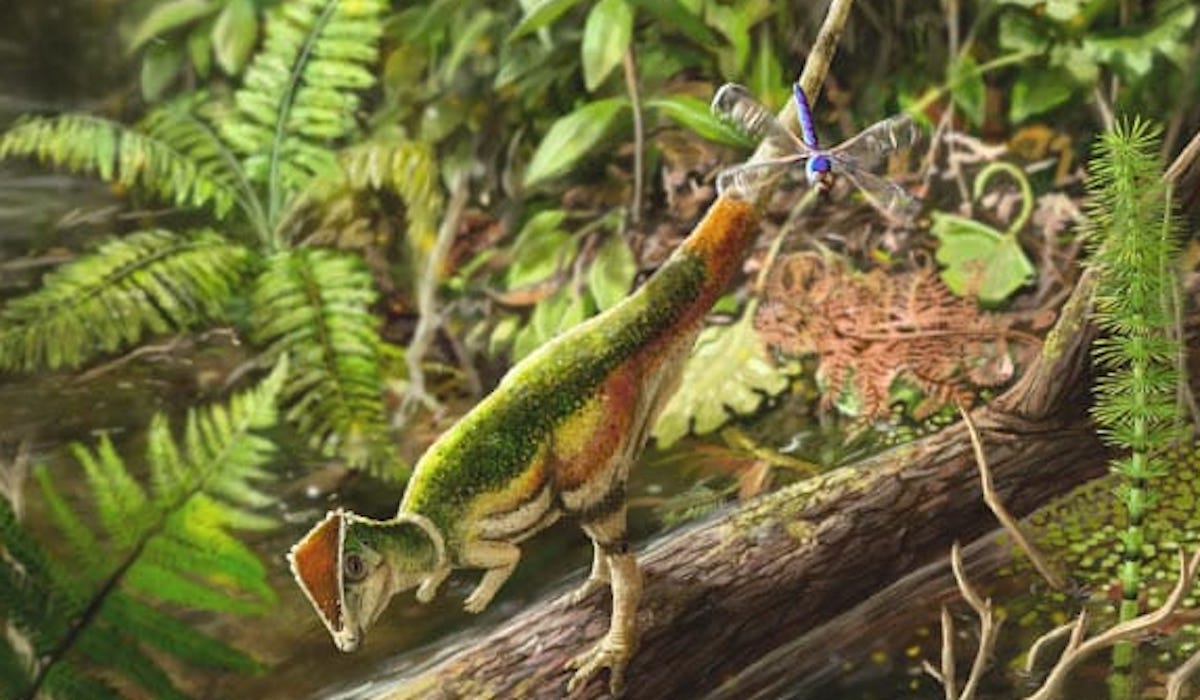
A remarkably complete fossil of a juvenile pachycephalosaur, a dinosaur known for its thick, dome-shaped skull, has been unearthed in Saskatchewan, Canada. The discovery, announced in late February 2026, offers an unprecedented glimpse into the early life stages of these fascinating creatures, a period previously obscured by a scarcity of juvenile remains. This find is particularly significant because pachycephalosaur fossils are often represented only by their robust skullcaps, leaving scientists with limited understanding of their overall anatomy and development.
The fossil, designated CMNFV 22039, dates back approximately 67 million years to the late Maastrichtian age, a period just before the Cretaceous-Paleogene extinction event. Researchers estimate the dinosaur was less than a year old at the time of its death, and only about 90 centimeters (roughly 3 feet) in length. Despite its small size, the skeleton exhibits key characteristics of the Pachycephalosaurinae subfamily, suggesting that the defining features of these “bone-headed” dinosaurs were already well-established early in life. The research, led by paleontologists at Carleton University, was published in February 2026 and is available via DOI: doi.org/10.1080/02724634.2026.2616325.
Pachycephalosaurs were bipedal dinosaurs that roamed Asia and North America during the Late Cretaceous period. Typically ranging in size from two to six meters (6.5 to 20 feet) in length, they are instantly recognizable by their thickened skull roofs, often adorned with domes, spikes, or knobs. These structures have long puzzled paleontologists, with theories ranging from head-butting displays to species recognition and social signaling. The durability of the skull domes is precisely why they are the most commonly found pachycephalosaur remains. the rest of the skeleton is far more fragile and less likely to survive the fossilization process.
Unlocking the Secrets of Juvenile Pachycephalosaurs
The completeness of CMNFV 22039 is what sets it apart. The fossil includes several diagnostic features of Pachycephalosauria, including a distinctive double ridge-and-groove articulation on the neural arches of the dorsal vertebrae, a medial flange on the ilium (hip bone), and a significantly reduced pubis, a bone in the pelvis. These features, combined with histological analysis of the leg bones revealing immature woven bone texture, confirm the specimen’s young age. The absence of cyclical growth rings in the bone further supports the conclusion that the dinosaur was less than a year old when it died.
The discovery challenges previous assumptions about pachycephalosaur development. The presence of adult characteristics in such a young individual suggests that the fundamental body plan of these dinosaurs was largely determined early in life, rather than developing gradually with age. This finding provides valuable insights into the ontogeny – the development of an organism – of pachycephalosaurs, helping scientists understand how these dinosaurs grew and changed throughout their lives.
A Shift in Locomotion: From Speed to Strength
Perhaps one of the most intriguing aspects of the discovery is the evidence suggesting a shift in locomotion as pachycephalosaurs matured. Researchers observed that the juvenile specimen possessed proportionally longer hind limbs compared to its body size than would be expected in an adult. This suggests that young pachycephalosaurs were likely more agile and speed-oriented, potentially relying on quickness to evade predators. As they grew larger and heavier, their body proportions would have shifted towards a more robust build, indicating a change in their mode of movement. This transition likely reflects a change in ecological niche and defensive strategies as the dinosaurs reached adulthood.
Bryan Moore, a paleontologist at Carleton University involved in the research, explained that the find provides a rare opportunity to study the skeletal anatomy of a young pachycephalosaur. “The postcranial record of Pachycephalosauria is poor, particularly for immature forms,” Moore stated. “This specimen helps fill that gap and provides valuable information about the evolution of these fascinating dinosaurs.”
Sphaerotholus: A Widespread and Long-Lived Genus
The discovery also has implications for understanding the distribution and evolutionary history of specific pachycephalosaur genera. The fossil was found in the Frenchman Formation, a geological formation known for its rich dinosaur fossils. The location and age of the find suggest a possible connection to the genus Sphaerotholus, a pachycephalosaurid known from both the United States and Canada. According to a 2026 study, Sphaerotholus existed for a relatively long period, approximately 7-8 million years, and had a widespread distribution across western North America. Sphaerotholus currently includes five recognized species: S. Goodwini, S. Buchholtzae, S. Edmontonensis, S. Lyonsi, and S. Triregnum.
Sphaerotholus buchholtzae, in particular, is a species found in both Montana and Saskatchewan, further supporting the possibility of a connection to the newly discovered juvenile fossil. The researchers acknowledge that definitively assigning the specimen to a specific species is challenging due to the lack of cranial material, but the spatiotemporal context suggests a potential affiliation with S. Buchholtzae.
The Importance of Taphonomy in Paleontological Discoveries
The preservation of this fossil highlights the importance of taphonomy – the study of how organisms decay and become fossilized – in paleontological research. The Frenchman Formation is known for its excellent fossil preservation, which allowed for the recovery of a relatively complete skeleton, even from a young individual. The taphonomic conditions in this area likely favored the preservation of bone, increasing the chances of discovering rare specimens like this juvenile pachycephalosaur.
The discovery underscores the value of continued paleontological exploration in regions like Saskatchewan, which hold the potential to reveal new insights into the lives of dinosaurs and other prehistoric creatures. Further research on CMNFV 22039, including detailed anatomical studies and comparisons with other pachycephalosaur fossils, will undoubtedly shed more light on the evolution and behavior of these remarkable animals.
The research team plans to continue analyzing the fossil and comparing it to other pachycephalosaur specimens to refine their understanding of its phylogenetic relationships. They also hope to uncover additional fossils from the Frenchman Formation that could provide further clues about the life history of these dinosaurs. The ongoing work promises to further illuminate the world of the pachycephalosaurs and their place in the prehistoric ecosystem.
Key Takeaways:
- A remarkably complete fossil of a juvenile pachycephalosaur has been discovered in Saskatchewan, Canada.
- The fossil, designated CMNFV 22039, dates back approximately 67 million years and represents a dinosaur less than a year old.
- The discovery suggests that the defining features of pachycephalosaurs were established early in life.
- The fossil indicates a potential shift in locomotion from speed and agility in juveniles to a more robust build in adults.
- The find may be linked to the genus Sphaerotholus, a pachycephalosaurid known from both the United States and Canada.
The ongoing analysis of CMNFV 22039 and future paleontological work in the Frenchman Formation are expected to yield further insights into the lives of these fascinating dinosaurs. Stay tuned for updates as researchers continue to unravel the mysteries of the pachycephalosaurs. We encourage readers to share their thoughts and questions about this exciting discovery in the comments below.
Keep reading