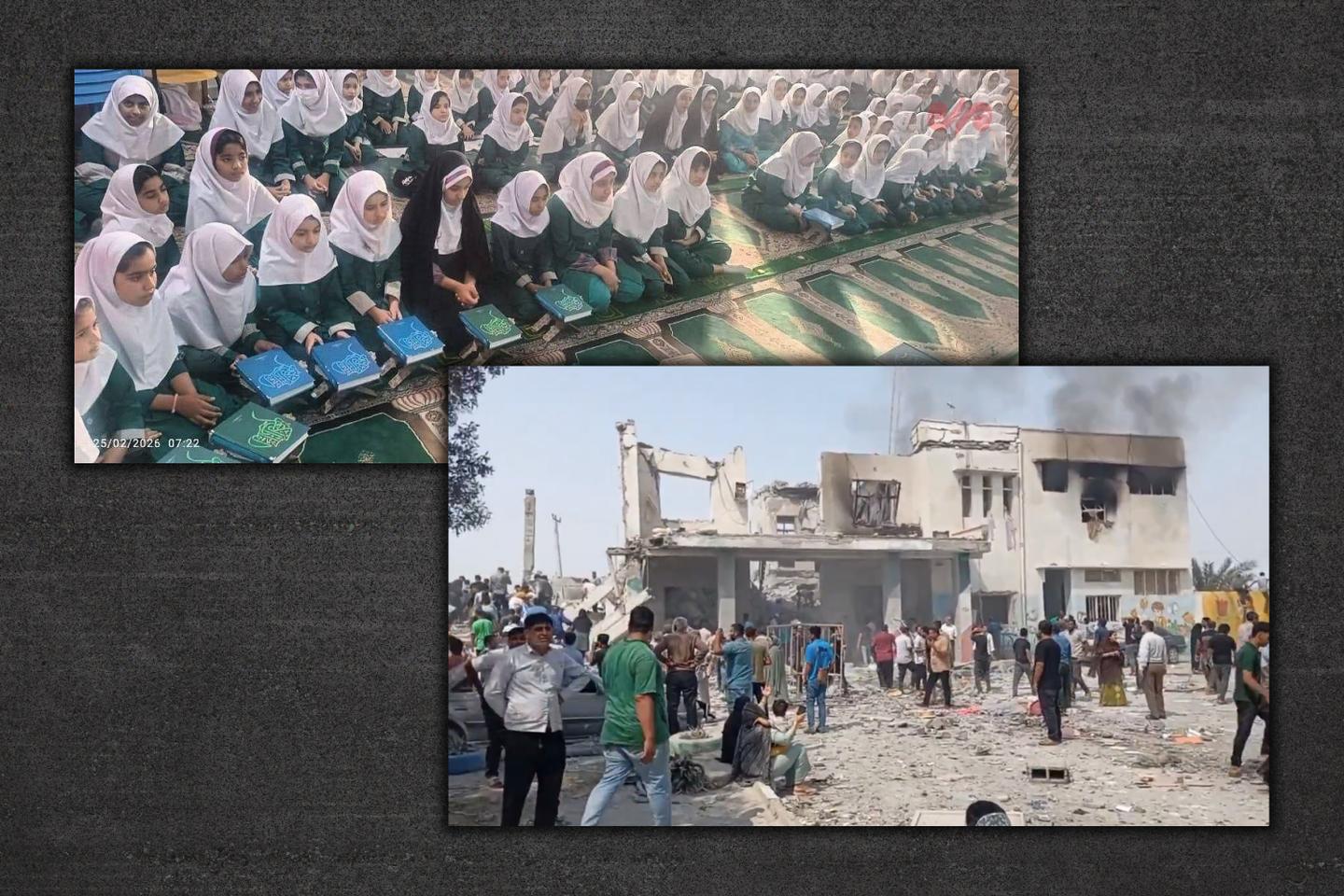
Minab, Iran – The aftermath of a recent strike in the southern Iranian city of Minab has brought renewed scrutiny to the escalating conflict between Iran and its adversaries, the United States and Israel. Reports indicate a significant loss of civilian life, particularly among schoolchildren, following an attack on a girls’ elementary school on February 28, 2026. The incident has sparked widespread condemnation and fueled anxieties about the protection of non-combatants in the region, as tensions continue to rise following a period of intensified military exchanges.
Initial reports from Iranian state media varied, with casualty figures ranging up to 108 deaths. However, a mass funeral held in Minab on Tuesday, March 3rd, suggests the toll may be even higher. According to reports from Facebook’s AlAraby.en, thousands of Iranians gathered for the funeral of 165 children and teachers killed in the strike. The discrepancy in numbers highlights the challenges in obtaining accurate information amidst the ongoing conflict and limited access to the affected area. The attack occurred shortly after a large-scale Israeli-American bombing campaign across Iran, adding to the complexity of verifying details.
The Attack on the Shajareh-Tayebeh School
Evidence gathered by Le Monde, including authenticated photos and videos, confirms that the targeted building was indeed a school – the Shajareh-Tayebeh elementary school in Minab. Prior to the attack, images circulating online depicted classrooms decorated with children’s artwork, pink and green walls, and scenes of students celebrating the birthday of the twelfth Imam, a significant event in Shia Islam. A video, reportedly from before the strike, shows young girls preparing food and drinks on a green carpet, a scene that tragically contrasts with the devastation that followed.
Following the February 28th bombing, videos emerged showing the ruins of the school, with bodies of children being recovered from the rubble. Le Monde reports that approximately two-thirds of the building, including the prayer room and several classrooms, were completely destroyed. The timing of the attack, occurring just hours after the start of the broader Israeli-American strikes, raises questions about the intended target and the extent of precautions taken to avoid civilian casualties.
Conflicting Accounts and Limited Transparency
The Iranian government has attributed the strike to the United States and Israel, but details surrounding the incident remain shrouded in uncertainty. Despite the high number of casualties, footage of victims has been scarce, even as photographs show a large crowd gathered at the targeted building. This lack of transparency has fueled speculation and criticism, particularly regarding the potential targeting of civilian infrastructure.
Iranian Foreign Minister Abbas Araghchi, in an interview with NBC News, stated that “almost all senior Iranian officials are safe and sound and alive,” despite rumors of high-level casualties. He acknowledged the possibility of losing “one or two commanders,” but downplayed the significance of such losses. This statement, however, does little to address the concerns surrounding the deaths of schoolchildren and teachers. The lack of independent verification and the ongoing information war make it demanding to ascertain the full extent of the damage and the identities of those killed.
Escalating Regional Tensions
The strike in Minab is just one element of a rapidly escalating conflict. According to a live update from PBS News, Iran and Iranian-backed militias have been launching missiles at Israel and Arab states. Reports indicate that the U.S. Embassy compound in Kuwait was also apparently hit by these missiles. This exchange of fire underscores the widening scope of the conflict and the potential for further escalation. The situation is further complicated by the ongoing geopolitical dynamics in the Middle East and the involvement of multiple actors.
The Broader Context of U.S.-Israel-Iran Relations
The current conflict represents a significant intensification of long-standing tensions between Iran and the United States and Israel. These tensions stem from a variety of factors, including Iran’s nuclear program, its regional influence, and its support for militant groups. The United States and Israel have consistently expressed concerns about Iran’s destabilizing activities and have imposed sanctions and engaged in military actions to counter them. Iran, in turn, views the U.S. And Israel as threats to its security and has vowed to retaliate against any perceived aggression. The recent exchange of attacks is likely to further entrench these positions and make a diplomatic resolution more difficult.
International Response and Calls for Investigation
The attack on the school in Minab has drawn condemnation from international organizations and governments. Calls for an independent investigation into the incident have grown louder, with many demanding accountability for those responsible. Human rights groups have emphasized the importance of protecting civilians in armed conflict and have urged all parties to adhere to international humanitarian law. The United Nations has also expressed concern about the rising number of civilian casualties and has called for de-escalation.
The incident raises serious questions about the proportionality of the response and the measures taken to minimize civilian harm. International law requires that military operations be conducted in a manner that distinguishes between military objectives and civilian objects and that precautions are taken to avoid or minimize incidental loss of civilian life. Whether these requirements were met in the case of the Minab school remains to be determined by a thorough and impartial investigation.
As of March 4, 2026, the situation remains fluid and unpredictable. Further developments are expected in the coming days and weeks, and the international community will be closely monitoring the situation. The focus remains on preventing further escalation and protecting civilians from the devastating consequences of the conflict. The need for a diplomatic solution to address the underlying causes of the conflict has never been more urgent.
The next key development to watch will be the report expected from the United Nations Human Rights Council regarding the Minab strike, scheduled for release on March 11, 2026. We will continue to provide updates as they become available. Your thoughts and perspectives on this critical situation are welcome in the comments section below. Please share this article to help raise awareness of the ongoing crisis.
Related reading