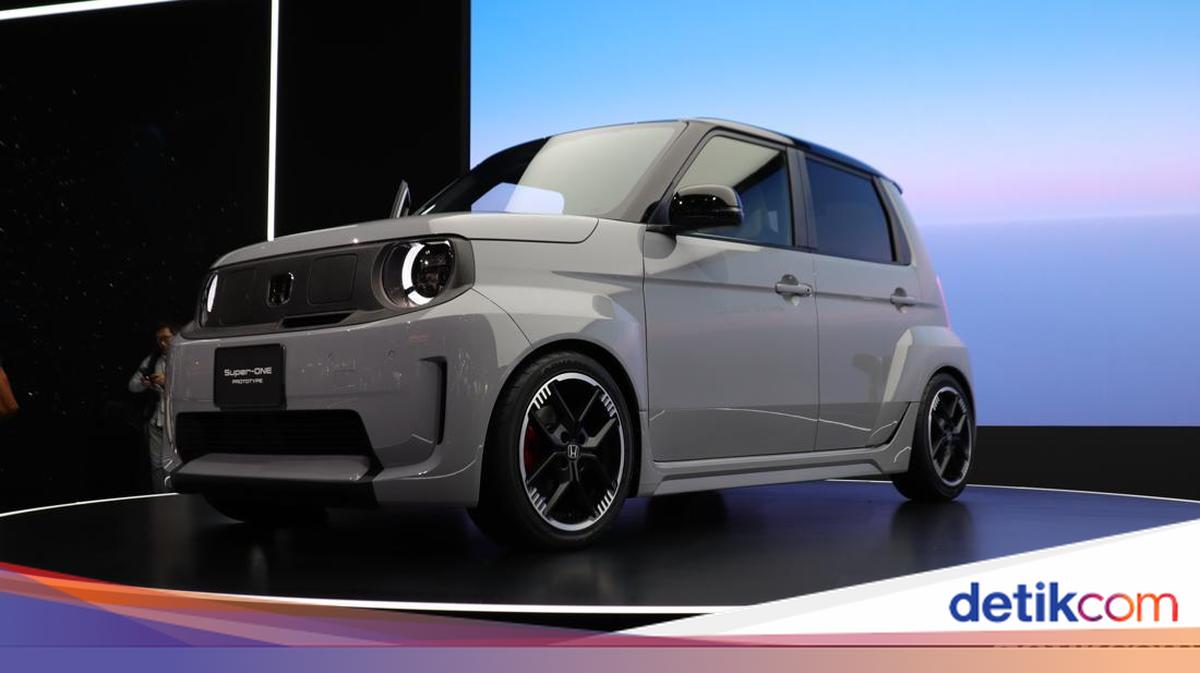
Jakarta – Honda is poised to enter the Indonesian electric vehicle (EV) market with the Super One, a compact electric hatchback that has already undergone testing on Indonesian roads. While the official name remains under wraps, speculation is mounting that the vehicle could be marketed as the ‘Brio EV’ due to its similar dimensions to the popular Honda Brio. The potential introduction of the Super One, or Brio EV, signals Honda’s growing commitment to electrification in a rapidly evolving automotive landscape.
The Honda Super One, first launched in Singapore in January 2026, has captured attention for its potential to offer an affordable and practical EV option for urban drivers. Its dimensions – measuring 3.589 mm in length, approximately 200mm shorter than the Honda Brio – have fueled comparisons between the two models. This similarity has led to considerable discussion regarding a potential branding strategy for the Indonesian market. The vehicle was registered with the DKI Jakarta Revenue Office in 2026, with a Vehicle Sale Value (NJKB) of Rp 257 million (approximately $16,200 USD as of March 5, 2026), marking the first time Honda has registered an electric vehicle in Indonesia. Otodriver.com reported on this registration, highlighting the growing momentum behind Honda’s EV plans.
Uncertainty Surrounds the Final Name
Despite the strong association with the Brio name, Honda Prospect Motor (HPM) remains tight-lipped about the final branding for the Indonesian market. Yusak Billy, Sales & Marketing and After Sales Director at HPM, acknowledged the speculation but stopped short of confirming the ‘Brio EV’ moniker. “I can’t mention the final name yet. If you’re talking about ‘Brio EV,’ that’s your speculation,” Billy stated on March 3, 2026, according to Mashable Indonesia. Billy emphasized that marketing names can vary across different countries, reflecting the company’s strategic approach to branding in each market.
This cautious approach suggests Honda is carefully considering its options to maximize the impact of its EV launch in Indonesia. The company is likely weighing factors such as brand recognition, market positioning, and consumer perception when making its final decision. The Indonesian automotive market is becoming increasingly competitive, with established players and new entrants vying for market share in the burgeoning EV segment. A well-chosen name will be crucial for differentiating the Super One and attracting potential buyers.
Technical Specifications and Performance
While the final name remains a mystery, details regarding the Honda Super One’s technical specifications are beginning to emerge. The vehicle is believed to be a widebody version of the Honda N-One e, featuring a battery capacity of 29.6 kWh. This battery powers an electric motor producing 95 PS (70 kW) and 162 Nm of torque, delivered to the front wheels. According to Otodriver, the Super One is estimated to achieve a range of 295 km based on the Worldwide Harmonized Light Vehicles Test Procedure (WLTP) standard.
Quick charging capabilities are also a key feature of the Super One, with the ability to charge from 20% to 80% in approximately 30 minutes. This rapid charging time addresses a major concern for potential EV buyers – range anxiety – and enhances the vehicle’s practicality for daily use. The Super One also incorporates a new “boost mode” designed to optimize power delivery from the electric motor, enhancing the driving experience. This focus on driving dynamics underscores Honda’s commitment to delivering a fun and engaging EV experience.
Market Entry and Infrastructure Considerations
Honda’s decision to register the Super One with the DKI Jakarta Revenue Office and conduct road tests in Indonesia signals a concrete plan for market entry. Yusak Billy confirmed that the company is actively studying market readiness and infrastructure requirements before officially launching the vehicle. Klikwartaku.com reported that Billy stated, “If the car has been tested on the road in Indonesia, then we certainly have a concrete plan.”
This careful approach reflects the challenges of introducing EVs to a developing market like Indonesia. The availability of charging infrastructure, consumer awareness, and government incentives are all critical factors that will influence the success of the Super One. Honda is likely working closely with local partners and government agencies to address these challenges and create a supportive ecosystem for EV adoption. The NJKB value of Rp 257 million, while not the official retail price, provides an initial indication of the vehicle’s potential price point in the Indonesian market. Though, it’s important to note that the final price will depend on factors such as import duties, taxes, and optional features.
Honda Sensing and Safety Features
Beyond its electric powertrain, the Honda Super One is expected to come equipped with a comprehensive suite of safety features, including Honda Sensing. This advanced driver-assistance system incorporates technologies such as Traffic Jam Assist, Post-Collision Braking System, emergency braking, and traffic monitoring. These features are designed to enhance driver safety and provide peace of mind on the road. The inclusion of Honda Sensing demonstrates Honda’s commitment to providing a safe and technologically advanced EV option for Indonesian consumers.
What to Expect Next
While a firm launch date remains undisclosed, Honda’s preparations suggest that the Super One, or potentially the Brio EV, will arrive in Indonesia later this year. The company is continuing to evaluate market conditions and refine its strategy to ensure a successful launch. Potential buyers and industry observers will be closely watching for further announcements regarding pricing, specifications, and availability. The introduction of the Super One is expected to intensify competition in the Indonesian EV market, offering consumers a wider range of choices and accelerating the transition to electric mobility.
The next key development will likely be an official announcement from Honda regarding the vehicle’s final name and launch timeline. Industry analysts predict that Honda will leverage its established brand reputation and extensive dealer network to gain a foothold in the Indonesian EV market. The success of the Super One will depend on its ability to offer a compelling combination of affordability, performance, and practicality, catering to the specific needs of Indonesian drivers.
What are your thoughts on the potential arrival of the Honda Super One (or Brio EV) in Indonesia? Share your comments below and let us understand what features are most important to you in an electric vehicle.
Worth a look