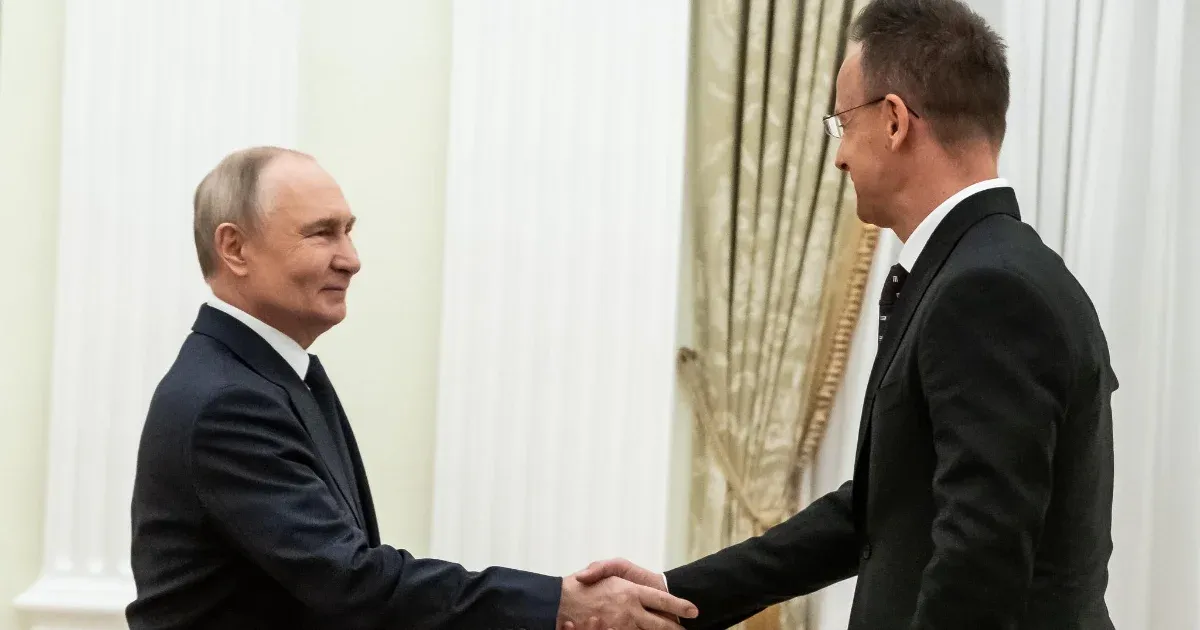
Moscow and Budapest have confirmed the release of two Ukrainian-Hungarian dual citizens held in Russian captivity, a development announced during a meeting between Russian President Vladimir Putin and Hungarian Foreign Minister Péter Szijjártó on Wednesday. The move, framed by Moscow as a gesture of goodwill at the request of Hungarian Prime Minister Viktor Orbán, comes amid ongoing diplomatic efforts to secure the release of individuals caught in the conflict. This exchange highlights the complex geopolitical dynamics at play, as Hungary continues to navigate a delicate balance between maintaining ties with Russia and its commitments to Ukraine and its allies.
The announcement, reported by both Russian and Hungarian state media, detailed that the two individuals were allegedly conscripted into the Ukrainian armed forces. Putin stated they would be transported back to Budapest on the same aircraft that brought Szijjártó to Moscow. The release of these dual citizens represents a rare instance of cooperation between Moscow and a European Union member state, particularly given the widespread condemnation of Russia’s actions in Ukraine. The situation underscores the unique position of Hungary within the EU, often diverging from the collective stance on Russia and prioritizing its own national interests, particularly concerning energy security and the welfare of its citizens living in neighboring Ukraine.
Details of the Prisoner Exchange and Allegations of Forced Conscription
According to the Kremlin, the two released individuals were subjected to “forced conscription” into the Ukrainian military. This claim, while echoed by Szijjártó, has not been independently verified. The Hungarian Foreign Minister had previously voiced concerns about the alleged conscription of Hungarian citizens residing in Ukraine, particularly in the Transcarpathian region, into the Ukrainian armed forces. He stated that many have died or gone missing and some have been taken prisoner by Russian forces. Szijjártó expressed hope that these two individuals would be among those returning to Hungary. A video posted on Szijjártó’s official Facebook page shows him meeting the two released prisoners on the plane returning to Budapest.
The issue of alleged forced conscription has been a sensitive topic for the Hungarian government, which represents the interests of a significant Hungarian minority in Ukraine, particularly in Transcarpathia. The Hungarian government has repeatedly raised concerns with Ukrainian authorities regarding the treatment of Hungarian citizens within Ukraine’s military. The Ukrainian government has not directly addressed the specific allegations of forced conscription, but has maintained that all conscription practices adhere to Ukrainian law. The situation is further complicated by the ongoing conflict and the challenges of verifying information from the front lines.
Energy Security and the Druzhba Pipeline
Beyond the prisoner exchange, Szijjártó’s visit to Moscow also focused on securing continued energy supplies from Russia. He reportedly received assurances from Putin that Russia would maintain its current levels of oil and natural gas deliveries to Hungary, despite the international energy crisis exacerbated by the conflict in Ukraine and related sanctions. This is a critical issue for Hungary, which relies heavily on Russian energy imports. According to data from the International Energy Agency (IEA), in 2022, Hungary imported approximately 85% of its natural gas and 65% of its crude oil from Russia. IEA data shows this reliance has remained significant even after the onset of the war.
Szijjártó also discussed the Druzhba oil pipeline, which transports Russian oil to Hungary. He stated that Ukraine has been blocking the pipeline for weeks, citing “political reasons.” However, he did not mention that the pipeline was damaged in July 2022 due to a Russian attack, which led to the suspension of oil flows. The disruption to the Druzhba pipeline has raised concerns about Hungary’s energy security, prompting the government to seek alternative supply routes and explore options for diversifying its energy sources. The Hungarian government has consistently argued that maintaining access to Russian energy is essential for protecting its economy and ensuring affordable energy prices for its citizens.
Controversial Pro-Russian Messaging and International Law Concerns
The Hungarian government’s engagement with Russia has drawn criticism from some quarters, particularly regarding its messaging surrounding the conflict in Ukraine. State-sponsored media in Hungary, such as MTVA, has broadcast programs featuring Russian prisoners of war expressing gratitude to their captors. This practice has raised concerns about potential violations of international law. According to international legal expert Tamás Hoffmann, a university lecturer at the Budapest Corvinus University, the dissemination of such videos could be interpreted as a breach of the Geneva Conventions. Hoffmann explained to Telex that the Geneva Conventions regulate the treatment of prisoners of war and prohibit actions that could compromise their dignity or rights, including the creation and broadcast of such videos.
The Geneva Conventions, established in 1949, outline the international legal standards for humanitarian treatment in war. These conventions aim to protect individuals who are not participating in hostilities, including prisoners of war, and to ensure their humane treatment. The alleged broadcasting of videos featuring prisoners of war expressing gratitude to their captors raises questions about whether these individuals are acting under duress or coercion, and whether their rights are being respected. The Hungarian government has defended its coverage, arguing that it is simply presenting different perspectives on the conflict. However, critics argue that such coverage serves to legitimize Russian actions and undermine international efforts to hold Russia accountable for its violations of international law.
Hungary’s Position in the Broader Conflict
Hungary’s position on the Russia-Ukraine conflict remains a point of contention within the European Union. While Budapest has condemned Russia’s invasion of Ukraine, it has consistently resisted calls for tougher sanctions against Moscow, arguing that such measures would harm Hungary’s own economic interests. Hungary has also refused to allow the transit of weapons through its territory to Ukraine, citing concerns about escalating the conflict. This stance has led to friction with other EU member states, who accuse Hungary of undermining the bloc’s unity and hindering efforts to support Ukraine.
Despite these disagreements, Hungary has provided humanitarian aid to Ukraine and has accepted Ukrainian refugees fleeing the conflict. The Hungarian government has also supported EU efforts to provide financial assistance to Ukraine. However, its continued engagement with Russia and its reluctance to fully align with the EU’s policy on sanctions have raised questions about its long-term commitment to supporting Ukraine. The release of the two Ukrainian-Hungarian dual citizens, while a positive development, is unlikely to significantly alter Hungary’s overall approach to the conflict.
The situation remains fluid, and further developments are expected in the coming weeks. The Hungarian government is likely to continue to prioritize its own national interests, balancing its relationships with both Russia and Ukraine. The international community will be closely watching Hungary’s actions, as its position could have significant implications for the future of the conflict and the broader geopolitical landscape.
Key Takeaways:
- Russia has released two Ukrainian-Hungarian dual citizens following a request from Hungarian Prime Minister Viktor Orbán.
- The release occurred during a meeting between Russian President Vladimir Putin and Hungarian Foreign Minister Péter Szijjártó in Moscow.
- Hungary secured assurances from Russia regarding continued energy supplies, despite the ongoing international energy crisis.
- Concerns remain regarding pro-Russian messaging in Hungarian state media and potential violations of international law.
The next step will be to monitor Hungary’s continued engagement with Russia and its adherence to EU policies regarding sanctions and support for Ukraine. Readers are encouraged to share their thoughts and perspectives on this developing story in the comments below.
Worth a look