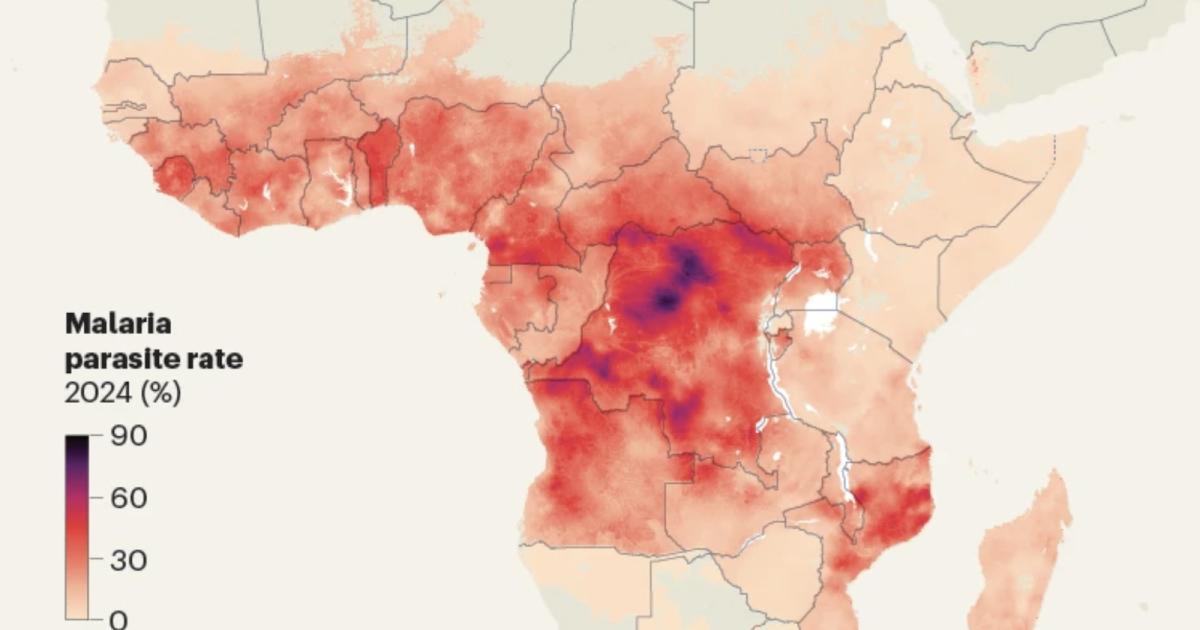
The fight against malaria, a disease that has plagued humanity for centuries, is facing a new and formidable threat: climate change. Although significant progress has been made in reducing malaria cases and deaths in recent decades, these gains are now increasingly jeopardized by shifting weather patterns, rising temperatures, and altered rainfall, creating new challenges for both prevention and treatment. The complex interplay between environmental factors and the transmission of this mosquito-borne illness demands a renewed focus on adaptation strategies and a deeper understanding of the ecological dynamics at play.
Malaria, caused by parasites of the Plasmodium genus, is transmitted to humans through the bites of infected female Anopheles mosquitoes. According to the World Health Organization (WHO), in 2022, there were an estimated 249 million malaria cases and 625,000 deaths globally, with the vast majority occurring in sub-Saharan Africa. The WHO highlights that children under five years of age are particularly vulnerable, accounting for over 80% of malaria deaths. The success of malaria control programs has historically relied on interventions such as insecticide-treated bed nets, indoor residual spraying, and artemisinin-based combination therapies (ACTs).
Climate Change and Malaria Transmission
However, the effectiveness of these interventions is being undermined by the changing climate. Rising temperatures are expanding the geographic range of Anopheles mosquitoes, allowing them to survive and reproduce in areas previously unsuitable for transmission. This is particularly concerning in highland regions of Africa, where malaria was once rare or absent. Warmer temperatures also shorten the parasite’s development cycle within the mosquito, increasing the rate of transmission. Changes in rainfall patterns, including more frequent and intense floods and droughts, further exacerbate the problem.
Increased rainfall and flooding create more breeding sites for mosquitoes, leading to larger populations and a higher risk of outbreaks. Conversely, droughts can concentrate mosquito populations around limited water sources, increasing human-mosquito contact. These shifts in vector distribution and abundance are making it increasingly difficult to predict and control malaria transmission. The impact isn’t uniform; some regions may experience increased transmission, while others may see a decrease, adding to the complexity of the challenge. Researchers are increasingly focused on understanding these regional variations and developing tailored interventions.
Ecological Considerations: Beyond Temperature and Rainfall
The relationship between climate change and malaria is not simply a matter of temperature and rainfall. Ecological factors, such as land apply change, deforestation, and agricultural practices, also play a crucial role. These factors can alter mosquito breeding habitats, affect vector-human interactions, and influence the overall resilience of ecosystems to climate change. As two researchers in environmental sciences write in Nature, the distinction is key given that it highlights the need for a holistic approach to malaria control that considers the broader environmental context.
Deforestation, for example, can lead to increased sunlight penetration and warmer temperatures in forest fringes, creating favorable conditions for mosquito breeding. Agricultural practices, such as irrigation, can also create artificial breeding sites. Land use change can also disrupt natural predator-prey relationships, potentially leading to an increase in mosquito populations. Understanding these complex ecological interactions is essential for developing sustainable and effective malaria control strategies.
The Role of Biodiversity and Ecosystem Resilience
Maintaining biodiversity and ecosystem resilience is increasingly recognized as a key component of malaria control. Healthy ecosystems provide a range of natural services that can help to regulate mosquito populations and reduce transmission risk. For example, wetlands can provide habitat for mosquito predators, such as fish and dragonflies. Forests can provide shade and regulate temperature, creating less favorable conditions for mosquito breeding.
Protecting and restoring these ecosystems can help to enhance their natural regulatory functions and reduce the burden of malaria. This requires a shift away from purely biomedical interventions towards a more integrated approach that incorporates ecological principles. The concept of “ecological solidarity,” as explored in research on public action and science, emphasizes the interconnectedness of human and environmental health and the need for collaborative efforts to address complex challenges like malaria. Studies suggest that a more holistic approach, integrating ecological considerations with traditional public health measures, is crucial for long-term success.
Challenges in Adaptation and Mitigation
Adapting to the impacts of climate change on malaria transmission presents significant challenges. Many of the countries most affected by malaria are also among the most vulnerable to climate change and have limited resources to invest in adaptation measures. Strengthening health systems, improving surveillance and early warning systems, and developing climate-resilient interventions are all essential steps, but require substantial financial and technical support.
mitigating climate change itself is crucial for reducing the long-term risk of malaria. Reducing greenhouse gas emissions and transitioning to a low-carbon economy are essential for stabilizing the climate and preventing further increases in temperature and changes in rainfall patterns. International cooperation and a commitment to sustainable development are vital for achieving these goals. The Paris Agreement, adopted in 2015, represents a landmark effort to address climate change, but its implementation remains a major challenge.
Innovations in Malaria Control
Despite the challenges, there is also reason for optimism. New innovations in malaria control are emerging, offering potential solutions to overcome the obstacles posed by climate change. These include the development of new insecticides, genetically modified mosquitoes, and vaccines. The RTS,S/AS01 (Mosquirix) malaria vaccine, developed by GSK, received WHO approval in 2021 and is being rolled out in several African countries. In October 2023, the WHO also recommended R21/Matrix-M, a second malaria vaccine, offering a potential boost to vaccination efforts. However, widespread vaccine deployment faces logistical and financial hurdles.
Other promising approaches include the use of spatial modeling and remote sensing to predict malaria outbreaks and target interventions more effectively. These technologies can help to identify areas at high risk of transmission and allocate resources accordingly. The development of new diagnostic tools, such as rapid diagnostic tests, is also improving the ability to detect and treat malaria cases promptly. Continued investment in research and development is essential for accelerating the pace of innovation and ensuring that new tools are available to those who need them most.
The ongoing “écologisation” – or greening – of agriculture and food systems in France and elsewhere, as discussed in OpenEdition Journals, highlights the broader need for integrated approaches to environmental and public health. Sustainable agricultural practices can reduce mosquito breeding sites and promote biodiversity, contributing to malaria control efforts.
Looking ahead, the fight against malaria will require a concerted and coordinated effort from governments, researchers, healthcare providers, and communities. Addressing the impacts of climate change on malaria transmission will necessitate a shift towards more sustainable and resilient approaches that prioritize ecological integrity and human well-being. The next key checkpoint will be the continued rollout and evaluation of the new malaria vaccines, with initial results expected in late 2026.
What are your thoughts on the challenges and opportunities in the fight against malaria in a changing climate? Share your comments below, and please share this article with your network to raise awareness of this critical issue.
Worth a look