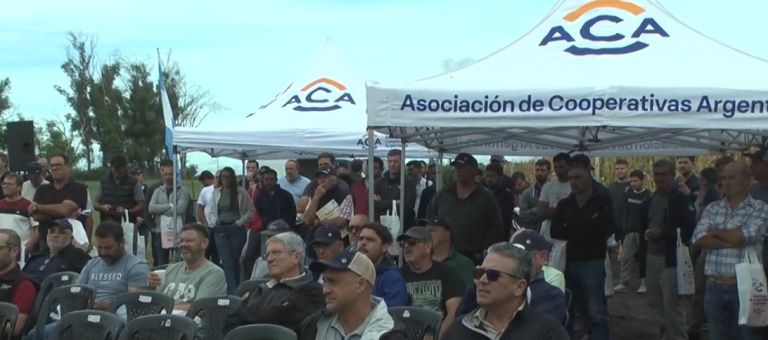
Buenos Aires, Argentina – In a significant display of collaboration and knowledge-sharing, the Asociación de Cooperativas Argentinas (ACA) recently hosted a field day focused on maize production. The event, designed to showcase advancements in agricultural technology and best practices, drew a substantial number of producers eager to learn about optimizing yields and improving efficiency. This gathering underscores the ongoing efforts to bolster Argentina’s agricultural sector, particularly in the face of evolving environmental conditions and market demands.
Argentina is a major global player in maize production, and events like this are crucial for maintaining its competitive edge. The ACA, a cooperative association representing agricultural producers, plays a vital role in supporting its members through research, development, and the dissemination of innovative techniques. The field day provided a platform for producers to directly observe the results of different agronomic practices, including varying seeding densities, fertilization strategies, and hybrid selections. This hands-on approach allows for a more nuanced understanding of how these factors impact overall performance.
Advancing Maize Production Through Collaborative Research
The core of the ACA field day centered around comparative trials designed to analyze maize yields under different management conditions. Attendees were able to examine plots demonstrating what organizers termed a “premium” production experience – an intensive approach to cultivation aimed at maximizing output. Fiorella Daffara, a key participant in the event, highlighted the value of allowing producers to directly compare results and observe the practical application of modern techniques. This direct observation is a powerful tool for adoption, as it allows producers to assess the feasibility and potential benefits within their own operational contexts.
A key focus of the discussions revolved around soil fertility and its relationship to seeding speed and nitrogen application. Luis Ventimiglia, an engineer specializing in crop development, explained the importance of analyzing how crop performance evolves based on the management strategies employed, and how to improve nutrient use efficiency. Optimizing nitrogen application is particularly critical, as it directly impacts yield potential while also presenting environmental considerations related to runoff and greenhouse gas emissions. ACA emphasizes a commitment to sustainable practices, and this focus on efficient nutrient management reflects that dedication.
The Role of Technology and Innovation in Maize Yields
Ventimiglia also emphasized the remarkable progress made in maize yields over the years, attributing much of this improvement to the integration of technology and knowledge. Maize, as one of the world’s most significant cereal crops, has benefited significantly from advancements in plant breeding, genetic modification, and precision agriculture. These innovations have allowed producers to increase yields, improve disease resistance, and enhance overall crop quality. The ACA field day served as a showcase for these advancements, demonstrating how producers can leverage technology to optimize their operations.
The event also featured contributions from Alan Meroni, who participated in technical discussions aimed at fostering the exchange of experiences and reinforcing the connection between technical experts and producers. This collaborative environment is essential for driving innovation and ensuring that research findings are translated into practical applications on the farm. The ability to share knowledge and learn from peers is a valuable asset for producers, particularly in a rapidly evolving agricultural landscape.
Addressing Challenges and Optimizing Late-Season Maize
The timing of the field day and the anticipated harvest are occurring amidst a broader context of challenges and opportunities for Argentine maize producers. According to a report from La Nación, published November 28, 2024, the prospects for maize planting in Argentina are consolidating, aided by the absence of the Dalbulus maidis (chicharrita) pest in some regions and its low presence in others. Here’s a significant positive development, as the chicharrita can cause substantial yield losses.
The report further highlights the potential for increased late-season maize planting. While early-season maize typically offers the highest yield potential, late-season maize can be a viable alternative, particularly when pest pressures are low. Agustín Sosa, an agronomist and ACA’s Seed Manager, noted that the reduced presence of the chicharrita could encourage increased late-season planting. Planting during a period of lower atmospheric demand can contribute to a stable yield, even if it doesn’t reach the peak potential of early-season maize.
The ACA emphasizes that achieving high productivity with late-season maize requires careful management, with a particular focus on hybrid selection and nutrient application. Choosing the right hybrid for the specific growing conditions and ensuring adequate nutrient availability are crucial for maximizing yield potential. This approach aligns with the broader trend towards precision agriculture, where inputs are tailored to the specific needs of the crop and the field.
Looking Ahead: Sustaining Maize Production in Argentina
Despite some challenges related to planting dates, organizers expressed optimism about the upcoming harvest, anticipating yields within normal parameters. This positive outlook is supported by the favorable pest conditions and the ongoing efforts to improve agronomic practices. The ACA field day served as a testament to the commitment of Argentine producers and researchers to continually enhance maize production.
The success of the event underscores the importance of collaboration and knowledge-sharing in addressing the challenges facing the agricultural sector. By bringing together producers, researchers, and technical experts, the ACA is fostering an environment of innovation and continuous improvement. This collaborative approach is essential for ensuring the long-term sustainability and competitiveness of Argentine maize production.
As the agricultural landscape continues to evolve, driven by factors such as climate change, technological advancements, and changing market demands, events like the ACA field day will become increasingly important. They provide a vital platform for producers to stay informed, adapt to new challenges, and capitalize on emerging opportunities. The future of Argentine maize production depends on a continued commitment to research, innovation, and collaboration.
The next key development to watch will be the release of official yield estimates for the 2025-2026 maize harvest by the Ministry of Agriculture, Livestock and Fisheries of Argentina. This data will provide a comprehensive assessment of the season’s performance and inform future planning and investment decisions. We encourage readers to share their thoughts and experiences on maize production in the comments below.
Worth a look