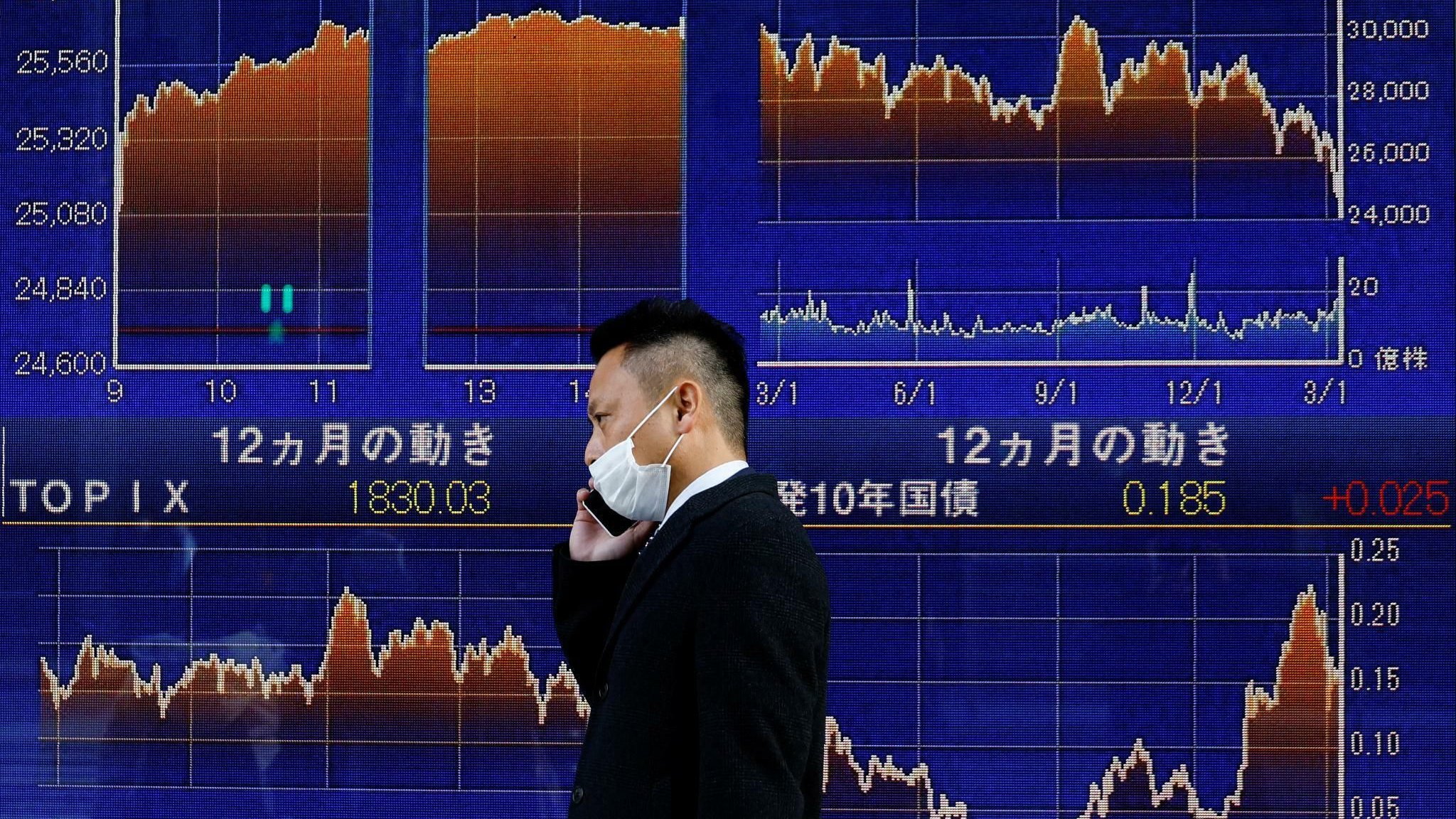
Tokyo, Japan – Asian stock markets are showing signs of stabilization Friday, though concerns surrounding escalating tensions in the Middle East continue to exert pressure, particularly on energy prices. Japan’s Nikkei 225 is currently on track for its largest weekly decline in nearly a year, reflecting investor anxieties over the potential economic fallout from the conflict. The benchmark index has fallen almost 6% this week, as investors shed riskier assets amid heightened geopolitical uncertainty.
The primary focus for investors in Japan remains the trajectory of energy prices. According to equity market analyst Shota Sando of Tokai Tokyo Intelligence Laboratory, “The biggest worry for the markets is the rise in crude oil prices.” Sando added that if it becomes clear oil prices are unlikely to reach the frequently cited $100 per barrel threshold, it “would likely bring a sense of relief and help to stabilize sentiment.”
Nikkei Faces Steepest Weekly Drop in 11 Months
As of 0219 GMT on Friday, March 6, 2026, the Nikkei Index was flat, though it had experienced a drop of as much as 1.4% earlier in the morning. The broader Topix index held steady at 3702.7. This week’s anticipated decline of nearly 6% marks the Nikkei’s steepest weekly percentage drop since April 4, 2025. The energy sector has been particularly hard hit, with the energy explorers index down by almost 3%. Inpex shares have fallen by 3%, while Japan Petroleum Exploration has lost 2.6% of its value.
The volatility comes as the U.S. Treasury Department is reportedly preparing to announce measures aimed at combating rising energy prices in the wake of the conflict with Iran. These measures may include potential interventions in the oil-futures market, though details remain forthcoming. World Energy News reports that the situation is being closely monitored by market participants.
Broader Market Trends and Sector Performance
Beyond energy, other sectors are also experiencing turbulence. Fujikura, a Japanese optical fiber and cable producer, saw a 6.6% decline in its share price due to selling pressure on U.S. Optical fiber stocks linked to AI data centers. This downturn weighed on Japan’s nonferrous-metals sector. Casio Computer also experienced a significant drop, falling 5.8% following an announcement that it will be removed from the Nikkei gauge in April.
But, not all sectors are facing headwinds. Software-related shares have risen in line with U.S. Market trends. Shift and Baycurrent both gained 6.6% overnight. Despite the overall negative trend, the Nikkei had 101 gainers and 122 losers, indicating some pockets of resilience within the market.
Impact of Middle East Conflict on Asian Markets
The concerns extend beyond Japan, impacting Asian markets more broadly. As Shota Sando noted in a report cited by The Mainichi, “As Asian countries import around 80 or 90 percent (of their oil) from the Middle East, the impact would be greater, accelerating the pace” of decline. This reliance on Middle Eastern oil supplies makes the region particularly vulnerable to disruptions caused by geopolitical instability.
Oil Price Concerns and Potential Stabilization
The potential for oil prices to surge remains a key concern for global markets. While the conflict in the Middle East has already contributed to price increases, the extent of further escalation will be crucial in determining the long-term impact. The market is closely watching for any signs that the conflict could significantly disrupt oil production or transportation routes.
The expectation of potential intervention by the U.S. Treasury Department is providing some measure of reassurance to investors. However, the effectiveness of these measures remains to be seen. Analysts are also monitoring developments in the oil-futures market for any indications of speculative activity that could exacerbate price volatility.
Looking Ahead: Key Factors to Watch
Several key factors will likely shape the trajectory of Asian stock markets in the coming days and weeks. These include:
- Escalation of the Middle East Conflict: Any further escalation could lead to additional price increases and increased market volatility.
- U.S. Treasury Department Actions: The details and effectiveness of the announced measures to combat rising energy prices will be closely scrutinized.
- Oil Price Movements: The actual path of oil prices will be a critical determinant of market sentiment.
- Global Economic Data: Economic data releases from major economies, including the United States and China, will also influence investor confidence.
The Yomiuri Shimbun reported on March 6, 2026, that Japan’s Nikkei share average was on track for its steepest weekly percentage drop in almost a year, driven by renewed concerns over the Middle East conflict. Japan News highlights the sensitivity of the market to geopolitical risks.
Key Takeaways
- Japan’s Nikkei 225 is poised for its largest weekly decline in 11 months, primarily due to concerns over the Middle East conflict and rising oil prices.
- The energy sector is experiencing significant losses, with Inpex and Japan Petroleum Exploration among the hardest-hit companies.
- The U.S. Treasury Department is expected to announce measures to combat rising energy prices, potentially including interventions in the oil-futures market.
- Asian markets are particularly vulnerable to disruptions in Middle Eastern oil supplies, given their high import dependence.
- Market sentiment will be heavily influenced by the trajectory of oil prices and the extent of any further escalation in the Middle East conflict.
Investors will be closely watching for further developments in the Middle East and the response from policymakers in the coming days. The next key event to watch will be the release of the U.S. Treasury Department’s detailed plan to address rising energy prices, expected within the next week. Stay tuned to World Today Journal for continued coverage of this evolving situation.
Do you think the U.S. Treasury’s intervention will be enough to stabilize oil prices? Share your thoughts in the comments below, and be sure to share this article with your network.