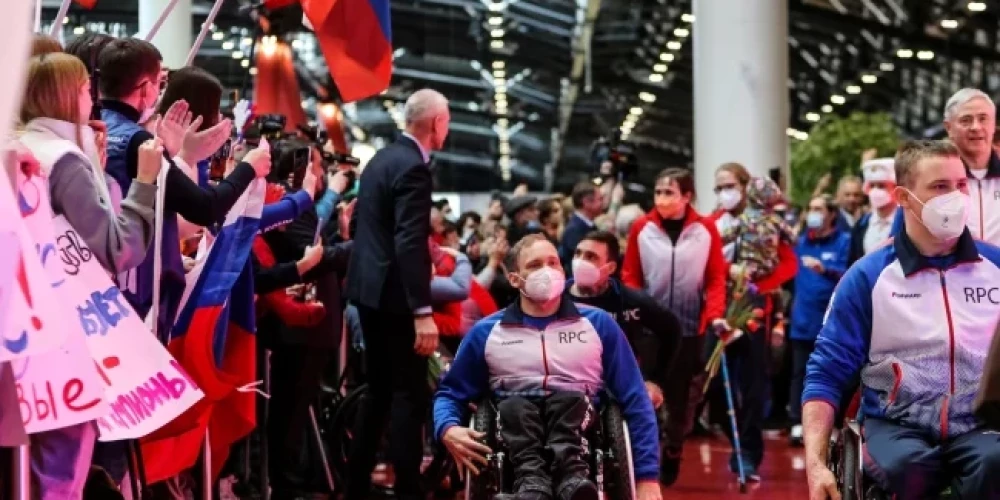
Milānas-Kortīnas, Italy – A growing chorus of nations, led by Latvia, is voicing strong disapproval of the International Paralympic Committee’s (IPC) decision to allow athletes from Russia and Belarus to compete in the upcoming Paris 2024 Paralympic Games. The move, which has sparked considerable controversy within the international sporting community, has prompted Latvia and seven other countries to accept a firm stance, signaling their discontent through symbolic gestures and calls for further action.
The dispute centers on the IPC’s decision to permit athletes from Russia and Belarus to participate under a neutral flag, a compromise intended to balance the principles of inclusivity with the condemnation of the ongoing war in Ukraine. However, critics argue that allowing representation from these nations, even under a neutral banner, effectively legitimizes the actions of their governments and undermines the solidarity expressed by many nations in opposing the conflict. This situation has ignited a debate about the role of sport in international politics and the extent to which sporting bodies should respond to geopolitical events.
Latvia Leads the Protest with Symbolic Withdrawal
Latvia was among the first nations to publicly demonstrate its opposition. On February 18, 2026, as Latvian flag bearers Poļina Rožkova and Agris Lasmans were officially named for the Milānas-Kortīnas Winter Paralympics at a ceremony in Riga Castle, the Latvian Paralympic Committee (LPK) announced it would not participate in the opening ceremony. The LPK further solidified its position on February 23, declaring that Latvian athletes would too abstain from appearing in pre-recorded video projections planned for display during the ceremony. This decision, according to the LPK, is a direct response to the IPC’s stance on Russian and Belarusian participation.
Poļina Rožkova, a veteran Paralympian who has competed in both Winter and Summer Games – including parapaukošanā at the Rio de Janeiro Summer Paralympics and ratiņkērlinga at the Beijing Winter Paralympics – is set to carry the Latvian flag. This will be her third Paralympic Games and her second time as a flag bearer. Agris Lasmans, a ratiņkērlinga player, will be making his second appearance at the Winter Paralympics, having debuted in 2022 in Beijing. The pair were chosen to represent Latvia in recognition of their achievements, including a historic gold medal win at the 2023 World Championships in mixed pairs ratiņkērlinga.
Growing International Opposition
Latvia is not alone in its condemnation. Seven other nations have joined the protest, expressing similar concerns about the IPC’s decision. While the specific actions taken by each country may vary, the unified message is clear: allowing athletes from Russia and Belarus to compete, even under a neutral flag, is unacceptable given the ongoing conflict in Ukraine. The LPK initiated discussions with other European Paralympic Committees to seek a unified response to what they deem an immoral situation, where sport is being used to justify acts of war. The European Paralympic Committee’s Extraordinary General Assembly, convened in Riga on March 8, 2026, is intended to address this issue and explore potential collective actions.
The LPK was among the first parasport organizations globally to condemn the IPC’s decision, expressing outrage and calling for a stricter stance against Russia and Belarus. This proactive approach led to the organization being chosen to host the Extraordinary General Assembly, highlighting its leadership in advocating for a strong response to the situation.
The IPC’s Rationale and the Neutral Athlete Status
The IPC maintains that its decision is rooted in the fundamental principles of the Paralympic movement, which emphasize inclusivity and non-discrimination. The IPC argues that punishing all athletes based on the actions of their governments is a violation of these principles. Allowing athletes from Russia and Belarus to compete under a neutral flag, the IPC contends, allows them to demonstrate their commitment to Paralympic values and participate in a spirit of fair play. However, this position has been met with skepticism by those who believe it fails to adequately address the ethical concerns surrounding the conflict in Ukraine.
Athletes competing under the neutral flag will not be allowed to display any national symbols, flags, or anthems. Their participation is contingent upon strict adherence to anti-doping regulations and a commitment to upholding the principles of the Paralympic movement. The IPC has also stated that it will continue to monitor the situation closely and may reconsider its decision if circumstances change.
Latvia’s Strong Stance on Russian and Belarusian Participation
Latvia’s firm stance against the participation of Russian and Belarusian athletes is not a new development. In 2022, during the Beijing Winter Paralympics, the LPK and the Latvian ratiņkērlinga team were the first to announce they would refuse to compete against athletes from Russia. This early demonstration of solidarity set a precedent for the current situation and underscores Latvia’s unwavering commitment to supporting Ukraine.
The current dispute extends beyond the Paralympics, impacting the broader international sporting landscape. Many nations and sporting organizations are grappling with the question of how to respond to the conflict in Ukraine and whether to allow athletes from Russia and Belarus to compete. The debate is complex, with strong arguments on both sides, and the outcome will likely have lasting implications for the future of international sport.
Key Takeaways
- Latvia and seven other nations are protesting the IPC’s decision to allow Russian and Belarusian athletes to compete in the Paris 2024 Paralympics.
- The LPK has announced it will not participate in the opening ceremony and will abstain from video projections featuring Latvian athletes.
- Poļina Rožkova and Agris Lasmans have been named as Latvia’s flag bearers for the Milānas-Kortīnas Winter Paralympics.
- The IPC defends its decision as upholding the principles of inclusivity and non-discrimination.
- The European Paralympic Committee is holding an Extraordinary General Assembly in Riga on March 8, 2026, to discuss the issue.
The situation remains fluid, and further developments are expected in the coming weeks. The Extraordinary General Assembly of the European Paralympic Committee in Riga is anticipated to be a crucial moment in shaping the future response to the IPC’s decision. As the Paris 2024 Paralympic Games draw closer, the debate over the participation of Russian and Belarusian athletes is likely to intensify, raising fundamental questions about the intersection of sport and politics.
What happens next? The outcome of the European Paralympic Committee’s Extraordinary General Assembly on March 8th will be pivotal in determining the collective response to the IPC’s decision. Further announcements regarding potential sanctions or coordinated actions are expected following the meeting. We will continue to provide updates as this story develops.
Share your thoughts on this important issue in the comments below. And please share this article with your network to raise awareness about the ongoing debate surrounding the participation of Russian and Belarusian athletes in international sporting events.
Related reading