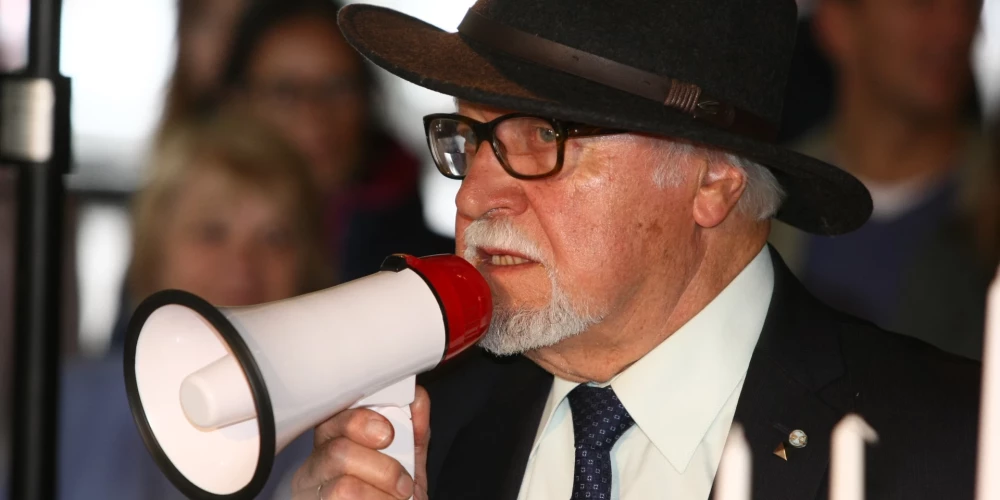
Riga, Latvia – Jānis Streičs, a towering figure in Latvian cinema and a multi-faceted artist whose work resonated deeply with audiences across the former Soviet Union, has died at the age of 89. His passing on March 5th, 2026, marks the end of an era for Latvian arts, and culture. Streičs wasn’t simply a filmmaker; he was a storyteller, a painter, a writer, and a public intellectual who consistently explored the complexities of the human condition through a distinctly Latvian lens.
Born on September 26, 1936, in Preiļu pagasts, Latvia, Streičs’s life journey was marked by both hardship and artistic triumph. His early years were shaped by the tumultuous events of the 20th century, including displacement and loss, experiences that would profoundly influence his later work. He rose to prominence during a period of significant cultural and political change, navigating the constraints of Soviet censorship even as still managing to create films that were both critically acclaimed and deeply popular. Streičs’s legacy extends beyond the silver screen, encompassing contributions to literature, painting, and public discourse, solidifying his place as one of Latvia’s most important cultural figures.
From Rural Beginnings to Cinematic Visionary
Streičs’s early life was characterized by movement and adaptation. According to information from the Latvian Wikipedia, his family initially resided in Preiļu pagasts before relocating to Riga in search of better opportunities. Further moves took them to the Sabile area in Kurzeme, where his younger siblings, Ruta and Ēriks, were born. The family’s return to the Preiļu region in 1940, following the Soviet occupation, was followed by further upheaval during World War II. His father, Jānis Streičs Sr., was mobilized into the Latvian Legion during the German occupation, and subsequently lived in England after the war’s end. The Latvian encyclopedia details how Streičs experienced the loss of his mother, Olga Streiča (née Žihare), to appendicitis when he was just eleven years old, leaving him and his siblings to be raised by their maternal aunt and grandmother.
Despite these challenges, Streičs pursued his education, first at the local Gailīšu pagasta school and then at the Rēzekne Pedagogical School. His compulsory military service in the Voroņež region of Russia proved formative, as he organized cultural activities for his fellow soldiers, foreshadowing his future artistic endeavors. Upon his return to Latvia, Streičs set his sights on a career in the arts, enrolling in the directing course at the Theatre Faculty of the Latvian State Conservatory in 1959. This marked the beginning of his formal training in the cinematic arts, and his eventual entry into the world of filmmaking.
A Prolific Career at Rīgas kinostudija
Streičs began his career at Rīgas kinostudija (Riga Film Studio), gaining experience in various roles – as an assistant director, second unit director, screenwriter, actor, and artistic director – before establishing himself as a leading director. The National Encyclopedia of Latvia notes that despite an initial desire to work with his former teacher, Aleksandrs Leimanis, Streičs found a long-term home at the studio, remaining there from 1963 until 1991.
Over three decades, Streičs participated in the creation of approximately 40 films, directing 22 feature films himself. His work garnered significant recognition, with three of his films – “Teātris” (1978), “Limuzīns Jāņu nakts krāsā” (1981), and “Cilvēka bērns” (1991) – winning the “Lielais Kristaps” award for Best Feature Film at the Latvian Film Festival. These films, and others like “Dzintara dziesma” (1972) and “Auga” (1977), captured the spirit of Latvian life and identity, often exploring themes of love, loss, and the search for meaning. Streičs’s films were not merely entertainment; they were cultural touchstones that reflected the hopes and anxieties of a nation.
Beyond the Camera: A Renaissance Man
Jānis Streičs’s creative output extended far beyond the realm of cinema. He was a prolific writer, publishing books such as “Lāga dvēseļu straumei” (2006) and “Tas garais cilvēkbērna gads” (2012). He also pursued painting, actively participating in art exhibitions and collaborating with Lithuanian artists. His personal website highlights his recognition as an honorary member of the Latvian Academy of Sciences and his receipt of the Order of the Three Stars, Latvia’s highest honor.
Streičs’s multifaceted talents and his commitment to artistic expression earned him international acclaim, including the Vatican’s Beato Angelico Prize, making him the first Latvian artist to receive this prestigious award. This recognition underscored his ability to represent Latvian culture and values on the world stage. He was a true Renaissance man, seamlessly blending different artistic disciplines and leaving an indelible mark on Latvian culture.
Early Life and Military Service
The early years of Jānis Streičs were marked by the instability of a nation undergoing significant political and social change. Born in 1936, he experienced firsthand the impact of Soviet and German occupations on his family and community. His father’s mobilization into the Latvian Legion and his subsequent life in England, coupled with the untimely death of his mother when he was eleven, instilled in him a sense of resilience and a deep connection to his Latvian heritage. His time in the Soviet army, serving in the Voroņež region, provided an unexpected outlet for his creative impulses, as he organized entertainment for his fellow soldiers. This experience, as noted in multiple sources, foreshadowed his future career in the arts.
A Lasting Legacy
Jānis Streičs’s death represents a significant loss for Latvian culture. His films continue to be screened and studied, inspiring new generations of filmmakers and artists. His writings offer valuable insights into his artistic vision and his reflections on life, society, and the human spirit. His paintings stand as testaments to his artistic versatility and his unwavering commitment to creative expression.
Streičs’s ability to capture the essence of Latvian identity, even within the constraints of the Soviet era, cemented his place as a national icon. He was a master storyteller who understood the power of cinema to connect with audiences on a deeply emotional level. His films are not simply historical artifacts; they are living documents that continue to resonate with viewers today.
As Latvia mourns the loss of this remarkable artist, his legacy will undoubtedly endure, inspiring future generations to embrace creativity, celebrate their cultural heritage, and strive for artistic excellence. The impact of Jānis Streičs on Latvian cinema and culture is immeasurable, and his work will continue to be cherished for years to arrive.
Further information regarding Latvian cultural events and commemorations can be found on the official tourism website of Latvia. The Latvian National Film Centre also provides resources on Latvian cinema and filmmakers.
What are your favorite Jānis Streičs films? Share your thoughts and memories in the comments below.
Related reading