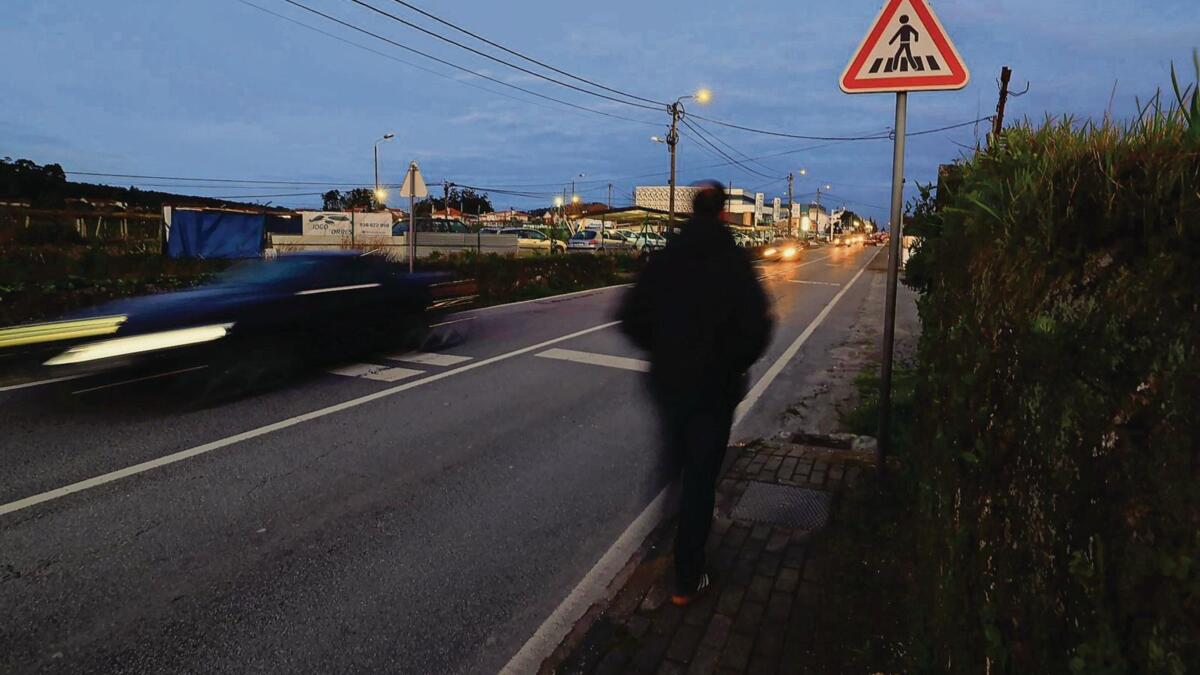
Barcelos, Portugal – Concerns are mounting over road safety on the EN 103-1, a national highway connecting Barcelos to Esposende in northern Portugal. Residents and local observers report a pattern of accidents, including pedestrian collisions, prompting calls for improved infrastructure and traffic management along the increasingly busy route.
The EN 103-1, traversing the parish of Perelhal, has become a focal point for safety anxieties, particularly as Barcelos experiences a higher-than-average rate of serious traffic accidents within the Braga district. The road’s combination of residential areas, commercial activity, and substantial traffic volume creates a hazardous environment, according to those living and working nearby. The issue isn’t fresh, but recent incidents have renewed calls for action from local authorities.
A Road Under Pressure: Traffic Growth and Safety Concerns
The EN 103-1 is part of the larger national network, designated as EN 103, which stretches 263 kilometers from Neiva, near Viana do Castelo, to Bragança. According to Wikipedia, the EN 103 was originally established in 1945 as part of the Plano Rodoviário Nacional (PRN 45), initially classified as a first-class national road. While designed to link the Minho coastline to the interior of Trás-os-Montes, the EN 103-1 section has struggled to adapt to increasing traffic levels.
Local residents point to several key factors contributing to the perceived danger. Excessive speed is frequently cited as a major problem, with drivers often treating the road as a de facto highway. The lack of dedicated pedestrian walkways in many areas forces pedestrians to share the road with vehicles, increasing the risk of collisions. Compounding the issue is insufficient lighting on pedestrian crossings, making it difficult for drivers to observe pedestrians, especially during periods of low visibility. The road also serves as a vital artery for commercial traffic, further adding to the congestion and potential for accidents.
The Broader Context: Portugal’s National Road Network
The EN 103 is a significant component of Portugal’s national road infrastructure. The original plan for the EN 103, dating back to 1945, aimed to create a route along the entire northern border of Trás-os-Montes with Spain, connecting key border towns. However, the plan was never fully realized, and a parallel route, the EN 308, was envisioned to serve smaller communities along the border. The EN 308 project remains incomplete, resulting in a fragmented network of roads in the region.
The EN 103 intersects with a complex web of other national roads, including EN13, EN14, EN15, EN101, and numerous others, as detailed on the Wikipedia entry for EN103. This network serves as a crucial link for transportation and commerce throughout northern Portugal. However, the increasing demands placed on these roads, particularly the EN 103-1, highlight the need for ongoing investment in infrastructure improvements and safety measures.
Recent Accidents and Local Response
While official accident statistics for the EN 103-1 are not readily available, anecdotal evidence and reports from local news sources suggest a concerning trend. Residents describe a series of near misses and collisions, including several incidents involving pedestrians. The lack of comprehensive data makes it difficult to assess the full extent of the problem, but the consistent reports from the community underscore the urgency of the situation.
Local community groups have begun organizing petitions and raising awareness about the safety concerns on the EN 103-1. They are calling on the municipal authorities of Barcelos and Esposende to prioritize improvements to the road, including the construction of pedestrian walkways, the installation of better lighting, and increased traffic enforcement. Some residents have also suggested lowering the speed limit on the EN 103-1 to improve safety.
Potential Solutions and Future Outlook
Addressing the safety concerns on the EN 103-1 will require a multi-faceted approach. Short-term solutions could include increased police presence to enforce speed limits and stricter penalties for traffic violations. Improved signage and road markings could also assist to alert drivers to pedestrian crossings and other potential hazards. However, more substantial improvements, such as the construction of dedicated pedestrian walkways and the installation of better lighting, will require significant investment.
Longer-term solutions may involve a comprehensive review of the road’s design and traffic flow. This could include widening the road in certain areas, creating dedicated turning lanes, and implementing traffic calming measures. The authorities could also explore the possibility of rerouting some traffic to alternative routes to reduce congestion on the EN 103-1. The implementation of intelligent transportation systems, such as variable speed limits and real-time traffic monitoring, could also help to improve safety and efficiency.
The situation on the EN 103-1 reflects a broader challenge facing Portugal’s national road network: the need to adapt to changing traffic patterns and prioritize road safety. As traffic volumes continue to increase, it is essential that the authorities invest in infrastructure improvements and implement effective traffic management strategies to ensure the safety of all road users. The case of the EN 103-1 serves as a stark reminder of the potential consequences of neglecting road safety and the importance of proactive measures to prevent accidents.
The next scheduled meeting of the Barcelos Municipal Council, where road safety issues are expected to be discussed, is on March 21, 2026. Residents are encouraged to attend and voice their concerns. Further updates on road safety initiatives in the region can be found on the Barcelos Municipal Council website. We encourage readers to share their experiences and perspectives on this important issue in the comments below.
Related reading