Iran Declares Itself at War, Vows Not to Yield to Western Demands
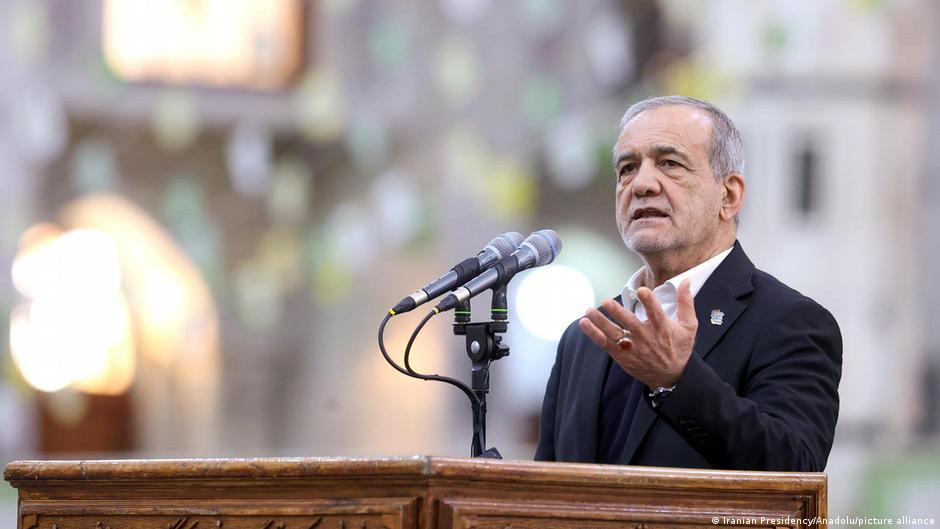
London, United Kingdom – In a dramatic escalation of tensions, Iranian President Masud Pezeshkian has declared that his country is engaged in a “full-scale war” with the United States, Israel, and Europe. The declaration, made on Saturday, March 7, 2026, comes in the wake of the death of Iran’s Supreme Leader, Ali Jamenei, on February 28th, and a subsequent wave of attacks across the region. Pezeshkian firmly rejected calls for unconditional surrender issued by U.S. President Donald Trump, stating that such a demand was a futile hope for Iran’s adversaries. This conflict marks a significant turning point in Middle Eastern geopolitics, raising concerns about a wider regional war and global stability.
The current crisis stems from the death of Jamenei, which triggered a period of unrest and retaliatory strikes. According to reports, Iran has launched attacks targeting Israel, as well as U.S. Military bases and embassies in countries including Kuwait and Saudi Arabia. Pezeshkian accused the U.S., Israel, and European nations of fueling violent protests within Iran and of indiscriminate bombing campaigns, alleging attacks on schools, hospitals, and civilian centers. While these accusations haven’t been independently verified by international observers, they underscore the escalating rhetoric and mutual distrust driving the conflict. The situation is further complicated by Iran’s history of regional influence and its support for various proxy groups, which could broaden the scope of the conflict.
Pezeshkian’s Defiant Stance and Apology to Neighbors
“The idea of Iran surrendering unconditionally is a dream that our enemies will take to their graves,” Pezeshkian stated in a televised address, his second public statement since the beginning of the conflict. This resolute declaration signals Iran’s unwillingness to back down despite mounting pressure. President Trump, on Friday, had demanded Iran’s “unconditional surrender” as the sole path to ending the hostilities in the Middle East. The differing positions highlight the deep chasm between the two nations and the lack of immediate prospects for de-escalation. The conflict’s origins, tied to the death of Jamenei, have created a volatile environment where compromise appears increasingly tricky.
In a surprising move, Pezeshkian also issued an apology to neighboring countries that have been affected by Iranian attacks. He announced a cessation of offensive operations against these nations, but with a crucial caveat: Iran reserves the right to retaliate if attacked from their territories. This conditional ceasefire aims to de-escalate tensions on Iran’s borders while simultaneously warning against any opportunistic aggression. The decision to halt attacks on neighboring countries was reportedly made by Iran’s Council of Leadership, a body formed in the wake of Jamenei’s death. This suggests a unified, albeit hardline, approach to the crisis within the Iranian government.
Concerns Over Regional Stability and Further Escalation
Despite the announced pause in attacks on neighboring countries, concerns remain high about the potential for further escalation. The Tasnim news agency, affiliated with Iran’s Islamic Revolutionary Guard Corps, reported a new “wave of missile and drone attacks” against Bahrain and Qatar shortly after Pezeshkian’s address. This suggests that despite the president’s statements, elements within Iran’s security apparatus may be continuing aggressive actions. The Islamic Revolutionary Guard Corps (IRGC) has long been a powerful force in Iranian politics and military strategy, and its actions often reflect a more hawkish stance than that of the civilian government. The IRGC’s influence is a key factor in understanding Iran’s foreign policy.
Pezeshkian warned neighboring countries against exploiting the current situation to attack Iranian territory, stating, “Some are thinking of taking this opportunity to attack our territory. I send this message: do not become instruments of imperialism.” This warning underscores Iran’s perception of external forces manipulating regional dynamics and its determination to defend its sovereignty. The accusation of “imperialism” is a common refrain in Iranian rhetoric, often directed at the United States and its allies. The potential for miscalculation and unintended consequences remains a significant risk, particularly given the complex web of alliances and rivalries in the Middle East.
International Response and Potential Pathways Forward
The international community is reacting with growing alarm to the escalating conflict. While specific responses vary, there is a widespread call for de-escalation and a return to diplomatic negotiations. However, the deep-seated mistrust between Iran and the West, coupled with the hardline rhetoric from both sides, makes a swift resolution unlikely. The United Nations Security Council is expected to convene an emergency session to discuss the crisis, but the effectiveness of any UN-led intervention is uncertain given the potential for vetoes from permanent members. The European Union has also expressed concern and is urging all parties to exercise restraint.
The conflict’s impact extends beyond the immediate region. Global oil prices have already begun to rise, reflecting concerns about potential disruptions to supply. Increased instability in the Middle East could also exacerbate existing humanitarian crises and lead to a new wave of refugees. The long-term consequences of this conflict are difficult to predict, but the region is entering a period of heightened uncertainty and risk. The death of Ali Jamenei, a figure who had dominated Iranian politics for decades, has created a power vacuum and a sense of unpredictability that is fueling the current crisis. Jamenei’s legacy and the succession dynamics within Iran are crucial factors in understanding the current situation.
Key Takeaways
- Iran has declared itself at war with the United States, Israel, and Europe, rejecting calls for unconditional surrender.
- President Pezeshkian apologized to neighboring countries for recent attacks but warned against any aggression from their territories.
- The conflict stems from the death of Supreme Leader Ali Jamenei and has led to retaliatory strikes across the region.
- The Islamic Revolutionary Guard Corps continues to engage in aggressive actions, despite the president’s call for a conditional ceasefire.
- The international community is urging de-escalation, but a swift resolution appears unlikely.
The situation remains fluid and highly volatile. The next key development to watch will be the outcome of the upcoming United Nations Security Council emergency session, scheduled for March 10, 2026. Further updates and analysis will be provided as the situation unfolds. We encourage readers to share their thoughts and perspectives in the comments section below.