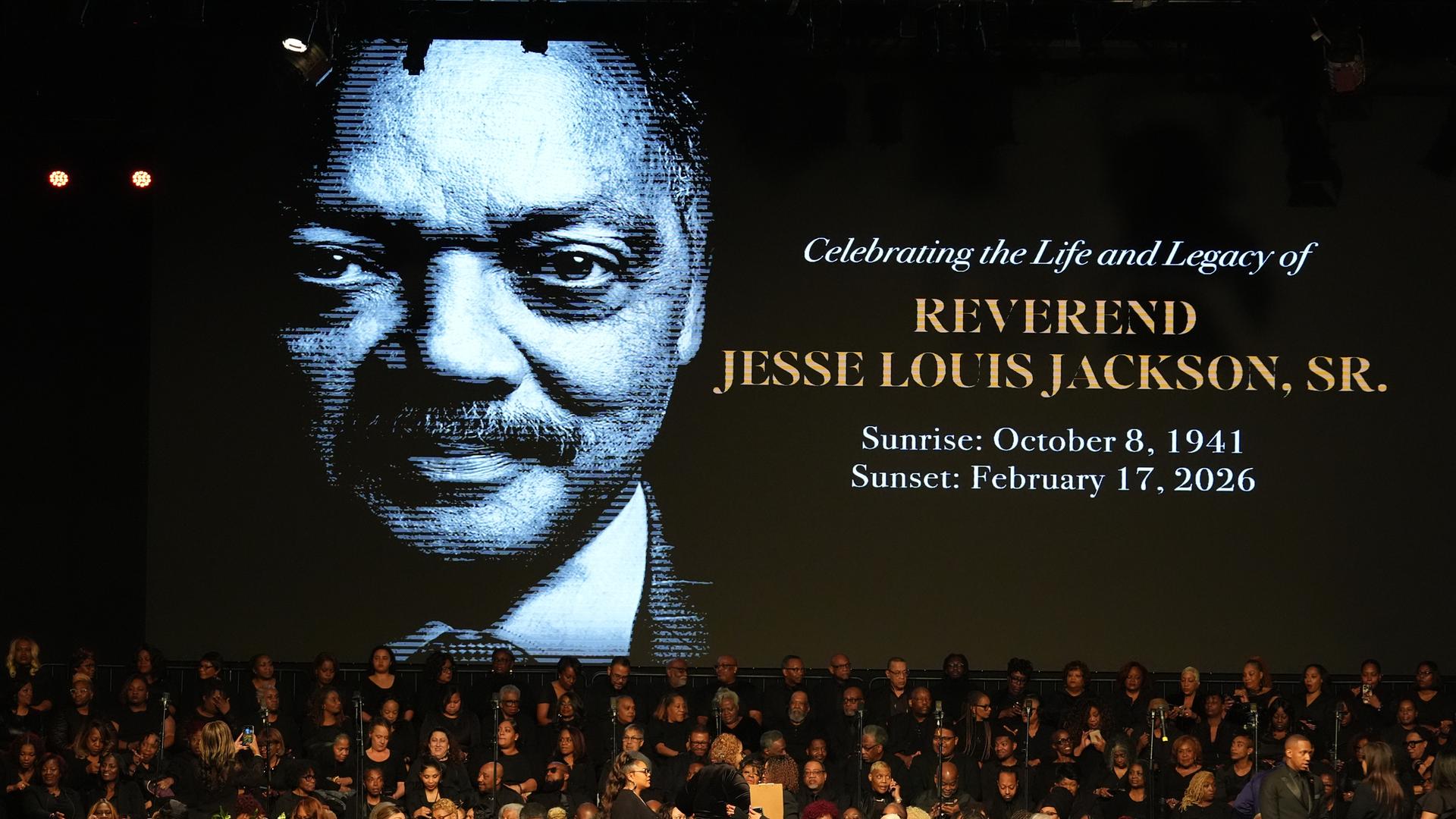
Chicago bore witness to a moving tribute on Saturday as thousands gathered to celebrate the life and legacy of Reverend Jesse Jackson, a towering figure in the American Civil Rights Movement. The service, held in the Illinois city, drew prominent figures including former Presidents Bill Clinton, Barack Obama, and Joe Biden, each offering heartfelt reflections on Jackson’s decades-long commitment to social justice and equality. The passing of Jackson on February 17th at the age of 84 has left a void in the fight for civil rights, but his message of empowerment continues to resonate.
Reverend Jackson’s influence extended far beyond the pulpit. He was a key lieutenant of Martin Luther King Jr. In the 1960s, and later forged his own path as a two-time presidential candidate, bringing the concerns of marginalized communities to the national stage. His campaigns, though ultimately unsuccessful in securing the presidency, were instrumental in galvanizing Black voters and pushing mainstream political discourse to address issues of poverty, racial discrimination, and economic inequality. Jackson’s enduring slogan, “I Am Somebody,” became an anthem for those seeking recognition and dignity, encapsulating his unwavering belief in the inherent worth of every individual.
A Legacy of Advocacy and Empowerment
The celebration of Jackson’s life served as a powerful reminder of his tireless advocacy for the disenfranchised. Former President Obama, speaking at the service, emphasized Jackson’s dedication to those whose voices often went unheard. According to remarks published on Medium, Obama stated, “No, see I believe in the Constitution. The book of Isaiah, God is looking for a messenger to guide a hardened and resistant…” Obama’s full remarks provide further insight into his assessment of Jackson’s impact. Obama’s presence underscored the continuity of the struggle for civil rights across generations, acknowledging Jackson’s role in paving the way for his own historic presidency.
President Biden echoed this sentiment, stating that Jackson “believed in the promise of America that all people should be treated fairly,” as reported by Politico. Biden’s tribute highlighted Jackson’s unwavering faith in the ideals of American democracy and his commitment to ensuring those ideals extended to all citizens, regardless of race or socioeconomic status. The former Vice President’s words served as a call to action, urging attendees to continue Jackson’s function in building a more just and equitable society.
Former President Clinton likewise shared his appreciation for Jackson’s influence, noting that the civil rights leader had made him a better president. This acknowledgement speaks to Jackson’s ability to challenge those in power and hold them accountable to the needs of the people. His willingness to confront demanding truths and demand systemic change earned him respect from across the political spectrum, even from those with whom he often disagreed.
A Movement Rooted in the Civil Rights Struggle
Jesse Jackson’s activism was deeply rooted in the Civil Rights Movement of the 1960s. He worked closely with Martin Luther King Jr., witnessing firsthand the power of nonviolent resistance in the face of systemic oppression. This experience shaped his own approach to social justice, emphasizing the importance of grassroots organizing, direct action, and moral persuasion. Jackson’s involvement in the movement began during a pivotal period of change, as African Americans fought for equal rights and an end to segregation.
Following King’s assassination in 1968, Jackson continued to carry the torch of the movement, founding the People United to Save Humanity (PUSH) organization. PUSH became a powerful force for economic empowerment, advocating for increased opportunities for Black-owned businesses and improved access to education and employment. The organization also played a key role in voter registration drives, mobilizing African American communities to participate in the democratic process. Jackson’s commitment to economic justice reflected his understanding that true equality required not only political rights but also economic opportunity.
The Absence of a Current Voice
Notably absent from the service was the current President, Donald Trump. According to reports from the White House, his absence was due to scheduling conflicts. This absence was remarked upon by some observers, given Jackson’s long history of advocating for the rights of marginalized communities and challenging those in power. The contrast between Jackson’s lifelong commitment to social justice and the policies of the current administration was not lost on many attendees.
The outpouring of grief and remembrance following Jackson’s death underscores his enduring impact on American society. His legacy extends beyond the realm of politics, inspiring generations of activists, organizers, and community leaders to fight for a more just and equitable world. Jackson’s message of hope and empowerment continues to resonate, reminding us that even in the face of adversity, we all have the power to make a difference. His work with the Southern Christian Leadership Conference (SCLC) after King’s death further cemented his role as a leader in the ongoing struggle for civil rights.
Key Takeaways
- Reverend Jesse Jackson, a pivotal figure in the Civil Rights Movement, passed away on February 17, 2026, at the age of 84.
- Former Presidents Obama, Clinton, and Biden paid tribute to Jackson’s legacy at a celebration of life in Chicago.
- Jackson’s work with Martin Luther King Jr. And the founding of PUSH were instrumental in advancing the cause of social justice and economic empowerment.
- His slogan, “I Am Somebody,” became a powerful anthem for those seeking recognition and dignity.
- President Trump did not attend the service, citing scheduling conflicts.
The impact of Reverend Jackson’s life and work will continue to be felt for generations to come. His unwavering commitment to social justice, his powerful oratory, and his ability to inspire hope in the face of adversity have left an indelible mark on American history. As the nation continues to grapple with issues of racial inequality and economic injustice, Jackson’s legacy serves as a reminder that the fight for a more just and equitable society is far from over. The next step in honoring his legacy will be to continue the work he started, advocating for policies that promote opportunity and empower marginalized communities.
The ongoing debate surrounding voting rights legislation, for example, reflects the challenges Jackson dedicated his life to addressing. GovTrack.us provides updates on federal legislation, including bills related to voting rights. Continued engagement in the political process and advocacy for policies that protect and expand access to the ballot box are essential to carrying forward Jackson’s vision.
As we reflect on the life of Reverend Jesse Jackson, let us remember his unwavering belief in the power of the human spirit and his commitment to building a world where all people are treated with dignity and respect. Share your thoughts on Jackson’s legacy in the comments below, and please share this article to help spread awareness of his remarkable life and work.
Worth a look