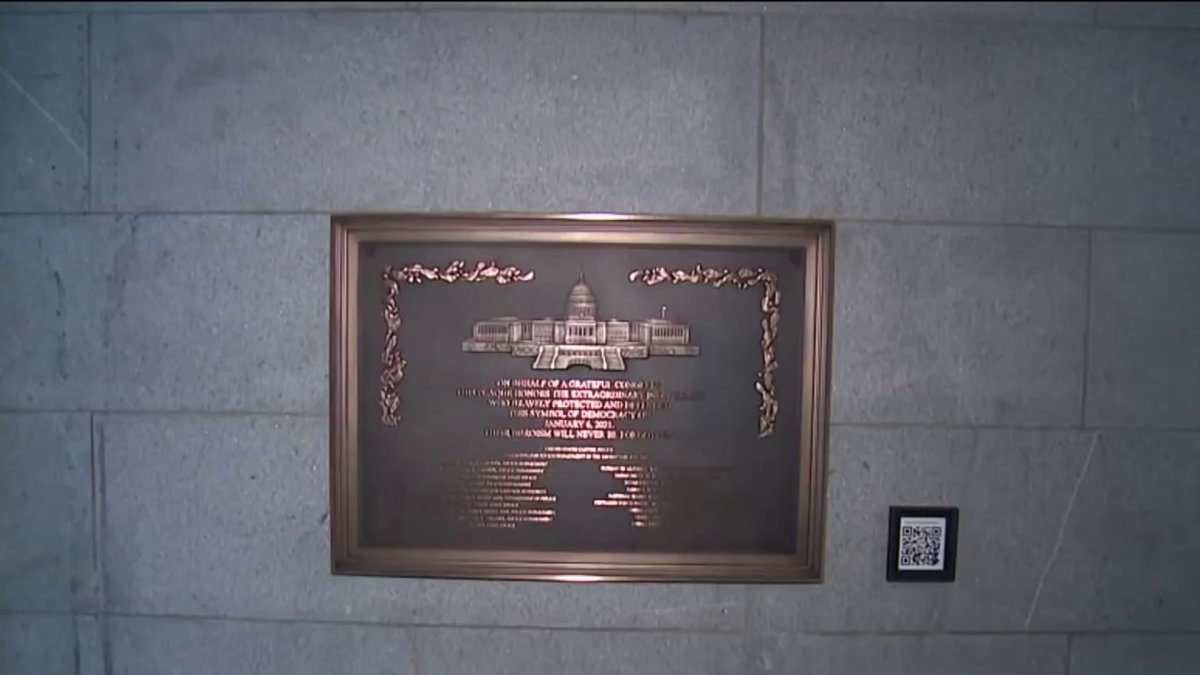
The U.S. Capitol now bears a permanent, though contested, reminder of the January 6th, 2021 attack. A plaque honoring the law enforcement officers who defended the building during the riot was installed early Saturday morning, more than five years after the events unfolded. Though, the location of the plaque – tucked away on the Senate side and currently inaccessible to the general public – has sparked criticism from former officers who feel the placement diminishes the significance of their sacrifice and the gravity of that day. The installation follows years of delays and political maneuvering, culminating in a compromise that, for some, feels like a further indignity.
The path to erecting this memorial has been fraught with obstacles. Congress passed legislation in 2022 mandating the plaque’s installation by March 2023, but progress stalled. The delay prompted a lawsuit filed by former Capitol Police officers, seeking to compel its completion. The Senate intervened, unanimously agreeing to a resolution directing the Architect of the Capitol to proceed with the installation after House Speaker Mike Johnson reportedly delayed the process. This resolution, introduced by Senators Jeff Merkley and Thom Tillis, finally paved the way for the plaque’s unveiling, though not without lingering discontent over its placement. The core issue, as articulated by those who defended the Capitol, is that a tribute meant to honor courage and remind the public of a pivotal moment in American democracy should be readily visible and accessible.
Delayed Recognition and a Disputed Location
The plaque itself reads, “On behalf of a grateful Congress, this plaque honors the extraordinary individuals who bravely protected and defended this symbol of democracy on January 6, 2021. Their heroism will never be forgotten.” It lists the various law enforcement agencies involved in the response, prominently featuring the U.S. Capitol Police Department and Washington’s Metropolitan Police Department. However, the current location, on the Senate side of a hallway and not easily visible to visitors, has drawn sharp criticism. Former Capitol Police officer Michael Fanone, who was violently attacked during the riot and later suffered a heart attack leading to his resignation from the Metropolitan Police Department, expressed his dismay. “I think that speaks volumes about they’re doing this because they were forced to do it and they did it in a manner that really added insult to the injury, to the injury that they had already subjected so many law enforcement officers to,” Fanone stated, as reported by NBC4 Washington. NBC News details the ongoing frustration surrounding the plaque’s placement.
Fanone emphasized that the plaque’s purpose should be to serve as a constant reminder to the public of the officers’ bravery and selflessness. “They installed it at four in the morning, in a part of the Senate that is not accessible to the public,” he said. “The whole purpose of the plaque is to remind the public when they arrive visit the Capitol of the selflessness, courage of the Metropolitan police department and the U.S. Capitol Police.” The timing of the installation, in the early hours of Saturday, further fueled the perception that the placement was deliberately intended to minimize public attention. The Washington Post was the first to report the installation, noting it was witnessed by a reporter around 4 a.m. EST. NBC New York confirms the early morning installation.
Political Context and the Aftermath of January 6th
The installation of the plaque occurs against a backdrop of ongoing political debate surrounding the events of January 6th. The riot took place as Congress was in the process of certifying the results of the 2020 presidential election, following repeated false claims of widespread voter fraud by then-President Donald Trump. The attack resulted in multiple deaths and injuries, and led to the arrests and prosecution of hundreds of individuals. In January 2026, a new Republican-led congressional subcommittee began reinvestigating the attack, prompting criticism from Democrats who accuse the GOP of attempting to downplay the severity of the events and promote conspiracy theories. NPR reported on the first hearing of this subcommittee, highlighting the partisan divisions surrounding the investigation.
Further complicating the narrative, former President Trump issued pardons to approximately 1,500 individuals charged in connection with the January 6th attack last year. While some received full pardons, others, like Stewart Rhodes, the former leader of the Oath Keepers convicted of seditious conspiracy and sentenced to 18 years in prison, received commutations, resulting in their release from prison but leaving their convictions intact. This decision has been widely criticized by Democrats and some law enforcement officials, who argue that it undermines the rule of law and sends a dangerous message to those who engaged in violence. The Department of Justice continues to pursue cases against individuals involved in the attack, seeking to hold them accountable for their actions.
Legal Challenges and Ongoing Concerns
Former U.S. Capitol Police Officer Harry Dunn, who was a plaintiff in the lawsuit seeking the plaque’s installation, expressed cautious optimism while reiterating his dissatisfaction with the location. In a social media post, Dunn wrote, “The location of the plaque that was just hung, is in a place that it will not be visible to the public. While I am thankful for this first step, our lawsuit continues until the plaque is hung in accordance with the law.” This indicates that the legal battle is not yet over, and that Dunn and other plaintiffs are determined to ensure the plaque is placed in a more prominent and accessible location. The lawsuit highlights the broader concerns of many officers who feel their sacrifices have not been adequately recognized by the institutions they swore to protect.
Senator Thom Tillis, who led the effort to install the plaque, acknowledged the significance of the moment, stating, “We owe them eternal gratitude, and this nation is stronger because of them.” However, the controversy surrounding the location underscores the deep divisions that remain regarding the events of January 6th and the appropriate way to honor those who defended the Capitol. The plaque’s current placement serves as a stark reminder that even acts of remembrance can become entangled in political disputes.
What Happens Next?
The plaque is currently expected to remain in its current location on the Senate side of the Capitol until both chambers of Congress can reach an agreement on a more permanent placement. Negotiations between House and Senate leaders are ongoing, but a resolution is not guaranteed. The outcome will likely depend on the political climate and the willingness of both sides to compromise. The lawsuit filed by former officers remains active, and a court ruling could potentially compel a change in location. The next steps in the legal proceedings are expected to be announced in the coming weeks.
This situation highlights the enduring impact of January 6th, not only on the individuals who defended the Capitol but also on the broader political landscape. The debate over the plaque’s placement is a microcosm of the larger struggle to reconcile differing narratives and uncover common ground in a deeply polarized nation. The ongoing legal challenges and political maneuvering suggest that the story of January 6th is far from over.
What are your thoughts on the placement of the January 6th plaque? Share your comments below and join the conversation.