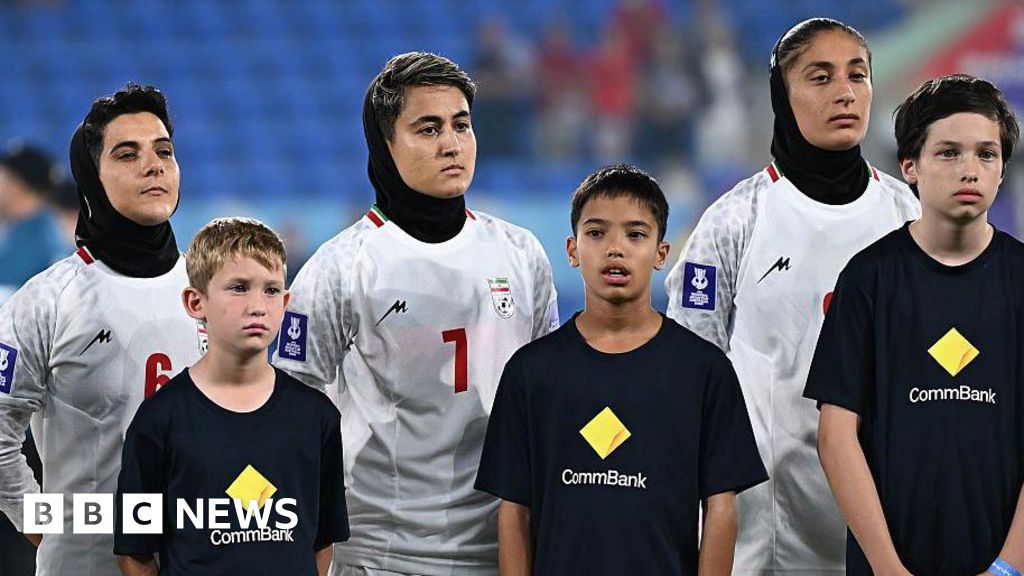
Iranian Women Footballers Seek Refuge in Australia Following Asian Cup Protest
Five members of the Iranian women’s national football team are reportedly in a secure location in Australia after raising concerns about alleged mistreatment and intimidation following their participation in the recent AFC Women’s Asian Cup qualifying tournament. The players, whose identities are being withheld for their safety, allege harassment and threats from team management, prompting a desperate plea for assistance and eventual relocation. The case echoes similar efforts to aid athletes from Afghanistan flee persecution following the Taliban takeover, highlighting the growing risks faced by female athletes in restrictive regimes.
The situation unfolded after the team’s qualifying matches, where concerns were raised about the players’ safety and well-being. Reports suggest the players were subjected to undue pressure and intimidation tactics by Iranian team officials. Details remain fragmented, but the core allegation centers on a denial of agency and freedom of communication, effectively isolating the players from external support networks. This alleged behavior prompted intervention from individuals and organizations dedicated to protecting athletes at risk.
Craig Foster, a prominent advocate for athletes’ rights and a key figure in assisting the Afghan women’s football team’s evacuation in 2021, is involved in this case. Foster described the situation as one where the players were “held hostage by the Iranian team management in their hotel and…denied the opportunity to speak to external community members, friends, family or any support networks, be that lawyers or anyone else.” This account, although currently unconfirmed by official Iranian sources, underscores the severity of the allegations and the urgency of the situation.
Background of Tensions and Restrictions
Iran’s relationship with women’s sports has been consistently marked by restrictions and challenges. While women’s football has gained some traction in recent years, it operates within a highly controlled environment. The Islamic Republic of Iran has faced international scrutiny over its policies regarding women’s participation in sports, particularly concerning stadium access and dress codes. In 2019, FIFA, the international governing body of football, pressured Iran to allow women to attend domestic league matches, a long-standing demand from women’s rights activists. Reuters reported on the landmark decision, marking a partial victory for advocates.
The broader context of Iran-Afghanistan relations also plays a role. Historically, relations between Iran and the Taliban have been volatile, stemming from differing ideologies and regional power dynamics. Clashes along the border in December 2021, as documented by Wikipedia, illustrate the ongoing tensions. While these clashes are distinct from the current situation involving the footballers, they highlight the complex geopolitical landscape in the region and the potential for instability.
Water Disputes and Regional Concerns
Beyond political and ideological differences, water resource management has been a source of friction between Iran and Afghanistan. The Helmand River, which flows from Afghanistan into Iran, is a critical water source for both countries. The Iran Primer details historical disputes over the Helmand River, including instances where Afghanistan has restricted water flow to Iran during droughts. These disputes underscore the interconnectedness of regional issues and the potential for conflict over vital resources.
Formalizing Ties with the Taliban
Despite past tensions, Iran has been actively working to formalize ties with the Taliban government in Afghanistan. In February 2023, Iran officially handed over the Afghan embassy in Tehran to Taliban diplomats, signaling a significant step towards establishing diplomatic relations. The Washington Institute for Near East Policy notes that this move reflects a pragmatic approach by Iran, seeking to secure its interests in Afghanistan and mitigate potential threats. The Taliban had previously operated consulate-generals in Iranian cities like Mashhad and Zahedan and Iran maintained its embassy in Kabul even after the Taliban’s takeover in 2021.
This shift in policy is driven by several factors, including concerns about border security, the flow of refugees, and the containment of extremist groups. However, it also raises questions about Iran’s commitment to human rights and the protection of vulnerable populations, particularly women and girls, under the Taliban regime. The current situation with the Iranian women footballers underscores these concerns and highlights the challenges of navigating complex geopolitical realities.
The Players’ Plight and International Response
The details surrounding the Iranian footballers’ allegations are still emerging. The players reportedly feared repercussions for speaking out against the alleged mistreatment, prompting them to seek assistance from external organizations. The intervention of individuals like Craig Foster, who has a proven track record of successfully advocating for at-risk athletes, was crucial in facilitating their relocation to Australia. The Australian government has not yet officially commented on the case, but it is understood to be providing support to the players.
The case raises broader questions about the safety and security of female athletes in countries with restrictive political and social environments. It also highlights the importance of international cooperation in protecting athletes who are at risk of persecution or harm. Organizations like FIFA and the International Olympic Committee (IOC) have a responsibility to ensure that athletes can participate in sports without fear of intimidation or reprisal. The IOC’s principles of political neutrality are often debated in such cases, as critics argue that silence can be interpreted as complicity.
Similar Cases and Precedents
The situation with the Iranian footballers is reminiscent of the challenges faced by Afghan female athletes following the Taliban’s return to power in 2021. Numerous Afghan athletes, including footballers, were forced to flee the country to escape persecution and seek refuge in other nations. The coordinated effort to evacuate the Afghan women’s football team, led by individuals like Craig Foster, served as a model for similar interventions in other countries. These cases demonstrate the growing need for international mechanisms to protect athletes who are at risk due to their gender, political beliefs, or other factors.
Key Takeaways
- Five Iranian women footballers have reportedly sought refuge in Australia after alleging mistreatment by team management.
- The case highlights the challenges faced by female athletes in restrictive regimes and the importance of international protection.
- Iran has been formalizing ties with the Taliban government in Afghanistan, raising concerns about human rights and regional stability.
- The intervention of advocates like Craig Foster has been crucial in facilitating the players’ relocation.
- The situation underscores the need for FIFA and the IOC to prioritize the safety and well-being of athletes.
The investigation into the allegations of mistreatment is ongoing. Further details are expected to emerge as the players settle into their new location and are able to speak freely about their experiences. The international community will be closely watching the response from Iranian authorities and the actions taken by FIFA and the IOC to address the concerns raised in this case. The long-term implications of this incident for women’s football in Iran and the broader region remain to be seen.
This is a developing story. World Today Journal will continue to provide updates as more information becomes available. We encourage readers to share their thoughts and perspectives in the comments section below.