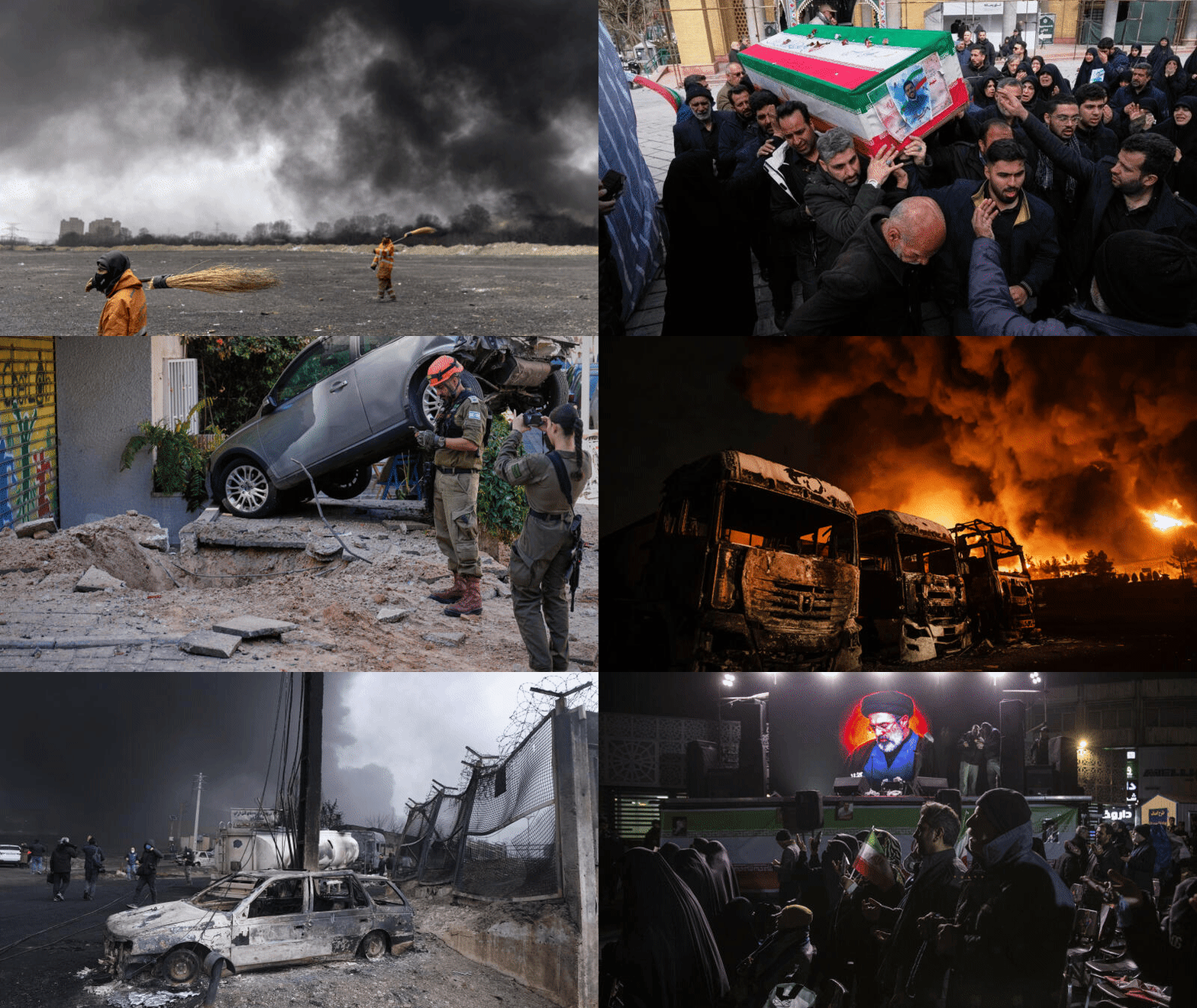
The escalating tensions in the Middle East continue to draw in international actors, with recent events highlighting the vulnerability of key strategic assets. Following a series of retaliatory strikes between Iran and its adversaries, concerns are mounting over the potential for wider regional conflict. A drone attack on the British military base of RAF Akrotiri in Cyprus last week has further underscored these anxieties, prompting a swift response from the United Kingdom and raising questions about the security of allied forces stationed in the region. The incident occurred during a period of heightened alert, coinciding with a visit from UK Defence Secretary John Healey, and has prompted a reassessment of defensive measures.
The situation is particularly sensitive for Cyprus, a strategically crucial island nation that hosts significant military infrastructure belonging to several countries. The drone strike, the first against a British military installation on the island in four decades, has triggered a diplomatic response and a bolstering of security protocols. Beyond the immediate threat to military personnel, the incident raises broader questions about the evolving nature of warfare and the challenges of defending against increasingly sophisticated, low-cost drone technology. The incident at RAF Akrotiri is occurring against a backdrop of global economic uncertainty, with stock markets reacting to the instability in the Middle East and investors seeking safe haven assets. This confluence of geopolitical and economic factors adds another layer of complexity to an already volatile situation.
Drone Attack on RAF Akrotiri: Details and Response
On Sunday, March 1, 2026, a drone struck RAF Akrotiri, a key British airbase located near Limassol, Cyprus. UK Defence Secretary John Healey revealed that the drone originated either from Lebanon or Iraq, according to a statement delivered to the House of Commons on Monday, March 2, 2026. The full statement detailed the ongoing assessment of the incident and the UK’s commitment to regional stability. The attack prompted a full alert at the base, with air raid sirens sounding three times during Healey’s visit, forcing him to take cover on two occasions.
The drone, described as Shahed-type, is a relatively inexpensive Iranian design used as a one-way attack weapon. According to reporting from The Guardian, the drone likely evaded initial detection by flying low and slow. While the attack caused limited damage and no injuries, it prompted anger from the Cypriot government and led to the evacuation of families living on the base. The incident also prompted a review of air defense systems and a strengthening of security measures at RAF Akrotiri.
Regional Implications and International Response
The attack on RAF Akrotiri is occurring within a broader context of escalating tensions between Iran and its regional rivals, particularly Israel and the United States. Recent strikes attributed to Iran and its proxies have targeted facilities in several countries, including Bahrain, where 32 civilians were reportedly injured in one attack and a desalination plant was hit, as Healey noted. The situation has prompted international concern and calls for de-escalation. French President Emmanuel Macron has pledged to defend Cyprus and is dispatching additional warships to the Eastern Mediterranean to bolster security in the region. This move underscores the growing international commitment to maintaining stability in the face of increasing threats.
The vulnerability of military installations to drone attacks is a growing concern for defense planners worldwide. The relatively low cost and ease of access to drone technology mean that non-state actors and state-sponsored groups can pose a significant threat to critical infrastructure. This incident is likely to accelerate the development and deployment of counter-drone technologies and strategies, as nations seek to protect their assets from this evolving threat. The incident also highlights the complex geopolitical dynamics in the region and the potential for miscalculation and escalation.
Economic Fallout and Market Reactions
The heightened geopolitical risk in the Middle East is already impacting global financial markets. Stock markets across Asia and Europe experienced declines on Monday, March 3, 2026, as investors reacted to the escalating tensions. The price of oil also rose, reflecting concerns about potential disruptions to supply. The Australian Securities Exchange (ASX) followed suit, experiencing a downturn as investors sought safer investment options. This economic uncertainty adds another layer of complexity to the situation, potentially exacerbating existing economic challenges.
The long-term economic consequences of the conflict remain uncertain, but analysts warn that a prolonged period of instability could have significant repercussions for global trade and investment. The disruption to shipping lanes in the Red Sea, coupled with the potential for further attacks on critical infrastructure, could lead to higher energy prices and supply chain disruptions. These factors could contribute to inflationary pressures and slow economic growth.
Succession in Iran: Khamenei’s Son Named New Supreme Leader
Amidst the ongoing regional tensions, Iran is also navigating a significant internal transition. Following the death of Ayatollah Ali Khamenei, his son, Mojtaba Khamenei, has been named as the new Supreme Leader. This succession marks a continuation of the established political order and is expected to maintain the country’s hardline stance on key issues. The appointment of Mojtaba Khamenei, who has held considerable influence within the Iranian political system for years, signals a commitment to the existing ideological framework and policies. The implications of this leadership change for regional stability and international relations are still unfolding, but it is likely to reinforce Iran’s assertive foreign policy.
Impact on Regional Policy
Analysts suggest that Mojtaba Khamenei’s leadership will likely result in a continuation of Iran’s support for regional proxies and its opposition to Western influence. His close ties to the Islamic Revolutionary Guard Corps (IRGC) suggest a strengthening of the military’s role in both domestic and foreign affairs. This could lead to further escalation of tensions with regional rivals, such as Saudi Arabia and Israel. The new Supreme Leader’s policies will be closely watched by international observers as they seek to assess the potential for further conflict and instability.
The confirmation of Mojtaba Khamenei as Supreme Leader occurred on March 8, 2026, according to reports from Iranian state media. This transition of power takes place at a critical juncture, as Iran faces increasing international pressure over its nuclear program and its involvement in regional conflicts. The new leadership will be tasked with navigating these challenges while maintaining the country’s internal stability and pursuing its strategic objectives.
The situation remains fluid and requires careful monitoring. The next key development to watch will be the response from the international community to the drone attack on RAF Akrotiri and the ongoing tensions in the region. Further diplomatic efforts are needed to de-escalate the situation and prevent a wider conflict. We encourage readers to share their thoughts and perspectives on these critical events in the comments below.
Keep reading