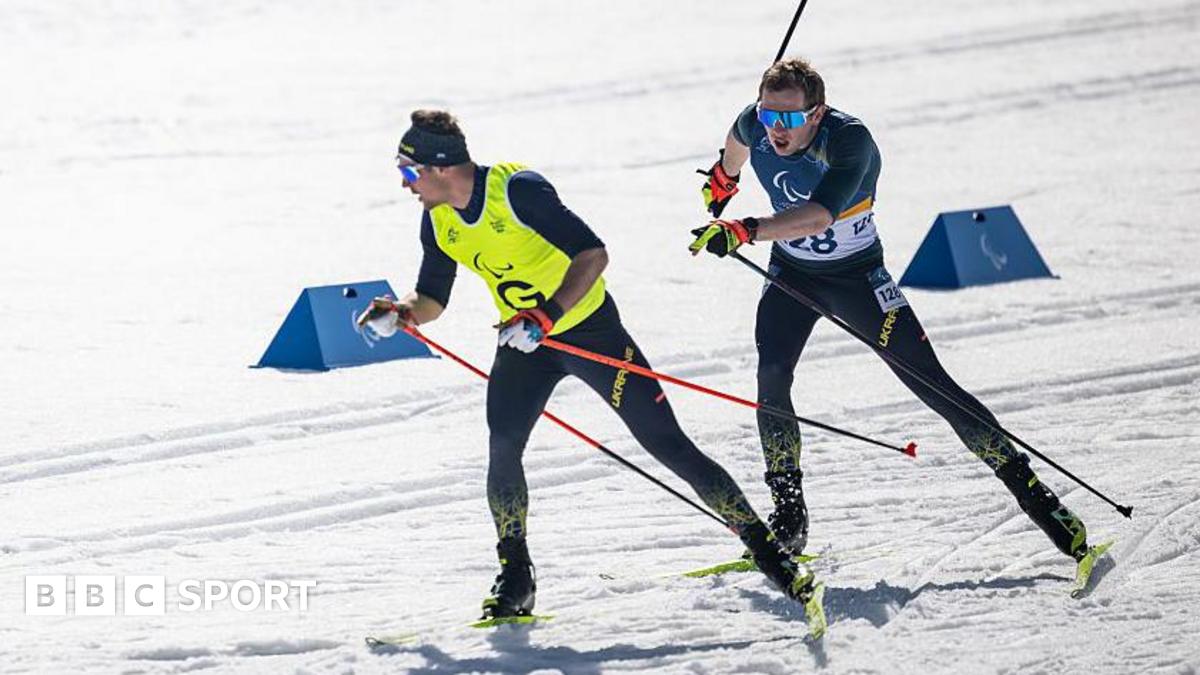
Ukraine’s Maksym Murashkovskyi Credits ChatGPT for Paralympic Biathlon Silver
Cortina d’Ampezzo, Italy – In a stunning revelation that’s sparking conversation across the sporting world, Ukrainian Para-biathlete Maksym Murashkovskyi has credited artificial intelligence, specifically OpenAI’s ChatGPT, with playing a pivotal role in his silver medal win at the 2026 Winter Paralympics. The 25-year-aged athlete, competing in the men’s individual vision impaired event, revealed that the AI tool wasn’t just a tactical advisor, but an integral part of his entire training regimen, offering support as a coach, psychologist and even a medical consultant. This marks a significant moment in the intersection of elite sports and artificial intelligence, raising questions about the future of athletic preparation and performance enhancement. Murashkovskyi’s success story highlights a growing trend of athletes exploring innovative technologies to gain a competitive edge, and it’s a development that’s sure to be closely watched by teams and competitors alike.
Murashkovskyi’s achievement comes at a time when Ukraine is demonstrating remarkable strength at the Milan-Cortina Winter Paralympics, currently holding second place in the medal table with 10 medals, including three golds, across Para-biathlon events. The nation’s performance is a testament to the resilience and determination of its athletes, even amidst ongoing challenges. His silver medal, secured alongside guide Vitaliy Trush, was particularly noteworthy as he didn’t miss a single shot during the competition, finishing behind China’s Dang Hesong. This was his first Winter Paralympics, and he had previously placed seventh in the men’s sprint event on Saturday, leaving him with three further opportunities to add to Ukraine’s medal haul.
The AI Advantage: A Holistic Training Partner
The extent of ChatGPT’s involvement in Murashkovskyi’s preparation is remarkable. For the past six months, the AI served as more than just a data analyst; it became a comprehensive training partner. “It was not only tactics,” Murashkovskyi explained. “It was half of my training plan, motivation, etcetera. So it was a huge volume of all of my training.” He detailed how the AI assisted in developing personalized training schedules, analyzing performance data, and providing psychological support to maintain focus and motivation. The athlete even leaned on ChatGPT for insights related to his physical well-being, utilizing it as a resource for understanding potential health concerns and recovery strategies. This level of integration demonstrates the potential for AI to move beyond simple performance analysis and become a truly holistic component of an athlete’s support system.
While Murashkovskyi is a relative newcomer to the Winter Paralympics, his success isn’t a sudden development. He previously secured a bronze medal at the 2023 World Championships and has consistently achieved success on the World Cup circuit. However, he believes that ChatGPT has unlocked a novel level of performance. Without the AI tool, he stated, he would have continued with “classical training, as I’ve always done, with humans.” This suggests that while he valued traditional coaching methods, he saw an opportunity to augment them with the capabilities of artificial intelligence. The use of AI in sports training is not entirely new, with teams across various disciplines employing data analytics and machine learning for performance optimization, but Murashkovskyi’s case represents a more direct and personalized application of the technology.
The Future of Coaching: AI as a Supplement, Not a Replacement
Despite the significant role ChatGPT played in his success, Murashkovskyi doesn’t foresee a complete takeover of the coaching world by AI. “Not completely for five to 10 years. But part of it, definitely,” he predicted, suggesting that AI will likely become an increasingly integrated component of coaching strategies, assisting human coaches rather than replacing them entirely. This perspective acknowledges the unique qualities that human coaches bring to the table – empathy, intuition, and the ability to build rapport with athletes – qualities that are currently beyond the capabilities of artificial intelligence. The athlete’s belief in the “revolutionary technology” of ChatGPT is clear, but he maintains a pragmatic view of its role in the future of sports training.
The integration of AI into athletic training raises ethical considerations as well. Questions surrounding fair play, access to technology, and the potential for creating an uneven playing field are likely to become increasingly key as AI becomes more prevalent in sports. While Murashkovskyi’s use of ChatGPT appears to be within the bounds of current regulations, governing bodies will need to address these issues proactively to ensure a level playing field for all athletes. The World Anti-Doping Agency (WADA) has not yet issued specific guidelines regarding the use of AI in sports, but it is a topic that is likely to be addressed in the coming years.
Ukraine’s Paralympic Performance and the Broader Context
Murashkovskyi’s silver medal is part of a broader story of success for Ukraine at the Milan-Cortina Winter Paralympics. As of March 9, 2026, Ukraine is second in the medal table, demonstrating the country’s commitment to Paralympic sport and the exceptional talent of its athletes. This performance is particularly poignant given the ongoing geopolitical situation in Ukraine, highlighting the power of sport to provide hope and inspiration during challenging times. The success of Ukrainian athletes at the Paralympics serves as a powerful symbol of resilience and determination.
The use of artificial intelligence in Ukraine extends beyond the realm of sports. Reports indicate that AI has been deployed in various sectors, including defense and security, to analyze satellite footage and identify targets. The Guardian reported on this broader application of AI within the country, demonstrating its growing importance in various aspects of Ukrainian society. This context adds another layer of significance to Murashkovskyi’s story, showcasing how Ukraine is embracing technological innovation across multiple domains.
Key Takeaways
- Ukrainian Para-biathlete Maksym Murashkovskyi won silver at the 2026 Winter Paralympics with significant assistance from ChatGPT.
- The AI tool was used for more than just tactics, encompassing training plans, motivation, and even psychological support.
- Murashkovskyi believes AI will become an increasingly important part of sports training but doesn’t foresee it completely replacing human coaches.
- Ukraine is currently second in the medal table at the Milan-Cortina Winter Paralympics, demonstrating the nation’s strength in Paralympic sport.
- The use of AI in Ukraine extends beyond sports, with applications in defense and security.
As the Winter Paralympics continue, Murashkovskyi has three further opportunities to compete for medals. His story serves as a compelling example of how athletes are embracing new technologies to push the boundaries of performance and achieve their goals. The impact of AI on sports is only beginning to be understood, and Murashkovskyi’s success is likely to inspire further exploration and innovation in this exciting field. The ongoing competition in Milan-Cortina will undoubtedly provide further insights into the evolving relationship between athletes, technology, and the pursuit of excellence.
What are your thoughts on the use of AI in sports? Share your opinions in the comments below, and don’t forget to share this article with your network!
Worth a look