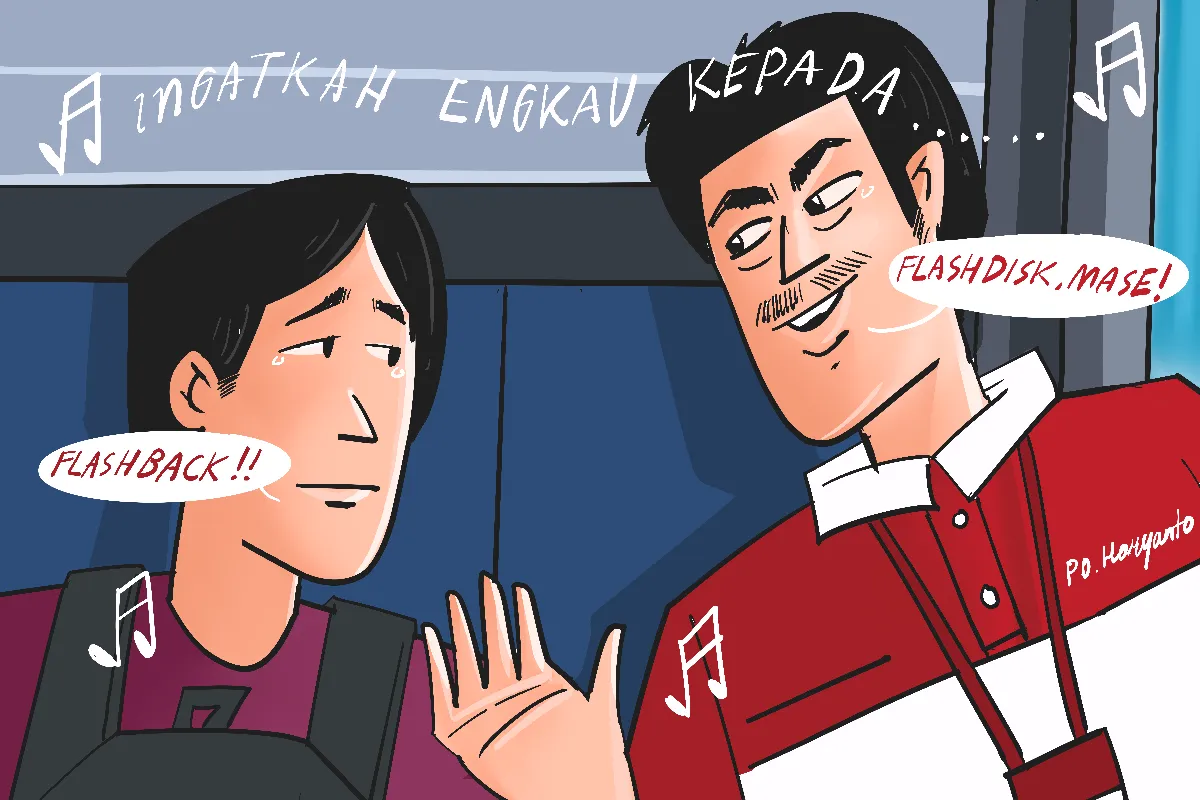
The familiar strains of Indonesian pop music from the 2000s are unexpectedly becoming a hallmark of travel along the Yogyakarta to Kudus bus route, specifically on the Haryanto line. More than just transportation, the journey is proving to be a potent trigger for nostalgia, stirring up memories and a touch of melancholy for passengers like 26-year-old Aji. While practical considerations like comfort and punctuality are important, it’s the curated playlist that’s leaving a lasting impression on riders, transforming a simple commute into a deeply personal experience.
The Haryanto bus, a popular choice for those traveling between Yogyakarta, Magelang, Semarang and Kudus, offers multiple departures daily from both Terminal Giwangan and Terminal Jombor in Yogyakarta, with fares ranging from Rp 60,000 to Rp 75,000, according to jadwalbis.com. However, the experience begins even before boarding, with some passengers noting a contrast in service at Terminal Jombor. Aji, who typically prefers traveling with Ramayana buses, found the Haryanto agency staff less approachable than their counterparts at Ramayana.
A Disconnect at the Ticket Counter
Aji described the Ramayana agency at Terminal Jombor as staffed by friendly and helpful women, readily assisting with inquiries. In contrast, he found the Haryanto agency, located near the restroom, to be staffed by men who were “cuek dan jutek” – aloof and unfriendly – as he recounted on March 7, 2026. While a minor inconvenience, this initial interaction set the tone for a journey that would prove to be more emotionally resonant than anticipated. He too noted frustration with occasional delays in departure times, adding to a less-than-ideal start to his trip.
The Soundtrack of a Generation
It was during a recent trip in early 2026 that Aji fully realized the unique character of the Haryanto bus experience. Unlike his usual habit of listening to his own music through headphones, Aji found himself captivated by the bus’s playlist. The selection, a carefully curated collection of Indonesian hits from the early 2000s, transported him back to his teenage years. Songs that once soundtracked formative experiences suddenly resurfaced, evoking a complex mix of joy and wistfulness.
The playlist included iconic tracks such as “Sebelum Cahaya” and “Permintaan Hati” by Letto, “Merindukanmu” and “Cinta Ini Membunuhmu” by D’Masiv, “Pemilik Hati” by Armada, and “Separuh Aku” and “Cinta Bukan Dusta” by Noah. These weren’t just songs; they were sonic time capsules, each note triggering a flood of memories. As Aji described it, the moment the bus pulled away from Terminal Jombor and the opening chords of a familiar tune filled the cabin, he was instantly transported back in time.
“The moment was epic when the bus left the terminal and the opening notes of ‘terbuai, aku hilang, terjatuh aku dalam keindahan penantian…’ began to play,” Aji recalled. From that point on, he found himself completely immersed in the music, allowing the songs to wash over him and carry him back to his youth. The experience was further enhanced by the weather; a light rain and the droplets on the window seemed to perfectly complement the melancholic mood of the music, prompting him to rest his head against the glass and lose himself in reflection.
The Power of Nostalgia in Travel
The phenomenon Aji experienced highlights the powerful connection between music and memory. Neuroscience research has consistently demonstrated that music can evoke strong emotional responses and trigger vivid recollections of past events. A 2017 study published in the journal Brain found that music-evoked autobiographical memories are particularly rich and detailed, often accompanied by a strong sense of emotional presence. Source: Brain Journal This explains why a seemingly simple bus ride can develop into a profoundly moving experience when accompanied by the right soundtrack.
The Haryanto bus’s playlist isn’t just about playing popular songs; it’s about creating an atmosphere that resonates with a specific generation. By tapping into the collective nostalgia of its passengers, the bus line is offering a unique and unexpected travel experience. It’s a reminder that sometimes, the journey is just as important as the destination, and that the memories we create along the way can be the most valuable souvenirs of all.
Haryanto Bus: Route and Service Details
Haryanto buses operate a key route connecting Yogyakarta with Kudus, passing through Magelang and Semarang. According to jadwalbis.com, departures from Terminal Giwangan in Yogyakarta are scheduled at 07:01, 13:50, 14:20, 14:25, 15:15, 16:01, 16:15, 16:54, and 17:35. Buses also depart from Terminal Jombor, located on Jln Magelang KM 06 in Sleman, Yogyakarta. The terminal can be reached by phone at (0274) 8568825 or 088802859020. The fare for the full journey is typically between Rp 60,000 and Rp 75,000.
While the Haryanto bus offers a convenient and affordable transportation option, the recent experiences shared by passengers like Aji suggest that its appeal extends beyond mere practicality. The carefully curated playlist, filled with Indonesian pop hits from the 2000s, has transformed the journey into a nostalgic trip down memory lane, offering a unique and emotionally resonant experience for those who grew up with those songs.
The choice of music on public transport is not unique to Haryanto. In Indonesia, and elsewhere, bus companies have long used music to create a more pleasant atmosphere for passengers. However, the Haryanto bus seems to have struck a particularly effective chord with its selection, tapping into a shared cultural memory and offering a welcome dose of nostalgia for a generation.
As Aji’s experience demonstrates, the Haryanto bus journey is more than just a ride from Yogyakarta to Kudus; it’s a journey through time, a reminder of youthful exuberance, and a poignant reflection on the passage of years. It’s a testament to the power of music to evoke emotions, trigger memories, and connect us to our past.
The next step for Haryanto Bus will be to maintain the quality of service and continue to refine the passenger experience. Monitoring passenger feedback and adapting the playlist to reflect evolving tastes will be crucial to maintaining its unique appeal. Passengers can share their experiences and provide feedback through the company’s official channels, ensuring that the Haryanto bus continues to offer a memorable and emotionally resonant journey for years to come.
What are your thoughts on the power of music to evoke nostalgia? Share your experiences in the comments below, and don’t forget to share this article with your friends and family!
Keep reading