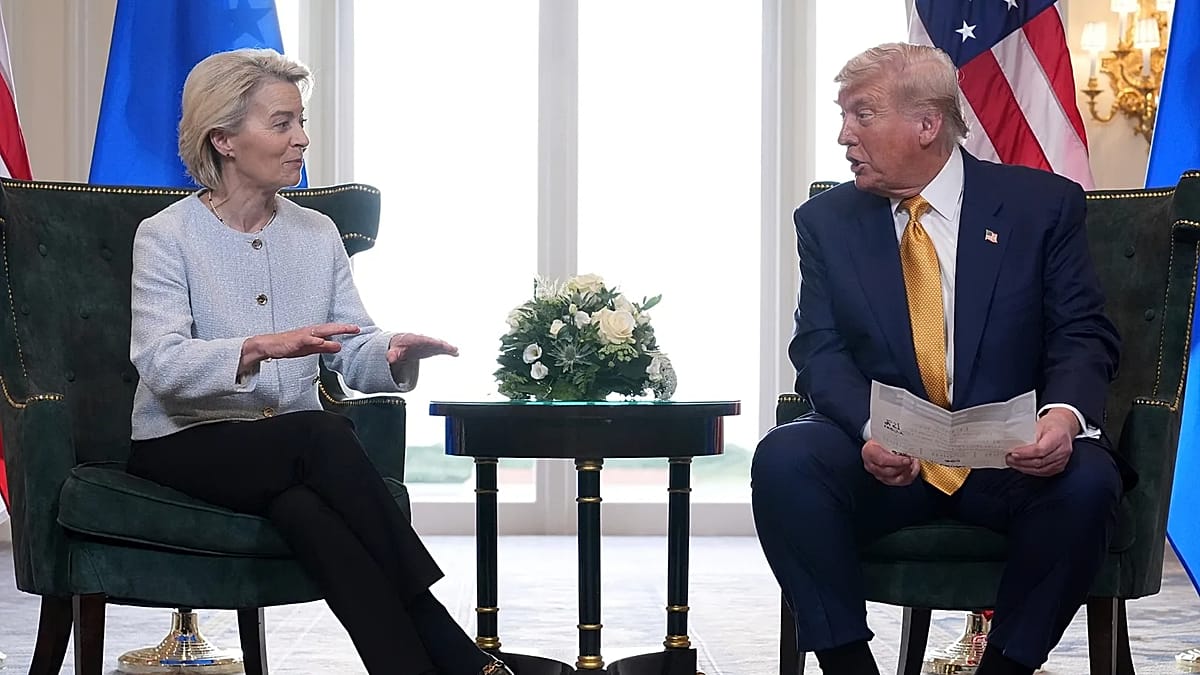
Sofia, Bulgaria – After months of uncertainty fueled by shifting U.S. Trade policy and a recent Supreme Court ruling, the controversial EU-US trade deal is poised for a crucial vote in the European Parliament. Lawmakers are currently working to finalize an agreement that addresses concerns raised by new tariffs imposed by Washington, with a potential vote scheduled for March 26th. The future of transatlantic trade relations hangs in the balance as both sides navigate a complex landscape of economic and geopolitical pressures. This EU-US trade deal, initially clinched in July 2025, has faced repeated challenges, highlighting the fragility of international agreements in an era of protectionist sentiments.
The path to ratification has been anything but smooth. The agreement, brokered between European Commission President Ursula von der Leyen and U.S. President Donald Trump, was initially met with criticism from within Europe, with many viewing it as disproportionately favorable to the United States. The deal locks in a 15% tariff on most EU exports to the U.S., while granting zero-duty access to most American goods entering the European Union. This imbalance sparked concerns among European businesses and policymakers, leading to initial hesitation and a previous freeze in the approval process. Now, fresh tariffs announced by President Trump have further complicated matters, threatening to unravel the hard-won compromise.
Navigating New Tariffs and Parliamentary Concerns
The latest hurdle stems from a 10% tariff imposed by the U.S. On imports from allies, including the EU, announced in February. This action prompted a renewed suspension of the deal’s approval within the European Parliament. The situation was further exacerbated by a U.S. Supreme Court ruling that deemed some of the tariffs imposed by Washington in 2025 illegal, adding another layer of legal uncertainty. According to reports, approximately 7% of European goods are now subject to tariffs exceeding the agreed-upon 15% ceiling, with certain products, like cheese, facing duties as high as 30%.
Despite these challenges, the European Parliament has resumed work on the agreement, encouraged by Trade Commissioner Maroš Šefčovič. Negotiators from the Parliament’s political groups met with Šefčovič on Tuesday to discuss a path forward, and sources indicate they are close to reaching a consensus. A key element of the potential agreement involves a “sunset clause,” which would allow the EU tariff relief to expire at the end of March 2028 unless explicitly renewed. This provision aims to provide the EU with leverage to renegotiate terms if the U.S. Fails to uphold its commitments. Another crucial component is a “suspension clause,” which would be triggered if the U.S. Violates the deal’s rules.
The “Sunrise Clause” and Geopolitical Considerations
Further details are still being finalized, including a “sunrise clause” proposed by Jörgen Warborn, a negotiator from the European People’s Party. Warborn explained that this clause ensures the deal doesn’t take effect until all its provisions are met, providing an additional safeguard for European interests. He also emphasized the urgency of securing trade agreements in light of global instability, particularly the ongoing war in the Middle East. As reported by Euronews, the current geopolitical volatility underscores the importance of stable trade relationships.
The EU’s willingness to move forward despite the U.S. Tariffs reflects a strategic calculation. Šefčovič has urged lawmakers to proceed, arguing that the deal, even with its imperfections, is a safeguard against further escalation in trade tensions. The agreement is seen as a means of preserving trade flows and protecting jobs within Europe. Though, this stance has not been universally accepted, with some member states, like France, expressing strong reservations. French Prime Minister François Bayrou has publicly criticized the accord as an act of “submission” to Washington, while industry groups have voiced concerns about the deal’s impact on European competitiveness.
A History of Trade Disputes and Negotiations
The current situation is not an isolated incident. The EU-US trade relationship has been marked by a series of disputes and negotiations in recent years. Prior to the 2025 agreement, tensions flared when then-President Trump threatened tariffs on several EU countries if they refused to entertain his proposal to purchase Greenland. This earlier threat led to a previous freeze in the trade deal’s approval process. As detailed in a February 23rd report, these recurring challenges highlight the inherent difficulties in forging a lasting trade partnership with the U.S. Under the current political climate.
The initial negotiations, culminating in the July 2025 agreement, were described as a last-ditch effort to avert a full-blown trade war. European Commission President von der Leyen traveled to President Trump’s golf resort in Scotland to finalize the deal, underscoring the high stakes involved. The agreement was also influenced by broader geopolitical considerations, including the need to secure continued U.S. Military support for Ukraine and NATO. Šefčovič emphasized this point in September 2025, stating that the deal was not solely about trade but also about security and geopolitical stability. According to remarks delivered at the European Parliament, the EU prioritized maintaining a strong transatlantic alliance alongside economic considerations.
Impact on European Industries and Consumers
The EU-US trade deal has significant implications for a wide range of European industries. Sectors such as agriculture, manufacturing, and technology are particularly affected by the tariffs and trade regulations outlined in the agreement. The 15% tariff on EU exports to the U.S. Could impact the competitiveness of European businesses, potentially leading to job losses and reduced economic growth. Conversely, the zero-duty access for American goods entering the EU could benefit U.S. Companies and consumers.
The impact on consumers is also a key consideration. Higher tariffs on imported goods could lead to increased prices for European consumers, while lower tariffs on U.S. Products could result in lower prices. However, the overall effect on consumer prices will depend on a variety of factors, including exchange rates, supply chain dynamics, and the responsiveness of businesses to changes in trade regulations. The European Commission has argued that the deal will ultimately benefit consumers by preserving trade flows and preventing a wider trade war, but this claim remains a subject of debate.
Looking Ahead: Committee and Plenary Votes
The next critical steps in the ratification process involve votes in the European Parliament’s Committee on International Trade, scheduled for March 19th, and the Plenary session on March 26th. If the deal receives approval from both bodies, it will officially come into effect. However, the outcome of these votes is far from certain, given the ongoing concerns about the fairness of the agreement and the potential for further U.S. Trade actions.
The European Parliament’s decision will have far-reaching consequences for the future of transatlantic trade relations. A rejection of the deal could trigger a trade war between the EU and the U.S., with potentially devastating economic consequences for both sides. Conversely, approval of the deal, even with its imperfections, could provide a foundation for a more stable and predictable trade relationship. The coming weeks will be crucial in determining the fate of this landmark agreement.
Key Takeaways:
- The EU-US trade deal is facing a critical vote in the European Parliament on March 26th.
- New tariffs imposed by the U.S. Have complicated the ratification process, prompting concerns about the fairness of the agreement.
- The deal includes “sunset” and “suspension” clauses designed to protect European interests.
- The outcome of the vote will have significant implications for transatlantic trade relations and the global economy.
The European Parliament will continue to debate the merits and drawbacks of the agreement in the coming days. The final vote is expected to be closely contested, reflecting the deep divisions within Europe over the best way to navigate the challenges of a changing global trade landscape. Stay tuned for further updates as this story develops.
Worth a look