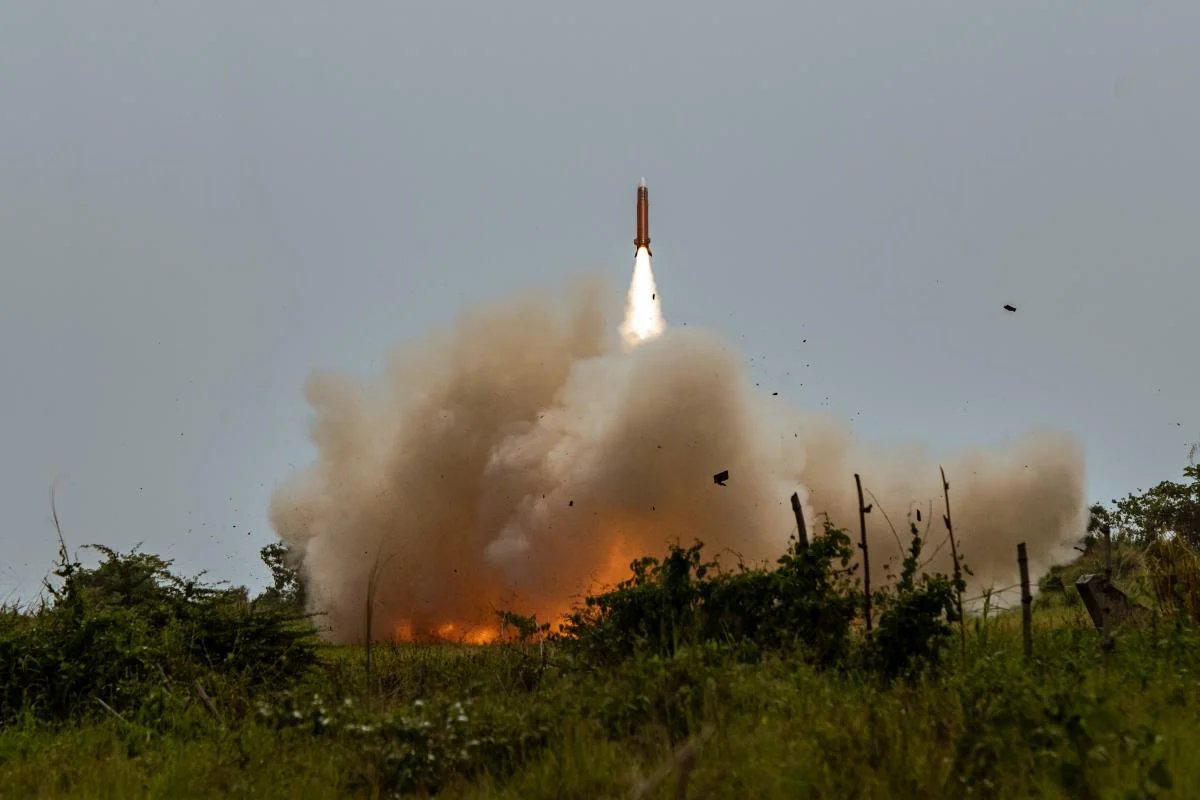
The war in Ukraine is entering a potentially new phase, marked by Kyiv’s increasing ability to strike deep within Russian territory with domestically produced weaponry. Recent attacks, notably a strike on a key missile production facility in Votkinsk, demonstrate a shift from reliance on smaller drones to the deployment of longer-range, heavier-payload cruise missiles like the FP-5 “Flamingo.” This evolving capability is prompting analysis of its potential impact on Russia’s defense industrial capacity and its overall war strategy.
For much of the conflict, Ukraine has focused on utilizing smaller, commercially available drones for reconnaissance and targeted strikes. While effective, these drones often lacked the destructive power to inflict significant damage on heavily fortified or strategically significant infrastructure. The recent Flamingo strike, confirmed by Ukraine’s General Staff, represents a significant escalation, hitting a facility approximately 1,400 kilometers from the Ukrainian border. This marks the first confirmed instance of a Ukrainian heavy missile striking a major Russian missile factory at such a distance, signaling a growing capacity to reach critical targets within Russia.
The Votkinsk Plant, a state-owned defense enterprise, is central to Russia’s missile production. It manufactures Iskander ballistic missiles – frequently used in attacks against Ukraine – as well as intercontinental ballistic missiles (ICBMs) capable of carrying nuclear warheads. The successful strike on this facility, using the Ukrainian-made Flamingo cruise missile, underscores a deliberate strategy to disrupt Russia’s defense supply chains. According to reports, the Flamingo missile destroyed the electroplating and stamping shop at the plant. Ukraine is investing heavily in its missile industry, aiming to replicate the rapid innovation cycle seen in its drone sector, which has become one of the most advanced in the world.
Flamingo Missile: Accuracy and Impact
Analysis of footage from the Votkinsk strike reveals key characteristics of the Flamingo missile. Experts at Defense Express noted the ultra-high accuracy of the weapon, indicating an effective terminal guidance system. The missile’s flight path also suggests a sophisticated navigation capability, given the long range of the attack. Footage shows the missile impacting production workshop No. 22, with subsequent explosions suggesting a significant blast wave effect. A large hole, approximately 30 by 25 meters, was blown in the roof of the workshop, caused by concrete structures being forced outward by the detonation of a one-ton warhead. Initial reports from Russian authorities indicated 11 people were injured, though the full extent of the damage remains unclear.
The increasing range and payload capacity of Ukrainian weaponry are posing new challenges for Russian air defenses. As Ukraine develops and deploys more long-range missiles, Russia is facing the difficult task of defending a vast territory with limited resources. This may necessitate the redeployment of air defense systems away from the front lines, potentially weakening defenses in key combat zones. Defense analyst Yelena Kryzhanovskaya has pointed out that the sheer size of Russia’s territory makes defending against such strikes a continuous and complex undertaking.
Beyond Votkinsk: Expanding Targets and Drone Warfare
The Flamingo strike on Votkinsk is not an isolated incident. Ukraine’s General Staff also confirmed attacks on a gas processing plant in Russia’s Samara Oblast, a fuel and lubricants warehouse in Russian-occupied Donetsk, a drone workshop in Donetsk Oblast, and a military warehouse in Zaporizhzhia Oblast, all utilizing Flamingo missiles. This broader targeting strategy indicates a shift towards disrupting Russia’s logistical network and weakening its ability to sustain military operations. The attacks are also forcing Russia to spread its defensive resources more thinly, potentially creating vulnerabilities elsewhere.
Alongside the development of long-range missile capabilities, Ukraine continues to expand its drone program. U.S. Retired General David Petraeus estimated that Ukraine could potentially manufacture up to 7 million drones per year. Ukrainian forces are currently utilizing approximately 10,000 drones daily for a variety of missions, including reconnaissance and attack operations.
Удари по території РФ стають все більш регулярними та глибокими. Збільшення виробництва ракет та БПЛА дозволяє ЗСУ вражати цілі на відстані понад 1000 км. Це створює серйозні проблеми для російської ППО та логістики. pic.twitter.com/Qnk4kGhwKC
— RBC-Ukraine (@NewsUkraineRBC) February 25, 2026
By increasing the production of relatively inexpensive, long-range drones, Ukraine is exploiting a key Russian weakness: defending a massive territory with numerous industrial and energy facilities.
Investment and Innovation in Ukrainian Arms Production
Ukraine is currently investing millions of dollars in the development of its missile industry, aiming to replicate the rapid innovation seen in its drone sector. While missile production is more expensive and complex than drone manufacturing, Ukraine has already made significant progress in developing weapons systems like the “Neptun” anti-ship missile and the “Flamingo” cruise missile. Ukrainian companies are also experimenting with ballistic missile designs. This commitment to innovation is crucial for sustaining Ukraine’s ability to challenge Russia’s military capabilities.
The increasing capabilities of Ukrainian forces to strike deep within Russia are already causing noticeable disruptions to Russian industry. As one Flamingo missile strike demonstrates the vulnerability of targets over 1,000 kilometers away, it highlights the limitations of Russia’s ability to defend its industrial centers. However, experts caution that no single weapon system will be “revolutionary.” The rapid pace of innovation previously observed in the drone war is now increasingly extending to the missile sector. As production increases and costs decrease, Russia’s air defense systems will likely face mounting pressure.
Recent Attacks and Confirmed Damage
On February 21, 2026, Ukraine’s Armed Forces General Staff confirmed the strike on the Votkinsk Machine Building Plant using long-range cruise Flamingo missiles. The Kyiv Independent reported that the plant produces short-range Iskander-M ballistic missiles and intercontinental ballistic missiles (ICBMs), including those capable of carrying nuclear warheads. Prior to this, on February 20, 2026, Ukrainian forces reportedly struck a microelectronics factory, “Kremnij El,” with Storm Shadow missiles. Ukrainian President Volodymyr Zelenskyy stated that the factory manufactures control systems for all types of Russian missiles.
The ability to target key components of Russia’s missile production infrastructure represents a significant strategic advantage for Ukraine. By disrupting the supply of critical components, Ukraine aims to degrade Russia’s ability to replenish its missile stockpiles and sustain its offensive operations. This strategy is particularly important as the conflict enters a protracted phase, where attrition and logistical challenges are becoming increasingly significant.
Key Takeaways
- Ukraine is expanding its strike capabilities with domestically produced long-range missiles like the Flamingo.
- The Votkinsk missile plant strike demonstrates Ukraine’s ability to reach critical infrastructure deep within Russia.
- Increased missile production and drone warfare are forcing Russia to adapt its air defense strategies.
- Disrupting Russia’s defense industrial complex is a key component of Ukraine’s overall war strategy.
As Ukraine continues to develop and deploy advanced weaponry, the dynamics of the conflict are likely to evolve further. The ability to strike deep within Russian territory presents both opportunities and challenges for Kyiv, requiring careful consideration of escalation risks and strategic objectives. The next key development to watch will be the scale and pace of Ukraine’s missile production, and Russia’s response to these increasingly bold attacks.
What are your thoughts on Ukraine’s evolving military capabilities? Share your comments below, and please share this article with your network.
Keep reading