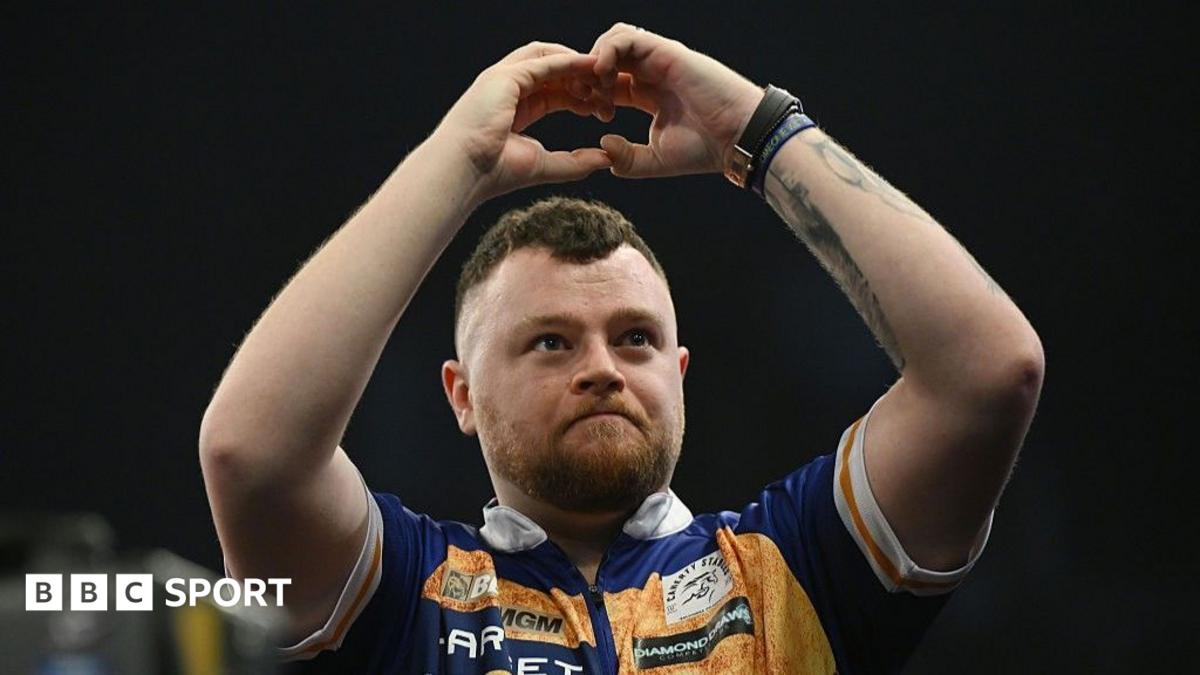
The pursuit of perfection in sports often leads to moments of breathtaking skill, but sometimes, achieving that pinnacle can be… unsettling. In the world of professional darts, the elusive nine-dart finish – a feat of accuracy and composure – is increasingly becoming a talking point, not just for its rarity, but for a curious trend: players who achieve it often don’t go on to win the match. This phenomenon, coupled with a recent surge in nine-darters, raises questions about the psychological impact of hitting perfection and whether the rewards are beginning to overshadow the ultimate goal of victory.
The latest player to etch her name into the history books is Beau Greaves, a 22-year-old darts sensation who became the first woman to record a nine-dart finish on the Professional Darts Corporation (PDC) ProTour. As reported by SportBible, Greaves achieved this remarkable feat during her second-round match at Players Championship 6 in Leicester against Mensur Suljovic. Her flawless leg, consisting of back-to-back 180s followed by a 141 finish, was met with stunned silence and then enthusiastic applause, even prompting a bow of appreciation from her opponent. Greaves, who earned a tour card at the conclude of 2025 after dominating the Women’s Series, is quickly establishing herself as a force to be reckoned with in the sport.
The Nine-Dart Curse: A Pattern of Post-Perfection Slumps
While Greaves ultimately secured a 6-5 victory over Suljovic, her experience highlights a peculiar pattern that has been observed repeatedly in professional darts. The achievement of a nine-darter, often described as the ‘holy grail’ of the sport, doesn’t always translate into match success. Former professional player Bobby George, as cited in reports, suggests that the intense emotional high of hitting a nine-darter can disrupt a player’s focus and rhythm. “It’s a mental barrier,” George explained. “They are still overjoyed about it in the nine-darter and the standard just seems to drop that little touch.”
This isn’t a modern observation. Fifteen years ago, Phil Priestley, a veteran of the sport, also experienced this phenomenon, hitting his only PDC-recognised nine-darter against Mensur Suljovic – and subsequently losing the match. More recently, this trend has continued. Ryan Searle hit a nine-darter in Belfast, only to fall short in the match. Gian van Veen, despite achieving a nine-darter himself, lost in the final of the Poland Darts Open to Luke Littler. Even at the highest level, during the 2025 World Championship, both Christian Kist and Damon Heta hit nine-darters, yet both ultimately lost their respective matches. The statistics suggest that the “consummate professional,” as George puts it, is “more than 50% likely to lose rather than win after hitting a nine-darter.”
The Rising Frequency of Perfection
The increasing frequency of nine-dart finishes is also a notable trend. While once a truly exceptional event, the number of perfect legs being recorded has been steadily rising. This increase is likely due to a combination of factors, including improved dartboard technology, enhanced player skill, and a greater emphasis on precision training. Still, it also contributes to the debate about whether the pursuit of the nine-darter is becoming a distraction from the primary objective of winning matches. The pressure to achieve this spectacular feat, coupled with the substantial rewards now on offer, could be influencing player strategy and potentially contributing to the post-nine-darter slump.
Financial Incentives and the Value of Perfection
The financial rewards associated with hitting a nine-darter have grown significantly in recent years. Recognizing the rarity and excitement generated by a perfect leg, tournament organizers are increasingly offering substantial prizes. At the 2025 World Championship, both Christian Kist and Damon Heta were awarded £60,000 for their nine-darters, a sum that, according to the Independent, exceeded their earnings from progressing further in the competition. More recently, Ryan Searle received a custom-made set of gold darts worth £30,000 for his nine-darter in Premier League Darts, dwarfing the £10,000 prize won by Stephen Bunting for winning the final that same week.
While players generally maintain that their primary focus remains on winning the match, the allure of these substantial prizes cannot be ignored. Former player John Lowe, who won £102,000 for a nine-darter in 1983, acknowledged the significant incentive such rewards provide. However, he also noted that as nine-darters turn into more common, the prize money offered is unlikely to reach those earlier heights. The question remains whether these financial incentives are subtly shifting the focus of players, encouraging them to prioritize the pursuit of perfection over the overall goal of tournament victory.
The Psychological Impact: A Delicate Balance
The psychological impact of hitting a nine-darter is undoubtedly significant. The intense focus, precision, and pressure involved in achieving such a feat are immense. The immediate aftermath is often characterized by a surge of adrenaline and euphoria. However, as Bobby George suggests, this emotional high can be detrimental to maintaining the composure and concentration required to continue performing at a consistently high level. The challenge for professional darts players is to locate a way to manage this emotional response, to harness the positive energy of the nine-darter without allowing it to disrupt their overall game plan.
The ability to compartmentalize and refocus after achieving perfection is a skill that separates the truly elite players from the rest. It requires a level of mental fortitude and discipline that is honed through years of experience and training. Players who can successfully navigate this psychological challenge are more likely to translate a nine-darter into a match win, while those who succumb to the emotional rollercoaster may find themselves struggling to regain their composure.
Looking Ahead: The Future of the Nine-Darter
As the frequency of nine-darters continues to increase, the debate about their impact on match outcomes is likely to intensify. Tournament organizers may need to consider whether the current prize structure inadvertently incentivizes players to prioritize perfection over victory. Perhaps a more balanced approach, with a greater emphasis on rewarding overall tournament performance, would encourage players to maintain a consistent level of focus throughout the entire match.
The story of Beau Greaves, and the broader trend of nine-darters followed by match losses, serves as a compelling reminder that in the world of professional darts, as in many other sports, achieving perfection is not always the key to success. It is the ability to maintain composure, focus, and strategic thinking that ultimately determines the outcome of the competition. The pursuit of the nine-darter will undoubtedly continue to captivate fans and inspire players, but it is crucial to remember that it is just one leg in a longer, more complex game.
The PDC season continues with the German Darts Championship in early April. Fans and analysts will be watching closely to see if the “nine-darter curse” continues to hold true, and whether players can find a way to harness the power of perfection without sacrificing their chances of victory. What are your thoughts on the psychological impact of hitting a nine-darter? Share your opinions in the comments below, and don’t forget to share this article with fellow darts enthusiasts.
Keep reading