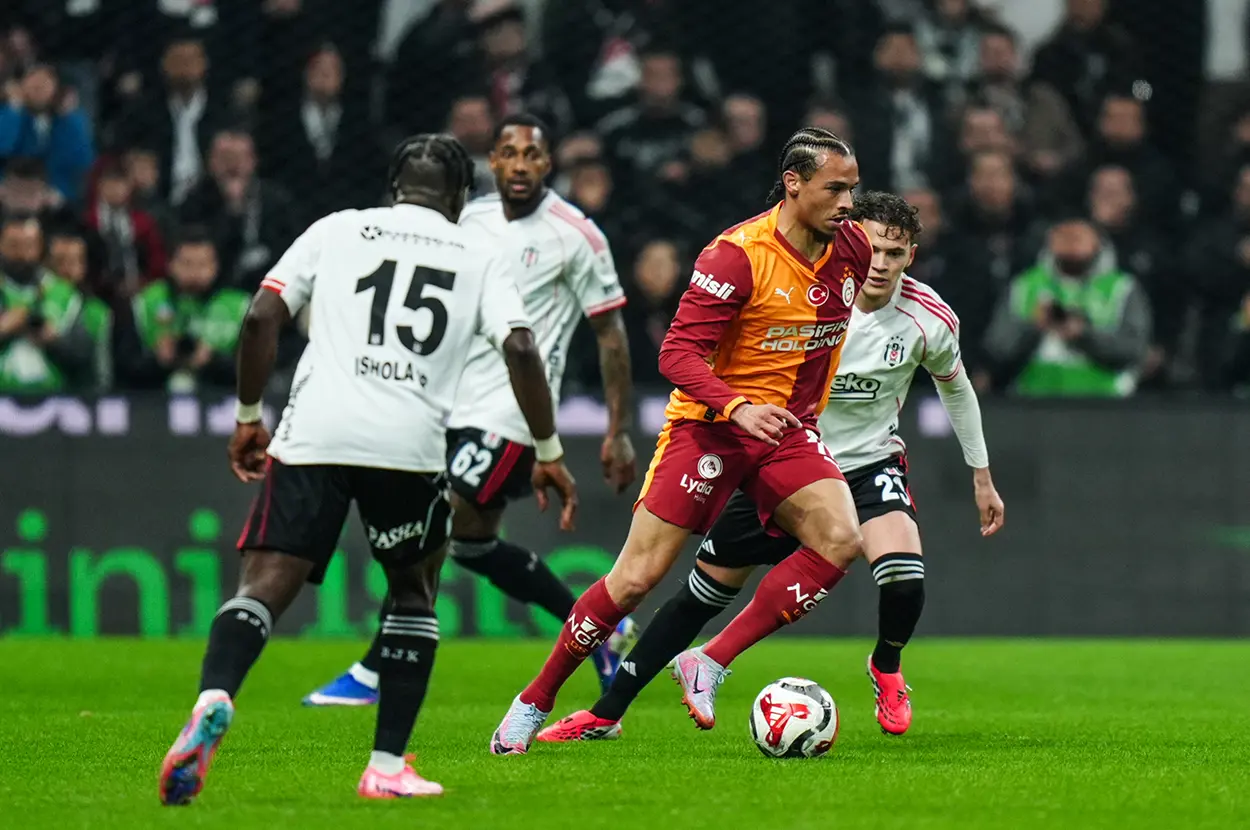
Istanbul – A controversial decision during the recent Beşiktaş-Galatasaray derby, involving a challenge by Leroy Sané on Kristjan Asllani, has sparked significant debate and prompted a response from the Turkish Football Federation (TFF). The incident, which occurred in the 23rd minute of the match on March 7, 2026, saw Sané receive a yellow card for the tackle, a decision that Beşiktaş officials vehemently contested, arguing for a red card. The fallout from the match continues to reverberate through Turkish football, raising questions about consistency in officiating and the interpretation of rules regarding reckless challenges.
The match, a highly anticipated clash in the Trendyol Süper Lig, ended with tensions flaring not only on the pitch but as well in the stands and amongst club officials. Beşiktaş supporters and management believed Sané’s challenge warranted a more severe punishment, potentially altering the course of the game. The club even issued a social media post during the match, questioning what further action would be required to justify a red card, accompanied by an image highlighting the incident.
Daha ne olması gerekiyor???#BJKvGS pic.twitter.com/YfvXayFrxg
— Beşiktaş JK (@Besiktas) March 7, 2026
The Incident and Initial Reactions
The challenge in question involved Sané going in for a tackle on Asllani. Reports indicate that Sané was late in the challenge and made contact with Asllani’s ankle with his studs, a detail highlighted by German football expert Merkur. As reported by Haberler.com, Merkur described the tackle as causing a “great reaction” and noted the potentially dangerous nature of the contact. Beşiktaş players immediately protested the decision to issue only a yellow card, surrounding the referee and expressing their dissatisfaction.
Adding to the drama, Beşiktaş midfielder Orkun Kökçü received a yellow card himself in the 29th minute for sarcastically applauding the referee’s initial decision regarding Sané’s tackle. This further escalated the tension and demonstrated the depth of Beşiktaş’s frustration with the officiating. Beşiktaş manager Sergen Yalçın also visibly expressed his disagreement with the call, with his reaction captured by television cameras. Sportz.news detailed these reactions, emphasizing the widespread discontent within the Beşiktaş camp.
TFF’s Response and Capela’s Explanation
In response to Beşiktaş’s strong objections, the TFF issued a statement through refereeing official Capela, attempting to clarify the reasoning behind the decision. Capela acknowledged the challenge was “borderline,” but ultimately defended the referee’s decision to award a yellow card. According to T24, Capela stated that the referee made the correct call, emphasizing the importance of consistent application of the rules and referencing similar situations and decisions made by UEFA.
Capela further explained that although the tackle involved “strong and unfair contact,” the absence of a clear attempt to play the ball contributed to the decision to issue a yellow card rather than a red. He also noted that the situation was a matter of interpretation, and that UEFA guidelines support the referee’s assessment. He stated, “Here’s a borderline position. The referee’s yellow card is correct. We are making these comparisons and explaining them. There are many different decisions like this. UEFA has a decision for this position. Borderline position. The referee’s yellow card decision for Sane is correct.”
The Debate Over Reckless Challenges and Player Safety
The incident has reignited the debate surrounding reckless challenges in football and the demand to prioritize player safety. While Sané did not intentionally aim to injure Asllani, the nature of the tackle raised concerns about the potential for serious harm. The discussion extends beyond this specific incident, touching upon the broader issue of how referees balance protecting players with allowing the game to flow.
The challenge highlights the difficulty in determining the threshold for a red card in such situations. Referees must assess the intent of the player, the force of the challenge, and the potential for injury. The subjectivity inherent in these assessments often leads to controversy and disagreement, as evidenced by the strong reactions from Beşiktaş officials and supporters. The incident also underscores the importance of clear and consistent guidelines from governing bodies like UEFA and the TFF to ensure fair and equitable officiating.
Looking Ahead: Potential Implications and Future Considerations
The TFF’s explanation is unlikely to fully satisfy Beşiktaş, and the club may continue to voice its concerns regarding the standard of officiating in Turkish football. The incident could prompt further discussions about the use of video assistant referee (VAR) technology and whether it could have been used more effectively in this situation.
the debate surrounding Sané’s tackle may lead to a re-evaluation of the rules regarding reckless challenges and the penalties associated with them. The focus will likely be on finding a balance between protecting players and maintaining the competitive integrity of the game. The next steps will involve monitoring how referees apply these rules in future matches and assessing whether any adjustments are necessary to ensure fairness and player safety. The Turkish Football Federation is expected to review the incident as part of its ongoing assessment of referee performance throughout the season.
The Beşiktaş-Galatasaray derby continues to be a focal point of discussion within Turkish football, and the controversy surrounding Sané’s tackle serves as a reminder of the challenges faced by referees and the importance of clear and consistent application of the rules. The incident also highlights the passion and intensity that characterize the rivalry between these two historic clubs.
The next scheduled action regarding this matter will be the TFF’s regular review of refereeing decisions from the week’s matches, expected to be released on March 19, 2026. Readers are encouraged to share their thoughts on the incident and the officiating in the comments section below.
Worth a look