London, United Kingdom – Escalating tensions in the Middle East are sending shockwaves through global energy markets, as Iran’s new Supreme Leader, Mojtaba Khamenei, signals a continuation of hardline policies amid a widening conflict. The disruption to oil trade, coupled with a recent U.S. Military plane crash in Iraq, underscores the precariousness of the region and the potential for further instability. The appointment of Mojtaba Khamenei follows the death of his father, Ayatollah Ali Khamenei, in a U.S.-Israeli strike on February 28th, an event that triggered the current wave of unrest.
The situation is further complicated by Iran’s stance on the critical Strait of Hormuz, a vital artery for global oil shipments. Mojtaba Khamenei, in his first public statement since assuming the leadership, has vowed to continue leveraging the strait to pressure Iran’s adversaries. This declaration, delivered via state media, has heightened concerns about potential disruptions to the world’s energy supply and sent oil prices climbing. The new Supreme Leader’s message, while framed as defensive, too includes warnings about targeting foreign military bases in the region if they are used to attack Iran and suggests support for armed groups in Yemen and Iraq.
A New Leader, Familiar Rhetoric
Mojtaba Khamenei, 56, was swiftly appointed as the third Supreme Leader of Iran by the Assembly of Experts, a body of 88 Islamic religious scholars vetted for loyalty to the supreme leadership. The decision, reportedly influenced by the Islamic Revolutionary Guard Corps (IRGC), marks a significant transition for the Islamic Republic. While both father and son have publicly opposed hereditary rule, the appointment of Mojtaba Khamenei represents a continuation of the established political order. The Independent reported on the confirmation of his succession following his father’s death.
The new leader’s initial statement, described as heavily reliant on religious language, emphasizes continuity and national unity. He positions himself as both the successor to his father and to Ayatollah Ruhollah Khomeini, the founder of the Islamic Republic. This messaging appears aimed at stabilizing the country following a period of immense upheaval. The statement frames the conflict as a response to attacks from what Khamenei refers to as the “leaders of the arrogant front,” a common euphemism for Western powers and their allies. Notably, the U.S. And Israel are not directly named in the statement, but are referenced through indirect language like “Zionist sedition.”
Oil Trade Paralyzed by Regional Instability
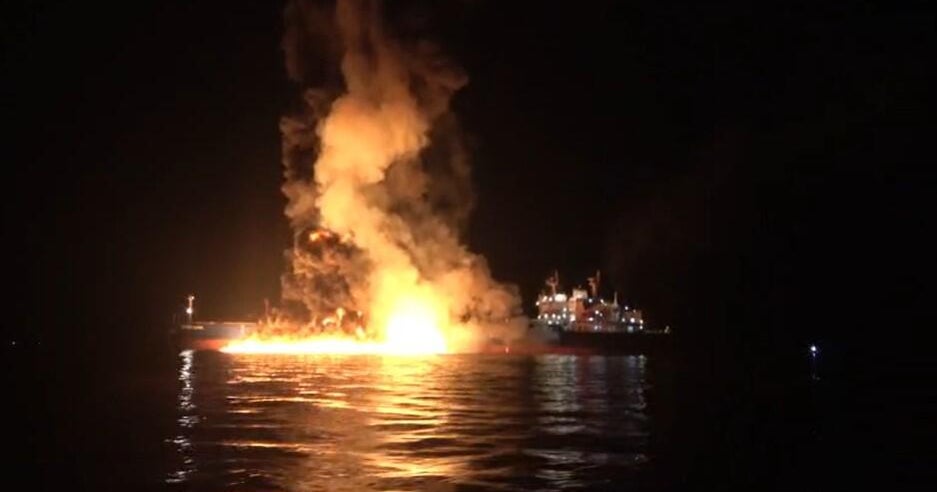
The escalating conflict is having a tangible impact on global oil markets. Disruptions to shipping routes, coupled with fears of further attacks, are driving up prices and creating uncertainty for energy consumers worldwide. The Strait of Hormuz, through which approximately 20% of the world’s oil supply passes, is a particularly vulnerable point. Mojtaba Khamenei’s pledge to continue using the strait as leverage raises the specter of further disruptions, potentially leading to a significant spike in energy costs. Analysts are closely monitoring the situation, with some warning of a potential global recession if the conflict continues to escalate and oil supplies are severely curtailed.
Beyond the Strait of Hormuz, attacks on oil infrastructure in the region are also contributing to the crisis. Houthi rebels in Yemen have repeatedly targeted oil tankers and facilities, while tensions remain high in Iraq, where Iran-backed militias operate. The recent crash of a U.S. Military plane in Iraq, while not directly linked to the conflict, adds to the sense of instability and underscores the risks of operating in the region. Details surrounding the crash remain limited, but it highlights the potential for miscalculation and escalation.
U.S. Military Plane Crash in Iraq Raises Concerns
On March 12, 2026, a U.S. Military aircraft crashed in Iraq, according to initial reports. The circumstances surrounding the incident are still under investigation, and the cause of the crash remains unknown. While no immediate claim of responsibility has been made, the incident occurred amidst heightened tensions and increased military activity in the region. The crash raises concerns about the safety of U.S. Personnel operating in Iraq and the potential for further escalation of the conflict. The U.S. Military has not yet released detailed information about the type of aircraft involved or the number of casualties, but confirmed an investigation is underway.
Iran’s Regional Network and Future Strategy
Mojtaba Khamenei’s statement also signals a continued reliance on Iran’s network of regional allies, including the Houthis in Yemen and Hezbollah in Lebanon. These groups have been instrumental in projecting Iranian influence throughout the Middle East and have played a key role in the current conflict. The new Supreme Leader’s praise for these partners suggests that Iran will continue to support them and coordinate its actions with them in the future. This network poses a significant challenge to regional stability and complicates efforts to de-escalate the conflict.
Despite the aggressive rhetoric, Mojtaba Khamenei also expressed a desire for “warm and constructive relations” with Iran’s neighbors. However, this offer is contingent on the cessation of attacks against Iran and a willingness to respect its interests. The new leader also insisted that Iran has no intention of dominating the region, a claim that is likely to be met with skepticism by its regional rivals. The statement suggests a complex and nuanced approach, combining a willingness to defend Iran’s interests with a desire for regional stability, albeit on its own terms.
The Role of the Strait of Hormuz
The Strait of Hormuz remains a central point of contention. Iran has repeatedly threatened to close the strait in response to sanctions or military action against it. While a complete closure would have devastating consequences for the global economy, even a partial disruption could significantly impact oil prices and supply. Mojtaba Khamenei’s reaffirmation of Iran’s right to control the strait underscores the potential for further escalation and the need for diplomatic efforts to prevent a wider conflict. The Al Jazeera report highlights the significance of this strategic waterway in Iran’s calculations.
The new Supreme Leader’s message also included a call for Iranians to remain united and avenge those killed in the attacks, including his father. This language suggests a leadership preparing its population for a prolonged conflict and seeking to rally support for its policies. The call to attend Quds Day events, an annual demonstration of solidarity with Palestinians, further underscores Iran’s commitment to its regional agenda.
Mojtaba Khamenei’s background is relatively unknown compared to his father. He has largely remained out of the public eye, focusing on Islamic theology and military training. According to the New York Times, he has a background in both Islamic theology and the military, currently teaching advanced theology at a religious seminary in Qom. This lack of public profile raises questions about his leadership style and his ability to navigate the complex challenges facing Iran.
The assassination of Ayatollah Ali Khamenei and the subsequent appointment of his son represent a pivotal moment in Iranian history. The new leadership faces a daunting array of challenges, including a widening conflict, economic sanctions, and internal political pressures. The coming months will be critical in determining the future of Iran and the stability of the Middle East.
The situation remains fluid and highly volatile. The international community is closely monitoring developments and urging all parties to exercise restraint. Further diplomatic efforts are needed to de-escalate the conflict and prevent a wider war. The next key event to watch will be the upcoming session of the United Nations Security Council, scheduled for March 20, 2026, where the situation in the Middle East is expected to be discussed.
Stay informed: Follow World Today Journal for continuing coverage of the evolving situation in the Middle East and its global implications. Share your thoughts and perspectives in the comments below.
- 15 Best Made in Hérault Products to Buy and Taste
- Vance Boelter Asks Judge About Sen. Amy Klobuchar at State Court Hearing
- Supreme Court Rulings on Student Protests and Police Accountability (world-today-news.com)
- Sony Pictures Updates Box Office Projections for Christopher Nolan Film (newsdirectory3.com)