Salzburg and Tirol recently concluded a large-scale disaster preparedness exercise, OLEX.26, designed to test the coordinated response of numerous organizations to a severe weather event. The exercise, which took place from March 4th to 6th, 2026, involved approximately 300 personnel from various agencies, including police, the Austrian Armed Forces, mountain rescue, the Red Cross, and fire departments. This collaborative effort underscores the growing importance of inter-agency cooperation in mitigating the impact of increasingly frequent and intense natural disasters. The focus of OLEX.26 was a simulated extreme weather scenario mirroring the heavy snowfall Salzburg experienced in January 2019, a situation that tested the region’s infrastructure and emergency response capabilities.
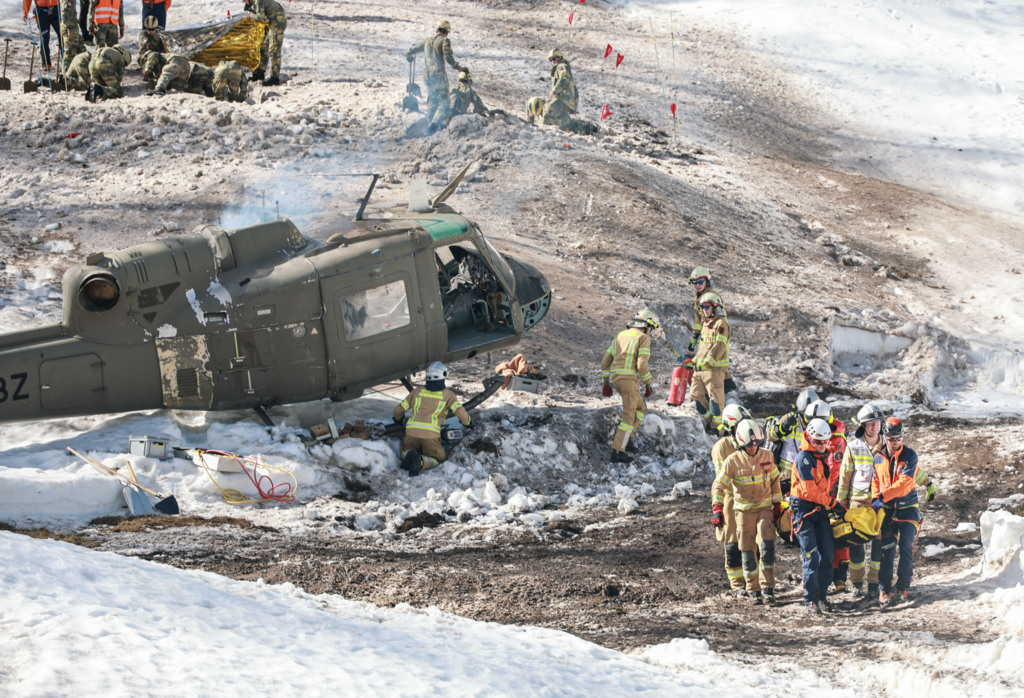
The exercise wasn’t simply a tabletop simulation; it culminated in a realistic field exercise at the Truppenübungsplatz Hochfilzen in Tirol. This real-world component involved a simulated helicopter crash, complete with a controlled fire, multiple casualties – some critically injured – and a simulated avalanche. The scenario demanded rapid and coordinated action from all participating organizations, testing their ability to operate effectively under pressure and challenging conditions. The ability to maintain essential services – transportation, energy, communications, and the supply of necessities to the population – was a key objective throughout the exercise. This proactive approach to disaster preparedness is crucial for ensuring the safety and well-being of citizens in the face of potential crises.
Coordinated Response Across Multiple Agencies
OLEX.26 involved more than 24 partner organizations, highlighting the complex network of cooperation required for effective disaster management. According to Markus Kurcz of the Salzburg Disaster Protection Agency, the exercise’s success hinged on the willingness of all involved to dedicate personnel and time to the effort. Beyond the core emergency services, the exercise incorporated representatives from telecommunications, education, energy providers, rail and bus transport, meteorological services, and various expert consultants, as well as district administrative offices and all relevant departments within the state of Salzburg. This broad participation aimed to create a realistic representation of the challenges faced during a major disaster and to facilitate a comprehensive assessment of response strategies.
The collaborative spirit of the exercise was also emphasized by Tirol’s Governor, Anton Mattle, who stated that OLEX.26 demonstrated the strong working relationship between Salzburg and Tirol in emergency situations. The state of Tirol’s official website details the exercise, noting the simulation of a helicopter crash with a subsequent fire and avalanche, requiring a coordinated response from all participating organizations.
Realistic Simulation at Hochfilzen Training Area
The centerpiece of OLEX.26 was the large-scale real-life exercise conducted at the Truppenübungsplatz Hochfilzen, a military training area in Tirol. The scenario involved a simulated helicopter crash, complete with a deliberately ignited wreckage, multiple casualties with varying degrees of injury, and a triggered avalanche. Around 200 emergency responders worked under challenging conditions – poor visibility and intense time pressure – to extinguish the fire, locate and rescue injured individuals, and prepare them for evacuation by air, and ground. The Austrian Armed Forces played a leading role in organizing the exercise, even going so far as to position a real helicopter wreck on the training grounds and set it ablaze for realistic training purposes.
This level of realism is critical for preparing emergency responders for the unpredictable nature of real-world disasters. The exercise provided a valuable opportunity to test communication protocols, coordination procedures, and the effectiveness of different rescue techniques in a high-stress environment. The use of a real wreckage and simulated casualties added a layer of psychological realism, forcing responders to make difficult decisions under pressure.
Evaluation and Future Improvements
Both the command post exercise and the field exercise were thoroughly evaluated by experts. The insights gained from this evaluation will be used to improve future disaster response efforts. A key area for improvement identified during the exercise is the timely exchange of data and coordination between states when a catastrophic event is unfolding. This highlights the need for standardized communication protocols and data-sharing platforms to ensure seamless collaboration across regional boundaries.
Landeshauptfrau Karoline Edtstadler emphasized the positive outcome of the exercise, stating, “To see with what care and responsibility this work is done gives a very good feeling that we are well prepared for crisis situations.” According to the Salzburg state government website, the exercise involved hundreds of participants and a wide range of organizations, demonstrating a commitment to comprehensive disaster preparedness.
Key Takeaways
- Inter-agency Collaboration: OLEX.26 underscored the vital importance of coordinated efforts between various emergency response organizations.
- Realistic Training: The use of a real helicopter wreck and simulated casualties enhanced the realism of the exercise, providing valuable training for responders.
- Data Sharing & Coordination: Improving the timely exchange of information and coordination between states was identified as a key area for future improvement.
- Preparedness is Paramount: The exercise reinforced the message that proactive disaster preparedness is essential for protecting citizens and maintaining essential services.
The success of OLEX.26 demonstrates a strong commitment to disaster preparedness in both Salzburg and Tirol. The lessons learned from this exercise will undoubtedly contribute to a more effective and coordinated response to future emergencies. Further evaluations and ongoing training will be crucial to maintaining a high level of readiness and ensuring the safety and security of the region’s population. The next scheduled review of the disaster preparedness plan is set for December 2026, where the findings from OLEX.26 will be formally integrated into updated protocols.
What are your thoughts on the importance of disaster preparedness exercises? Share your comments below, and please share this article with your network to raise awareness about the importance of community resilience.
Keep reading