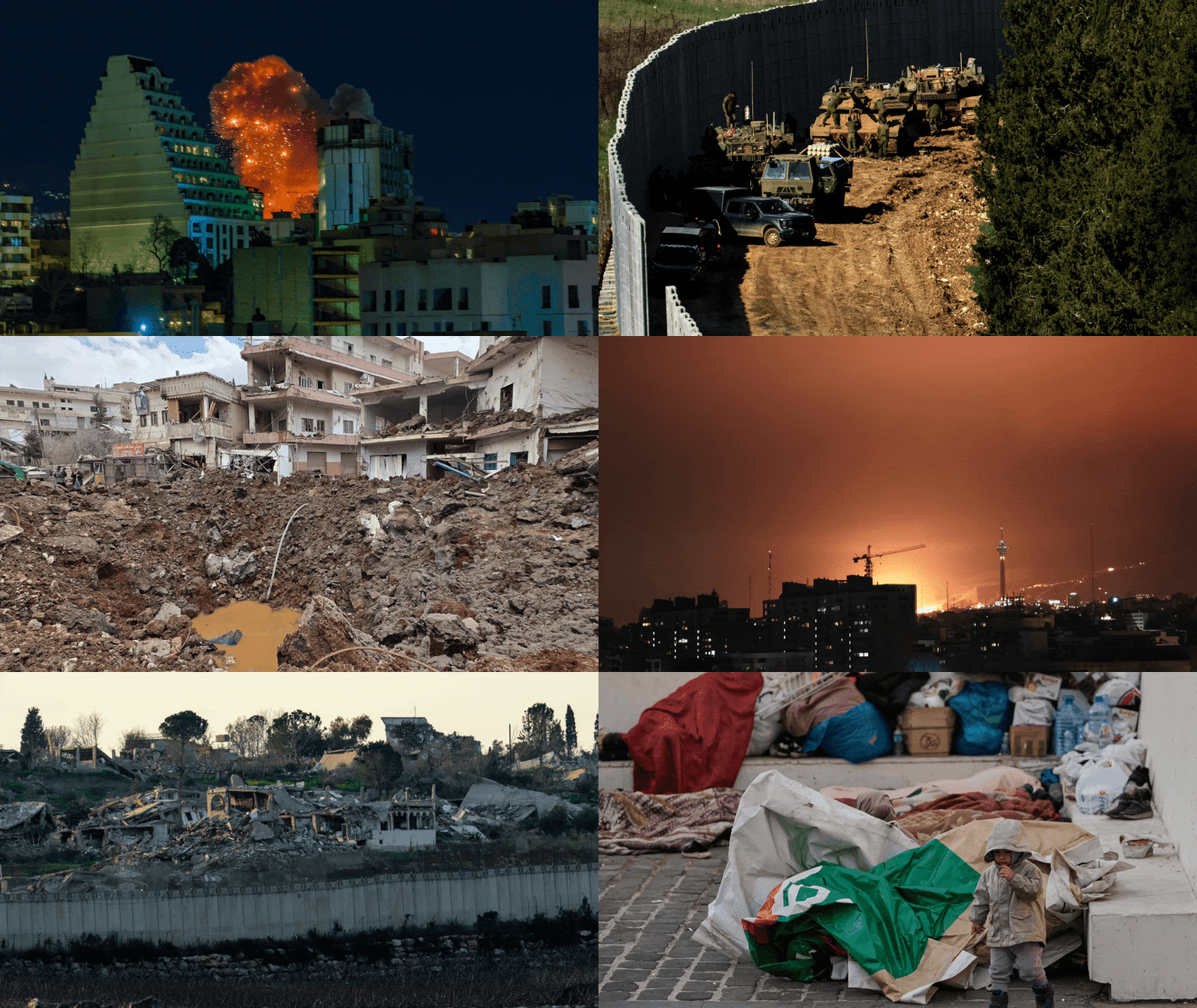
The geopolitical landscape of the Middle East remains volatile as the conflict involving Iran continues to escalate. Amidst ongoing military actions by the United States and Israel, questions are surfacing regarding the leadership and stability within Iran. Recent claims by U.S. Defense Secretary Pete Hegseth allege that Iran’s new Supreme Leader, Mojtaba Khamenei, sustained injuries during the recent attacks, raising concerns about his ability to effectively lead the nation during this critical period. This development comes as Iran vows to retaliate and maintains a firm stance on regional control, particularly concerning the Strait of Hormuz.
The situation is further complicated by the lack of public appearances by Khamenei since assuming the role of Supreme Leader following the death of his father, Ayatollah Ali Khamenei, on February 28th. His initial statement, delivered via state television, lacked the visual and auditory presence typically associated with such announcements, fueling speculation about the extent of any potential injuries. The absence of direct communication from the new leader has prompted scrutiny from international observers and raised doubts about the legitimacy of his authority, particularly as the country faces mounting pressure from both military action and economic sanctions.
The claims made by Secretary Hegseth, while lacking concrete evidence, have added another layer of complexity to an already fraught situation. Hegseth stated that Khamenei is “wounded and likely disfigured,” basing his assessment on the unusual format of the new leader’s first public statement. This assessment, yet, has not been independently verified, and Iranian officials have offered limited information regarding Khamenei’s condition, describing him as “war-wounded” but continuing to operate. The conflicting reports and lack of transparency contribute to the uncertainty surrounding the leadership transition in Iran and its potential impact on regional stability.
Escalating Tensions and Regional Implications
The current conflict stems from a series of escalating tensions between Iran and the United States, and Israel. The recent attacks on Iranian soil have prompted strong condemnation from Iranian officials, who have vowed to retaliate against perceived aggressors. A key element of Iran’s response has been its threat to close the Strait of Hormuz, a vital waterway for global oil supplies. This action would have significant repercussions for the global economy, potentially disrupting energy markets and leading to increased prices. The Strait of Hormuz connects the Persian Gulf with the Gulf of Oman and the Arabian Sea, and approximately 20% of the world’s oil passes through it daily. ABC News reports that Khamenei, in his first statement, called on neighboring countries to close US bases on their territory or risk Iran targeting them.
The United States, under President Donald Trump, has maintained a hardline stance towards Iran, accusing the country of destabilizing activities in the region. The recent military actions are presented as a response to these perceived threats and a demonstration of resolve. However, critics argue that the escalating conflict risks further destabilizing the region and potentially leading to a wider war. The involvement of Israel adds another layer of complexity, as the country has a long-standing history of tensions with Iran and has been accused of conducting covert operations within Iranian territory. The situation is further complicated by the presence of various proxy groups and non-state actors in the region, who could potentially be drawn into the conflict.
The Question of Leadership and Legitimacy
The health and leadership capabilities of Mojtaba Khamenei are now central to the unfolding crisis. The lack of public appearances and the reliance on written statements have raised questions about his ability to command the Iranian military and effectively navigate the current geopolitical challenges. Secretary Hegseth’s claims, while unverified, have amplified these concerns, suggesting that Khamenei may be incapacitated or lacking the authority to craft critical decisions. The absence of a strong and visible leader could create a power vacuum within Iran, potentially leading to internal instability and further complicating the international response.
The transition of power following the death of Ayatollah Ali Khamenei was already a sensitive issue, given his decades-long role as the supreme religious and political leader of Iran. Mojtaba Khamenei, while widely expected to succeed his father, lacks the same level of experience and public recognition. His legitimacy as the new Supreme Leader is now further challenged by the circumstances surrounding his ascension and the questions surrounding his health. The Iranian government’s decision to release a written statement rather than a televised address has only fueled speculation and raised doubts about his ability to project strength and authority.
Economic Fallout and Global Concerns
Beyond the immediate military and political implications, the conflict is also having a significant impact on the global economy. The threat to close the Strait of Hormuz has sent shockwaves through energy markets, leading to concerns about potential supply disruptions and price increases. In response, the United States has issued a partial 30-day waiver for purchases of sanctioned Russian oil, as reported by ABC News, in an attempt to ease prices and stabilize the market. This move, however, has been criticized by some as a concession to Russia and a weakening of sanctions policy.
The conflict is also impacting global trade routes and supply chains, as companies reroute shipments to avoid the region. The increased risk of attacks on commercial vessels has led to higher insurance costs and delays in deliveries. The economic fallout is particularly acute for countries that rely heavily on oil imports from the Middle East, as well as those with significant trade ties to Iran. The ongoing uncertainty is also weighing on investor confidence, leading to volatility in financial markets. The Australian Securities Exchange (ASX) has reportedly experienced losses totaling $200 billion, reflecting the broader global economic concerns stemming from the conflict.
Australia’s Response and Domestic Impacts
Australia, while geographically distant from the immediate conflict zone, is not immune to its effects. The economic repercussions, including potential increases in fuel prices and disruptions to trade, are already being felt domestically. The Australian government has responded by releasing strategic fuel reserves to mitigate potential shortages, addressing concerns about diesel and petrol supply. The government is closely monitoring the situation and working with international partners to ensure the stability of energy markets and protect Australian interests. The potential for cyberattacks and disinformation campaigns linked to the conflict also poses a threat to Australian infrastructure and national security.
The Australian government has consistently called for de-escalation and a peaceful resolution to the conflict. Officials have emphasized the importance of upholding international law and protecting freedom of navigation in the region. Australia is also providing humanitarian assistance to countries affected by the conflict and working to support diplomatic efforts to find a sustainable solution. The situation underscores the interconnectedness of the global community and the demand for coordinated international action to address complex geopolitical challenges.
Looking Ahead: Potential Scenarios and Next Steps
The future trajectory of the conflict remains uncertain. Several potential scenarios could unfold, ranging from a negotiated settlement to a full-scale regional war. A key factor will be the response of Iran to the ongoing military actions and the extent to which This proves willing to engage in diplomatic negotiations. The role of other regional actors, such as Saudi Arabia and Turkey, will also be crucial in shaping the outcome. The United States and Israel will likely continue to exert pressure on Iran, but the risk of escalation remains high.
The international community is urging all parties to exercise restraint and prioritize dialogue. The United Nations Security Council is expected to hold further discussions on the situation, but the prospects for a unified response are limited due to divisions among member states. The European Union is also attempting to mediate between Iran and the United States, but its efforts have so far yielded limited results. The coming weeks will be critical in determining whether the conflict can be contained or whether it will spiral into a wider regional war. The next official update from the Pentagon regarding the situation in Iran is expected on March 20th, and will likely be closely watched by international observers.
Key Takeaways:
- U.S. Defense Secretary Pete Hegseth claims Iran’s new Supreme Leader, Mojtaba Khamenei, is wounded, though this remains unconfirmed.
- Iran has vowed retaliation for recent attacks and threatens to close the Strait of Hormuz, a critical global shipping lane.
- The conflict is impacting global energy markets and leading to economic uncertainty.
- Australia has released strategic fuel reserves to mitigate potential domestic shortages.
- The situation remains highly volatile, with the potential for further escalation.
The evolving situation in the Middle East demands continued vigilance and informed analysis. We encourage readers to share their perspectives and engage in constructive dialogue in the comments section below. Please also share this article with your networks to aid raise awareness of this critical global issue.
Worth a look