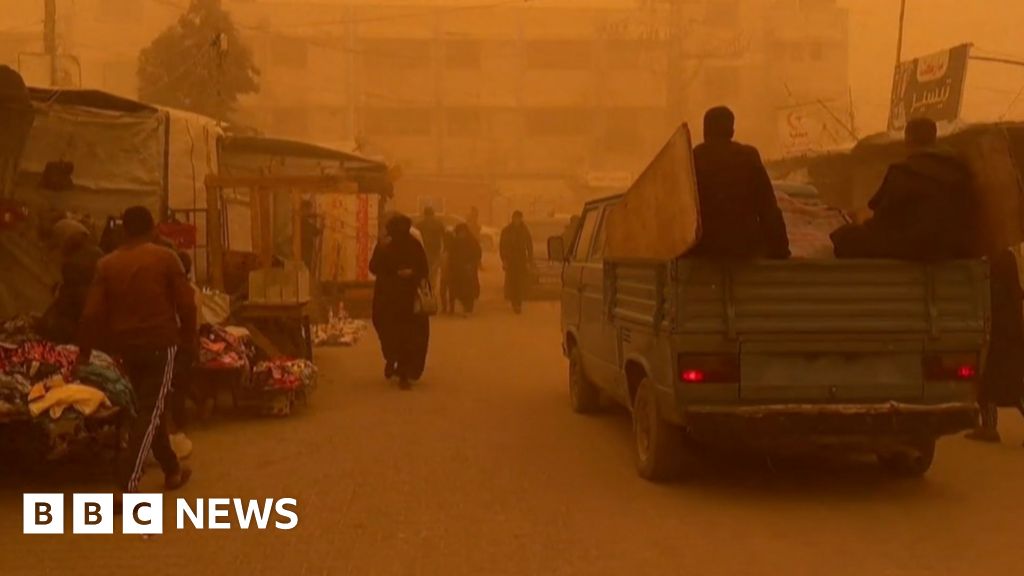
Gaza City, Gaza Strip – Residents of the Gaza Strip are bracing for the effects of a severe sandstorm that swept across the region on Saturday, prompting urgent warnings to seek shelter. The storm arrives at a particularly vulnerable time for the territory’s population, the vast majority of whom are already displaced and living in precarious conditions following months of intense conflict.
The current situation is particularly dire as over two million Palestinians in Gaza remain displaced, many residing in tents or structures severely damaged by the ongoing Israel-Hamas war. The conflict, which began on October 7, 2023, following a Hamas assault on Israel that resulted in over 1,200 Israeli deaths, has led to widespread destruction and a humanitarian crisis within the Gaza Strip. The Israel-Hamas War has seen a devastating toll, with the Hamas-run health ministry reporting more than 72,000 Gazan deaths as of February 2026, according to reports from the BBC.
First responders operating under the authority of the Hamas-run Interior Ministry have issued advisories urging residents to secure tents and other temporary shelters to prevent them from being blown away by the strong winds. The immediate concern is the safety of those living in exposed conditions, but health officials are also warning of the broader health risks associated with such intense dust storms.
Health Risks Amplified by Displacement and Conflict
Sandstorms pose significant health risks, particularly for individuals with pre-existing respiratory and cardiovascular conditions. The fine particulate matter carried by the wind can exacerbate asthma, bronchitis, and other lung ailments. Exposure can also trigger heart problems and increase the risk of stroke. These risks are dramatically heightened in Gaza due to the widespread damage to healthcare infrastructure and the limited access to medical supplies resulting from the conflict. The already strained healthcare system is struggling to cope with the influx of patients suffering from war-related injuries and illnesses, making it even more challenging to address the health consequences of the sandstorm.
The combination of displacement, conflict-related injuries, and now, the environmental hazard of a sandstorm, creates a perfect storm of health challenges for the people of Gaza. Limited access to clean water and sanitation further compounds these risks, increasing the potential for the spread of infectious diseases. The World Health Organization has repeatedly warned of the deteriorating health conditions in Gaza, citing concerns about malnutrition, disease outbreaks, and the collapse of the healthcare system.
Hamas Reasserts Control Amidst Ongoing Challenges
Even as Gaza faces this latest environmental challenge, reports indicate that Hamas is working to reassert its control over various aspects of life within the territory. According to recent reports, Hamas is regaining influence over security, tax revenue, and government services, raising questions about its long-term strategy and its willingness to relinquish control as outlined in the second stage of Donald Trump’s peace plan.
This re-emergence of Hamas control is evident in the re-establishment of police presence in the streets, the resumption of tax collection, and the reassertion of authority over essential services like identity card issuance and healthcare procedures. Stallholders in Gaza markets report regular patrols by Hamas police and pressure to pay fees and taxes. This development comes after a ceasefire brokered in October 2025, as part of the Trump peace plan, which initially aimed to transition Gaza towards a more stable and internationally-supported governance structure.
The Trump Peace Plan and the Board of Peace
The Trump peace plan, which has seen phases of implementation since January 2025, involves significant financial investment in Gaza’s reconstruction and the establishment of an international security force. The plan’s first phase focused on a ceasefire and hostage exchange, although the second phase, currently underway, calls for Hamas to disarm and cede control to a new governing body. The Board of Peace, established to oversee the implementation of the plan, held its first meeting recently, with President Trump pledging $10 billion in U.S. Funding. FIFA has also committed $75 million towards soccer-related projects in Gaza as part of the reconstruction efforts.
Though, the reassertion of Hamas control raises doubts about the plan’s success and the feasibility of achieving a lasting peace. The group’s continued presence and influence could hinder reconstruction efforts and undermine the establishment of a stable and secure Gaza. The international community is closely monitoring the situation, seeking to understand whether Hamas is genuinely committed to relinquishing its authority and embracing a peaceful future.
Regional Tensions and the Broader Conflict
The situation in Gaza remains inextricably linked to broader regional tensions, including ongoing conflicts in the West Bank, Lebanon, and Yemen. Israel has engaged in direct strikes against Iran, and escalating tensions with Iran’s “Axis of Resistance” continue to pose a threat to regional stability. Israel also maintains a large-scale offensive in the West Bank, further exacerbating the humanitarian crisis in the region.
The conflict in Yemen, involving the Houthi movement, and the ongoing tensions with Hezbollah in Lebanon, add further layers of complexity to the situation. These conflicts are often intertwined with the Israeli-Palestinian conflict, with various actors supporting different sides. The potential for escalation remains high, and the international community is working to de-escalate tensions and prevent a wider regional war.
The sandstorm impacting Gaza is a stark reminder of the environmental challenges facing the region, which are often exacerbated by conflict and political instability. The combination of displacement, destruction, and environmental hazards creates a desperate situation for the people of Gaza, who are in urgent need of humanitarian assistance and a lasting peace.
Key Takeaways
- A severe sandstorm is impacting the Gaza Strip, prompting warnings for residents to seek shelter.
- The storm arrives at a time when the vast majority of Gaza’s population is displaced and living in vulnerable conditions.
- Hamas is reportedly reasserting control over security and government services in Gaza.
- The Trump peace plan aims to rebuild Gaza and establish a new governing structure, but its success is uncertain.
- Regional tensions remain high, with ongoing conflicts in the West Bank, Lebanon, and Yemen.
The next scheduled update from the Board of Peace regarding the implementation of the Gaza reconstruction plan is expected on April 20, 2026. We will continue to monitor the situation closely and provide updates as they become available. Share your thoughts on the challenges facing Gaza in the comments below, and please share this article with your networks to raise awareness of this critical situation.
- Extreme Drought Sparks Massive Wildfires Across Europe: France, UK, Spain, and Balkans Hit
- Australia’s Giant Firefighting Helicopter Deployed for the First Time in Landes Wildfire
- Bird Flu Crisis in Australia: Outbreaks, Vaccines, and Event Cancellations (newsdirectory3.com)
- Smoking & Heart Disease: The Hidden Cardiovascular Risks Smokers Ignore (archyworldys.com)