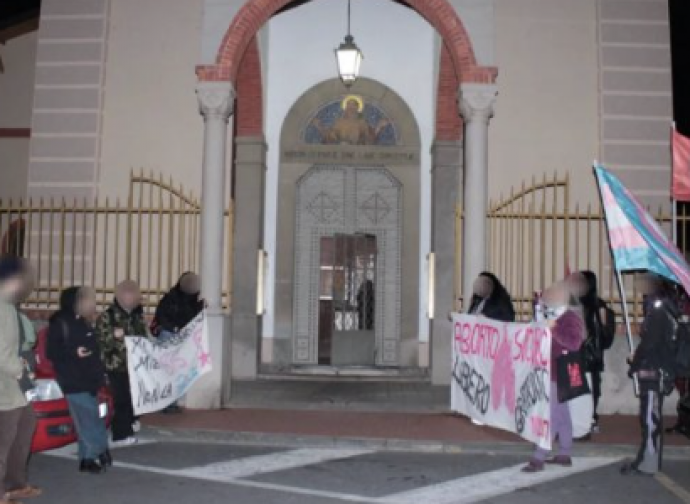
Imperia, Italy is witnessing a growing tension between religious expression and secular activism. A series of protests have erupted in response to a local parish’s decision to ring a church bell each evening during Lent, a practice intended as a prayerful remembrance of unborn children. The initiative, mirroring a similar effort in the nearby diocese of Ventimiglia-Sanremo, has sparked opposition from a student collective known as “Spiraglio Imperiese,” who view the bell ringing as an intrusion on bodily autonomy and a manifestation of what they describe as an anti-abortion agenda. This conflict highlights a broader societal debate surrounding religious freedom, reproductive rights, and the increasing polarization of public discourse.
The controversy centers on the church of the former Capuchin convent in Imperia, where the bell began tolling daily at 8:00 PM in February. The practice, initiated by Don Lucio Fabbris, the parish priest, is a direct response to a call from Bishop Antonio Suetta of Ventimiglia-Sanremo to commemorate unborn children throughout the Lenten season. According to the diocese, the bell serves as a reminder to pray for the respect and defense of nascent life, drawing inspiration from passages within Pope John Paul II’s encyclical Evangelium Vitae. However, Spiraglio Imperiese argues that this public display of religious conviction constitutes an attempt to control bodies and undermine the right to self-determination, echoing concerns raised during similar protests in Sanremo.
Protests and Counter-Demonstrations
Spiraglio Imperiese has organized a series of protests, dubbed “adorations” and “sit-ins,” coinciding with the evening bell ringing and the prayer services held at the former Capuchin convent. These demonstrations are not simply passive expressions of dissent; they involve the use of megaphones, banners, and slogans challenging what the collective perceives as an encroaching “anti-abortion ideology.” The group’s tactics have drawn criticism, with some observers accusing them of deliberately disrupting religious practices. The collective has announced planned protests for March 20th, March 25th, and April 1st, signaling a sustained campaign of opposition.
The group’s actions build upon previous demonstrations in Sanremo, where they organized a protest against a similar “bell for the unborn” initiative. That protest was notably marked by the provocative title “Transfeminist Mass,” a label that drew condemnation from some quarters. More recently, Spiraglio Imperiese circulated a flyer featuring a rosary shaped like a uterus accompanied by the slogan, “What state? What God? My body, my decision.” This imagery underscores the group’s central tenet: the prioritization of individual bodily autonomy over religious or state intervention. The collective has publicly declared its intention to oppose the “Sanremo model,” viewing it as a spreading “disease” threatening the territories they inhabit.
The tone of the protests has been described as confrontational, with the collective utilizing inflammatory language and imagery on social media, including an Instagram post featuring an explosion emoji alongside announcements of upcoming demonstrations. This rhetoric has raised concerns about potential escalations and the safety of both protesters and worshippers. The local authorities have authorized the protests, stipulating that demonstrators remain within the piazza in front of the church, but concerns remain about whether this condition will be respected, given past incidents of disruption.
Legal and Constitutional Considerations
The situation in Imperia raises complex questions regarding the balance between freedom of religion and freedom of expression within the framework of Italian law. Article 19 of the Italian Constitution guarantees the right to profess one’s faith freely, both individually and collectively, and to practice religious worship in public and private. The Italian Constitution explicitly protects this right. However, this freedom is not absolute and can be subject to limitations necessary to protect public order and the rights of others.
Legal experts suggest that the actions of Spiraglio Imperiese, while protected under freedom of expression, could potentially cross the line into violating Article 403 of the Italian Penal Code, which prohibits the public offense of a religious confession through vilification of those who profess it. Article 403 of the Italian Penal Code outlines penalties for offenses against religious beliefs. The question of whether the collective’s actions constitute such an offense is likely to depend on the specific nature of their protests and whether they are deemed to have crossed the threshold of legitimate dissent into deliberate provocation and disrespect.
Concerns over Christianophobia
Some observers have expressed concern that the protests represent a growing trend of Christianophobia within Italian society. They argue that the targeting of religious practices and the use of deliberately provocative imagery demonstrate a lack of respect for the beliefs of others. This perspective suggests that the protests are not simply about reproductive rights but are part of a broader cultural shift that marginalizes and demonizes Christianity. However, others counter that the protests are a legitimate exercise of freedom of expression and a necessary response to what they perceive as an attempt to impose religious values on society.
The Broader Context: Reproductive Rights in Italy
The controversy in Imperia unfolds against a backdrop of ongoing debate surrounding reproductive rights in Italy. While abortion is legal in Italy under certain conditions, access to abortion services remains uneven across the country, with some regions imposing significant barriers to access. Objectors’ clauses, which allow healthcare professionals to refuse to perform abortions on conscientious grounds, are also a significant issue, leading to shortages of providers in some areas. These challenges contribute to a climate of political and social tension surrounding reproductive health, making the issue particularly sensitive and prone to polarization.
The “bell for the unborn” initiatives in Imperia and Sanremo can be seen as part of a broader effort by pro-life groups to raise awareness about the issue of abortion and to advocate for greater protection of fetal life. These initiatives often draw inspiration from similar campaigns in other countries, reflecting a global network of anti-abortion activism. However, they also face strong opposition from pro-choice groups, who argue that such initiatives are intended to stigmatize abortion and to undermine women’s reproductive rights.
The situation in Imperia highlights the complex interplay between religious belief, political activism, and individual rights. As the protests continue, it remains to be seen whether a resolution can be found that respects both the freedom of religion and the right to self-determination. The next scheduled protest is set for March 20th, and local authorities will be closely monitoring the situation to ensure public safety and prevent further escalation. The ongoing debate underscores the demand for open and respectful dialogue on these sensitive issues, as well as a commitment to upholding the constitutional rights of all citizens.
Key Takeaways:
- A parish in Imperia, Italy, began ringing a church bell daily to commemorate unborn children, sparking protests.
- The student collective Spiraglio Imperiese opposes the bell ringing, viewing it as an infringement on bodily autonomy.
- The controversy raises legal questions regarding the balance between freedom of religion and freedom of expression under Italian law.
- The situation reflects broader debates surrounding reproductive rights and the increasing polarization of public discourse in Italy.
We encourage readers to share their thoughts on this developing story and to engage in respectful dialogue on these vital issues.
Worth a look
- Why GPs Are Leaving England for Scotland to Escape Healthcare Crisis
- How Many Cups of Coffee Per Day Are Healthy? Benefits for Heart and Longevity
- India Education Minister Dharmendra Pradhan Resigns After Youth Protests (time.news)
- Maldini and Leonardo Resign From Italy National Team: Conte or Mancini Next? (newsdirectory3.com)