Tehran, Iran – The Islamic Revolutionary Guard Corps (IRGC) has warned that United States military facilities in the United Arab Emirates could be considered legitimate targets, escalating tensions in the region following recent exchanges. The statement, issued Saturday, comes after reports of U.S. Military action against targets on Iran’s Kharg Island, a critical hub for Iranian oil exports.
The IRGC’s warning, reported by Iranian state media, asserts Iran’s “legitimate right” to defend its territory by striking U.S. Missile launch sites located within “ports, docks and hideouts” in the UAE. A spokesperson for the IRGC likewise suggested that U.S. Troops stationed in cities within the UAE could be targeted, and urged residents near potential targets to evacuate for their safety. This rhetoric significantly raises the stakes in an already volatile geopolitical landscape.
Escalation Following Kharg Island Strike
The IRGC’s threat follows a reported U.S. Military action targeting installations on Kharg Island. While initial reports, including those circulating in early March 2026, suggested a broader strike, details remain somewhat unclear. Kharg Island is of immense strategic importance to Iran, serving as the primary export terminal for approximately 90% of the country’s crude oil shipments. The Islamic Revolutionary Guard Corps, established in May 1979, plays a central role in Iran’s defense strategy and regional influence.
The timing of these events coincides with heightened concerns over the security of maritime traffic in the Strait of Hormuz, a narrow waterway between Iran and Oman crucial for global oil transport. The IRGC has reportedly maintained a near blockade of the strait, raising fears of disruptions to the global energy supply. The potential for escalation has prompted international calls for de-escalation and diplomatic solutions.
UAE Response and Regional Implications
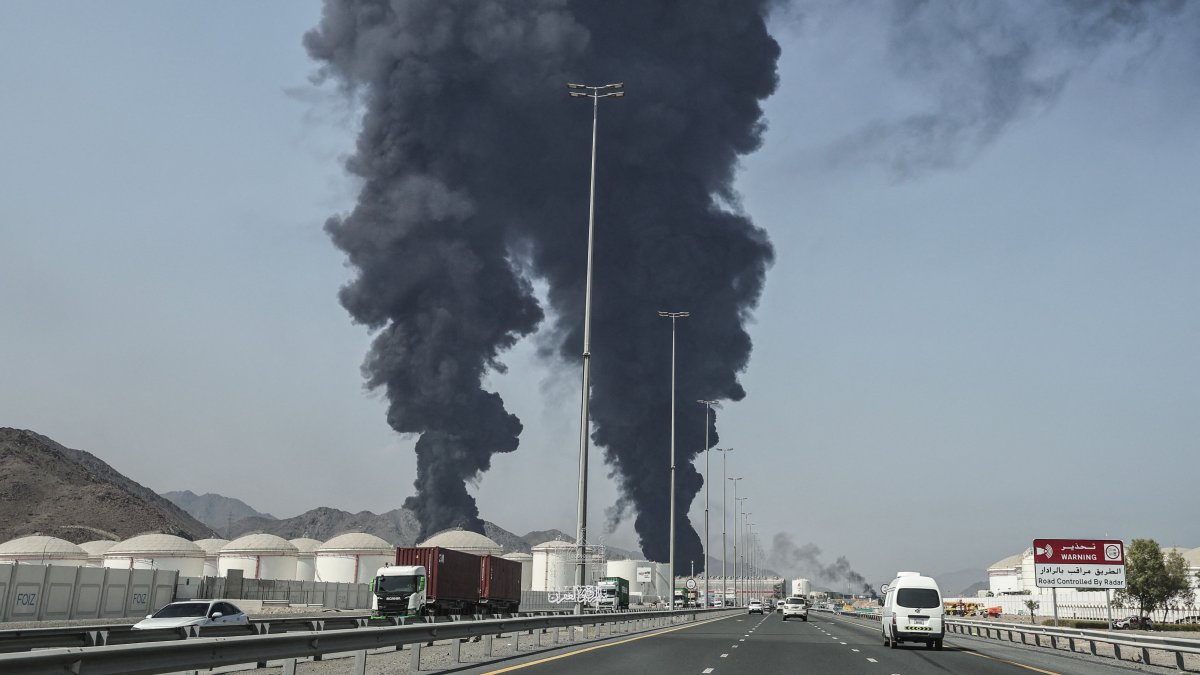
The United Arab Emirates has been a frequent target of tensions involving Iran, and authorities in Fujairah reported intercepting a drone on Saturday, with falling debris sparking a fire. No casualties were reported in that incident. The UAE maintains close security ties with the United States, hosting a significant U.S. Military presence. The IRGC’s explicit threat to target U.S. Facilities within the UAE represents a direct challenge to these security arrangements and raises concerns about a potential widening of the conflict.
The situation is further complicated by the broader regional dynamics, including ongoing conflicts in Syria, Yemen, and Iraq, where Iran and the United States support opposing sides. The potential for miscalculation or unintended consequences is high, and diplomatic efforts to prevent further escalation are considered critical. The IRGC’s actions are consistent with its history of assertive regional policies and its commitment to defending Iran’s interests, as outlined in its founding ideology of Khomeinism and Shia Islamism. According to Wikipedia, the IRGC’s motto is “Prepare against them (the enemies) what you believers can of military power.” (Quran 8:60).
The Role of the Quds Force
Within the IRGC structure, the Quds Force is a particularly significant element. This unit is responsible for extraterritorial operations, supporting allied groups and pursuing Iran’s strategic interests abroad. The Quds Force has been implicated in numerous conflicts and security incidents throughout the Middle East, and its activities are closely monitored by international intelligence agencies. The Quds Force’s involvement in regional conflicts adds another layer of complexity to the current situation.
Historical Context and U.S.-Iran Relations
The current escalation is rooted in a long history of strained relations between the United States and Iran. Following the 1979 Iranian Revolution, the two countries have been locked in a cycle of mistrust and confrontation. The U.S. Has imposed extensive sanctions on Iran over its nuclear program and its support for regional proxies, while Iran has accused the U.S. Of interference in its internal affairs and of supporting its regional adversaries.
The 2015 nuclear deal, formally known as the Joint Comprehensive Plan of Action (JCPOA), offered a brief period of détente, but the U.S. Withdrawal from the agreement in 2018 under the Trump administration led to a renewed escalation of tensions. The Biden administration has expressed a willingness to rejoin the JCPOA, but negotiations have stalled amid disagreements over the terms of the agreement. The current crisis underscores the urgent need for a diplomatic solution to address the underlying causes of conflict and prevent further escalation.
Recent Developments in Iran
Adding to the complexity, Iran has also been grappling with internal challenges, including widespread protests in 2026. These protests, sparked by economic grievances and political discontent, have been met with a harsh crackdown by the authorities. The IRGC has played a key role in suppressing the protests, further solidifying its control over Iranian society. Iran International reports that exiled Prince Reza Pahlavi is preparing a transition structure in the event of the Islamic Republic’s fall.
Potential Impacts on Global Oil Markets
The escalating tensions in the Persian Gulf have already had a noticeable impact on global oil markets. Oil prices have risen sharply in recent days, reflecting concerns about potential disruptions to supply. The Strait of Hormuz is one of the world’s most important oil chokepoints, and any significant disruption to traffic through the strait could have severe consequences for the global economy. The potential for a wider conflict in the region has prompted calls for increased security measures and for diplomatic efforts to ensure the free flow of oil.
The IRGC’s warning to the UAE, and the potential targeting of U.S. Facilities, adds a new dimension to these concerns. The UAE is a major oil producer and a key transit hub for oil shipments, and any disruption to its oil infrastructure could have a significant impact on global energy markets. The situation underscores the vulnerability of the global energy supply to geopolitical risks.
Looking Ahead
The coming days and weeks will be critical in determining whether the current escalation can be contained. Diplomatic efforts to de-escalate tensions and resume negotiations over the nuclear deal are urgently needed. The United States and Iran must find a way to engage in constructive dialogue and address the underlying causes of conflict. The international community must also play a role in promoting stability and preventing further escalation in the region.
The IRGC’s recent actions and statements demonstrate its willingness to assert Iran’s interests and challenge U.S. Influence in the Middle East. The situation remains highly volatile, and the potential for miscalculation or unintended consequences is high. Continued monitoring of the situation and a concerted diplomatic effort are essential to prevent a wider conflict.
The next key development to watch will be the response from the United States and the UAE to the IRGC’s warning. Further statements from government officials and any potential military movements will be closely scrutinized. We will continue to provide updates on this developing story as they develop into available. Share your thoughts and analysis in the comments below.