Civilians ‘Deserve to Live Without Fear’ as Conflict Escalates in Lebanon
Beirut – The escalating conflict between Israel and Hezbollah is rapidly transforming southern Lebanon into a war zone, displacing hundreds of thousands and prompting urgent calls for de-escalation from the international community. United Nations Secretary-General António Guterres, during a visit to Beirut on Saturday, March 14, 2026, underscored the devastating impact of the fighting on civilians, stating that the Lebanese people “did not choose this war” and deserve to live without the constant threat of violence. The current crisis stems from a complex series of events, beginning with the US and Israeli bombing of Iran two weeks prior, which triggered retaliatory rocket fire from Hezbollah into Israel. This, in turn, led to what Guterres described as a “devastating” Israeli bombing campaign rendering large portions of Lebanon uninhabitable.
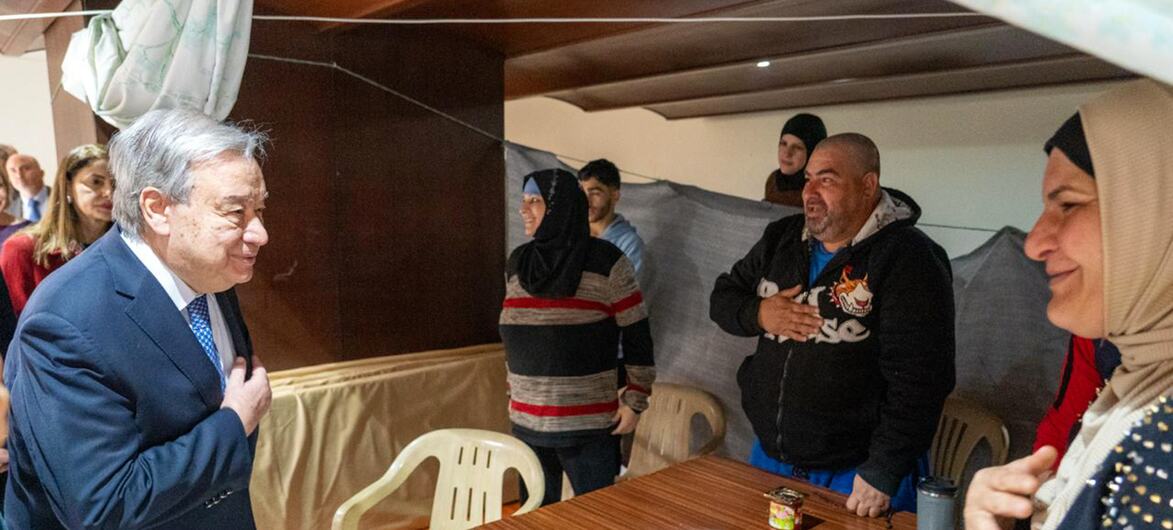
The situation is particularly dire for the over 800,000 Lebanese citizens who have been forced to flee their homes in the southern conflict zone and areas of southern Beirut, following widespread evacuation orders issued by Israel. Guterres visited a shelter in Beirut and expressed his profound sadness at the testimonies of those displaced, highlighting the human cost of the ongoing hostilities. The conflict is not occurring in a vacuum; simmering violence has persisted even after a cessation of hostilities agreement between Lebanon and Israel just over a year ago, with both sides accused of violating ceasefire terms. The renewed fighting underscores the fragility of peace in the region and the urgent need for a sustainable diplomatic solution.
The UN Secretary-General’s visit comes amidst growing international concern over the potential for a wider regional conflict. Guterres emphasized that there is “no military solution” to the crisis, only a diplomatic one aligned with the principles of the UN Charter. He acknowledged the impact of the fighting on both sides of the Blue Line, the internationally recognized border between Lebanon and Israel, which is patrolled by the UN Interim Force in Lebanon (UNIFIL) under a Security Council mandate. UNIFIL peacekeepers have themselves come under fire in recent days, prompting Guterres to condemn attacks against them as “completely unacceptable” and a violation of international law, potentially constituting war crimes. Three peacekeepers serving with the Ghanaian contingent were wounded earlier this month in south Lebanon, demonstrating the increasing risks faced by those attempting to maintain stability in the region.
A History of Tensions and Broken Ceasefires
The current conflict is rooted in decades of tension between Israel and Hezbollah, a powerful Lebanese Shia political and military organization. Hezbollah has long been a key ally of Iran, and its actions are often seen as a response to perceived threats from Israel and the United States. The group’s rocket attacks into Israel are intended to demonstrate its strength and deter further aggression, while Israel views Hezbollah as a significant security threat and has repeatedly launched military operations against it. The 2006 Lebanon War, sparked by Hezbollah’s capture of two Israeli soldiers, resulted in widespread destruction and a significant loss of life on both sides. While a ceasefire was eventually brokered, the underlying issues remained unresolved.
The cessation of hostilities agreement reached over a year ago failed to fully address these issues, with both Hezbollah and Israeli forces continuing to engage in sporadic violations of the ceasefire terms. These violations have included cross-border fire, alleged arms smuggling, and the construction of military infrastructure near the Blue Line. The recent escalation of violence appears to be directly linked to the killing of Iranian Supreme Leader Ayatollah Ali Khamenei in US-Israeli strikes, an event that prompted Hezbollah to launch its initial rocket attacks into Israel. The situation is further complicated by the involvement of other regional actors, including Iran and the United States, raising the stakes and increasing the risk of a wider conflict.
Humanitarian Crisis Deepens
The humanitarian situation in Lebanon is rapidly deteriorating as the conflict intensifies. The displacement of over 800,000 people has placed a significant strain on already limited resources, and many are in urgent need of food, water, shelter, and medical care. The UN has launched a flash appeal for $325 million to support the Lebanese government’s response to the crisis, aiming to provide assistance to those affected by the fighting. However, the appeal is facing challenges as international donors grapple with competing humanitarian crises around the world.
UNIFIL/Haidar Fahs
UN Secretary-General António Guterres visits a Ghanaian peacekeeper in hospital serving with the UNIFIL mission who was injured after coming under fire during the renewed conflict in southern Lebanon.
The Lebanese government, grappling with a severe economic crisis and political instability, is struggling to cope with the influx of displaced people. The country’s healthcare system is overwhelmed, and many hospitals are operating at full capacity. The conflict is also exacerbating existing vulnerabilities, such as poverty and food insecurity, and threatening to push more Lebanese citizens into desperation. Guterres praised the Lebanese Government’s decision last August to establish a “monopoly of arms,” but emphasized that Hezbollah militants must abide by this resolution and all other Security Council resolutions to hand over their weapons.
Diplomatic Efforts and the Path Forward
Despite the grim situation, Guterres remains optimistic that a diplomatic solution can be found. He stated that “diplomatic avenues are available,” including through his special coordinator for Lebanon and through key member states. The UN is actively engaged in mediation efforts, working to bring the parties to the negotiating table and secure a ceasefire. However, the prospects for a breakthrough remain uncertain, as both sides have expressed firm positions and are unwilling to compromise.
The international community is also playing a role in seeking a resolution to the conflict. The United States, a key ally of Israel, has called for de-escalation and urged Hezbollah to cease its attacks. Other countries, including France and Egypt, are also engaged in diplomatic efforts to mediate between the parties. However, the complex geopolitical dynamics of the region and the deep-seated mistrust between Israel and Hezbollah pose significant challenges to any peace process. According to the South China Morning Post, Guterres urged support for the Lebanese government during his visit, emphasizing the need to empower the state and support its armed forces.
The situation in Lebanon is a stark reminder of the human cost of conflict and the urgent need for a peaceful resolution. As Guterres powerfully stated, the people of Lebanon, Israel, and the entire region deserve to live without fear, to raise their children without the constant threat of violence, and to return home without wondering when they will have to flee again. The international community must step up its engagement and work tirelessly to achieve a lasting peace.
The UN flash appeal for Lebanon, launched in March 2026, seeks $325 million to address the immediate humanitarian needs of those affected by the conflict. The situation remains fluid, and further developments are expected in the coming days and weeks. The next key event to watch will be the outcome of ongoing diplomatic efforts and any potential meetings between representatives of Israel, Hezbollah, and international mediators.
What can you do? Stay informed about the situation in Lebanon and share this article with your networks. Consider donating to reputable humanitarian organizations working on the ground to provide assistance to those affected by the conflict. Advocate for a peaceful resolution and urge your elected officials to support diplomatic efforts to de-escalate the crisis.
Related reading