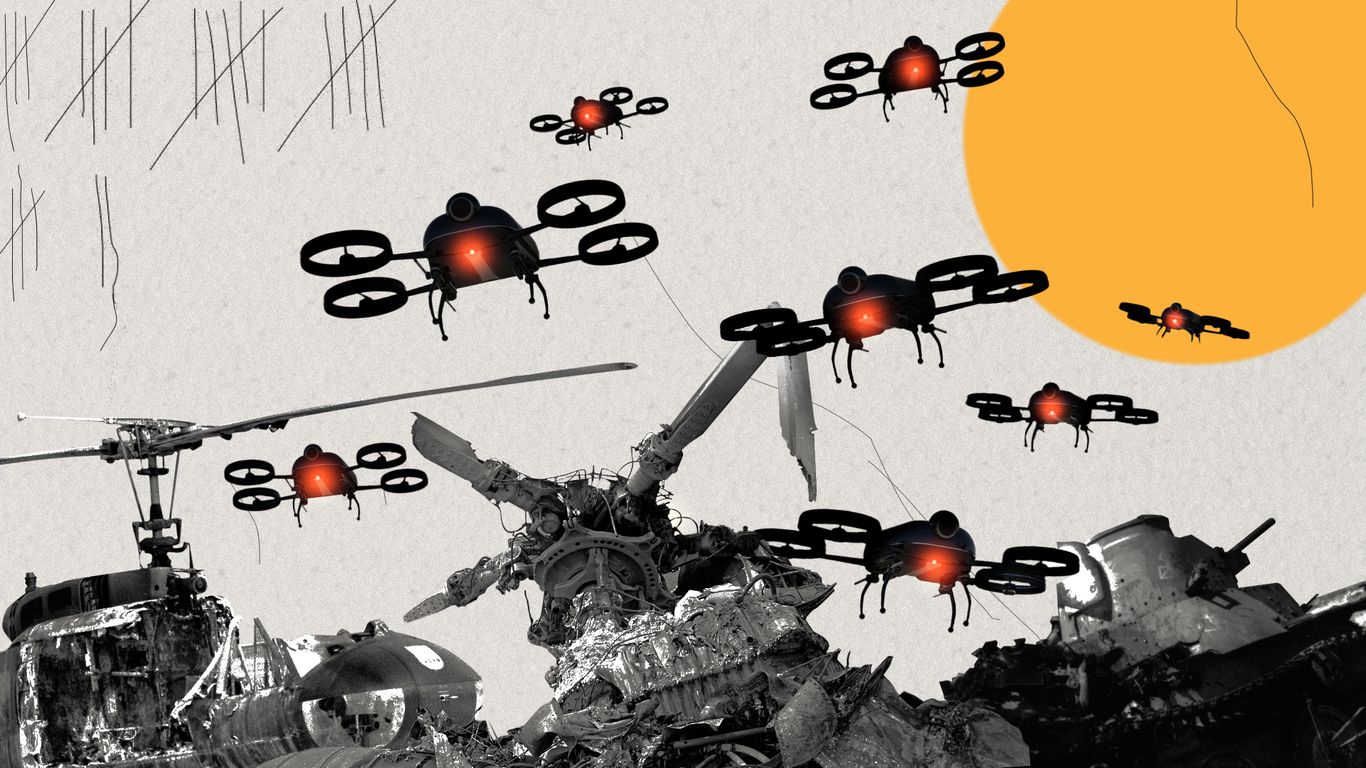
The battlefield has undergone a seismic shift. No longer is military dominance solely the domain of nations with vast resources and conventional firepower. A new era has dawned, one defined by the proliferation of cheap, commercially available drones, fundamentally altering the calculus of modern warfare. From the conflict in Ukraine to the Red Sea, and increasingly in the Middle East, these unmanned systems are empowering both state and non-state actors, leveling the playing field and presenting unprecedented challenges to traditional defense strategies.
The impact is stark. Without access to drones, Ukraine’s defense against the Russian invasion would be dramatically weakened, facing a vastly superior force with limited means of effective resistance. Similarly, the Houthi movement in Yemen, previously considered a regional militia, has leveraged drone technology to disrupt global shipping lanes, inflicting significant economic consequences. Even Iran, constrained by international sanctions, has found in drones a potent means of projecting power and challenging adversaries. This democratization of military capability, while not entirely new, has reached a critical inflection point, forcing a global recalibration of defense priorities and strategies.
The affordability and accessibility of drones are key to this transformation. While sophisticated military drones can cost millions of dollars, the models driving this change are often available for tens of thousands, or even less. This allows groups with limited budgets to acquire a significant offensive and defensive capability. The Iranian Shahed-136 drone, for example, is estimated to cost between $20,000 and $50,000, a fraction of the cost of interceptor missiles used to counter it. This cost asymmetry presents a significant dilemma for wealthier nations, forcing them to expend considerable resources to neutralize a relatively inexpensive threat.
The Rise of the Iranian Shahed Drone and its Proliferation
The Shahed-136, a delta-wing drone developed by Iran, has become a symbol of this new era of warfare. Its relatively low cost and ease of production have made it a popular choice for both direct Iranian attacks and for export to proxy groups. The drone gained prominence during the ongoing conflict in Ukraine, where Russia acquired a substantial number of Shaheds from Iran and began mass-producing its own version, known as the Geran-2. As the Atlantic Council reports, this collaboration highlights a strategic alignment between Russia and Iran, both seeking to challenge the established global order.
The impact of the Shahed in Ukraine has been significant. Used in swarms, these drones have overwhelmed Ukrainian air defenses, targeting critical infrastructure and civilian areas. The Houthis in Yemen have also deployed a copy of the Shahed, known as the Waid, to launch attacks on commercial vessels in the Red Sea, disrupting international trade and raising concerns about maritime security. The United States has even reverse-engineered the Shahed, creating its own version, dubbed LUCAS, and is now reportedly using it in operations against Iranian targets. As Admiral Brad Cooper, commander of U.S. Naval Forces Central Command, stated, these drones are “indispensable.”
The proliferation of the Shahed isn’t limited to Ukraine and Yemen. In early March 2026, six U.S. Service members were killed when an Iranian drone struck an operations center in Kuwait, highlighting the reach and lethality of this technology. CBS News reported that officials at the time expressed concerns about the lack of effective drone defense capabilities. This incident underscored the urgent need for improved counter-drone technologies and strategies.
Ukraine: A Testing Ground for Counter-Drone Technology
Ukraine has become a crucial testing ground for counter-drone technologies and tactics. Having endured years of attacks from Russian Shaheds and other unmanned systems, Ukrainian forces have developed a deep understanding of the threats posed by drones and have pioneered innovative solutions to combat them. Prior to the escalation of tensions in the Middle East, Ukrainian officials reportedly offered their anti-drone technology to the United States eight months before the recent conflict with Iran began. As first reported by Axios, this offer was initially declined by the Trump administration, but was later revisited after the outbreak of hostilities.
Following the start of the conflict in the Middle East, the U.S. Reversed course and began collaborating with Ukraine on counter-drone measures. Ukrainian specialists are now deployed to the Gulf region to train U.S. And allied forces in the latest techniques for detecting, tracking, and neutralizing drones. The U.S. Has also rushed 10,000 Merops interceptor drones to the Middle East, according to Army Secretary Dan Driscoll. Bloomberg reported that these AI-enabled systems, previously tested in Ukraine, cost approximately $14,000 each, making them a more cost-effective alternative to expensive missile interceptors.
The Pentagon claims that Iranian drone attacks have decreased by 95% since the implementation of these new counter-drone measures. While this figure should be viewed with caution, it suggests that the combined efforts of the U.S., its allies, and Ukrainian expertise are having a positive impact on mitigating the drone threat.
Beyond Aerial Drones: The Expanding Landscape of Autonomous Systems
The proliferation of drones is not limited to aerial systems. The battlefield is increasingly witnessing the deployment of maritime drones, capable of disrupting shipping lanes and targeting naval vessels, and ground robots designed for reconnaissance, explosive ordnance disposal, and even direct combat. These autonomous systems are often coordinated through artificial intelligence (AI), creating a complex and rapidly evolving battlefield environment.
Oleg Rogynskyy, CEO of defense-tech company UForce, suggests that we are entering “phase zero of Terminator,” where autonomous systems are beginning to outperform humans in certain military applications. This raises profound ethical and strategic questions about the future of warfare and the role of human control in lethal decision-making. The increasing reliance on AI-powered systems also introduces new vulnerabilities, such as the potential for hacking, jamming, and algorithmic bias.
The implications of this technological shift are far-reaching. Traditional military doctrines, based on the assumption of overwhelming firepower and technological superiority, are being challenged by the rise of cheap, readily available drones. Nations and non-state actors alike must adapt to this new reality, investing in counter-drone technologies, developing new defensive strategies, and grappling with the ethical dilemmas posed by autonomous weapons systems.
Key Takeaways
- Democratization of Warfare: Cheap drones have empowered both state and non-state actors, leveling the playing field in modern conflict.
- Iranian Shahed Drone: The Shahed-136 has become a key weapon for Iran and its proxies, posing a significant threat to regional stability.
- Ukraine’s Expertise: Ukraine has emerged as a world leader in counter-drone technology and tactics, sharing its knowledge with allies.
- Expanding Autonomous Systems: The battlefield is evolving beyond aerial drones to include maritime drones and ground robots, all coordinated through AI.
Looking ahead, the development and deployment of drone technology are likely to accelerate. The U.S. Department of Defense is investing heavily in counter-drone research and development, exploring new technologies such as directed energy weapons and advanced electronic warfare systems. The next major development to watch will be the outcome of ongoing trials of advanced counter-drone systems in the Gulf region, with results expected to be released in late April 2026. The evolving drone landscape demands constant vigilance, adaptation, and a commitment to responsible innovation to mitigate the risks and harness the potential benefits of this transformative technology.
What are your thoughts on the changing face of warfare? Share your comments below and join the conversation.
Keep reading