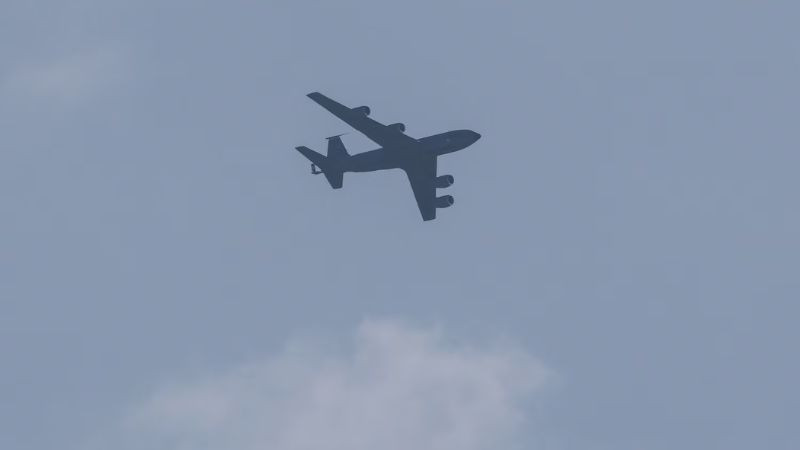
Baghdad, Iraq – The U.S. Department of Defense has identified the six American service members who died when a Boeing KC-135 Stratotanker aerial refueling aircraft crashed in western Iraq on March 12, 2026. The incident, which involved two KC-135s, remains under investigation, but the loss represents a significant blow to the U.S. Military and the ongoing Operation Epic Fury in the region. This tragic event underscores the inherent risks associated with military operations, even in areas considered relatively secure.
The fallen service members were engaged in a critical mission supporting Operation Epic Fury, a continuing effort to advise, assist, and enable partnered forces in the fight against remaining elements of ISIS in Iraq and Syria. Aerial refueling is a vital component of such operations, extending the range and endurance of aircraft involved in surveillance, reconnaissance, and strike missions. The KC-135 Stratotanker, a mainstay of the U.S. Air Force’s refueling fleet for decades, plays a crucial role in maintaining air superiority and providing logistical support to forces on the ground. The loss of this aircraft and its crew highlights the complex logistical challenges of sustaining military operations in a volatile environment.
Among those who perished were Major John A. Klinner, 33, of Auburn, Alabama; Captain Ariana G. Savino, 31, of Covington, Washington; and Technical Sergeant Ashley B. Pruitt, 34, of Bardstown, Kentucky, all assigned to MacDill Air Force Base in Florida. Too lost were Captain Seth R. Koval, 38, of Mooresville, Indiana; Captain Curtis J. Angst, 30, of Wilmington, Ohio; and Technical Sergeant Tyler H. Simmons, 28, of Columbus, Ohio, who were based at the Rickenbacker Air National Guard Base in Columbus, Ohio. The Department of Defense has initiated the process of notifying families and providing support during this incredibly difficult time. The close-knit nature of military communities means that the impact of this loss will be felt deeply across multiple states and within the Air Force family.
Details of the Incident and Ongoing Investigation
According to the Department of Defense, the crash occurred around 2:00 p.m. Eastern Time while the aircraft were operating in airspace deemed safe in western Iraq. Initial reports indicate that two KC-135 tankers were involved in the incident. While one aircraft crashed, the second successfully landed at a nearby airbase. MSN News reported on the incident, confirming the loss of life and the ongoing investigation.
The precise cause of the crash remains unknown. Military officials have stated that a thorough investigation is underway to determine the factors that led to the accident. This investigation will likely involve a detailed analysis of flight data recorders, maintenance records, and witness statements. The investigation will also consider potential external factors, such as weather conditions and the possibility of enemy activity, while officials have not indicated any evidence of hostile fire at this time. The Air Force Safety Center will lead the investigation, and its findings will be crucial in preventing similar incidents in the future. The KC-135, while a reliable aircraft, has been in service for over six decades, and ongoing maintenance and modernization efforts are essential to ensure its continued safe operation.
The KC-135 Stratotanker: A Vital Asset
The Boeing KC-135 Stratotanker is a long-range aerial refueling aircraft that has been the backbone of the U.S. Air Force’s refueling capability since the late 1950s. The aircraft is capable of transferring large quantities of jet fuel to other aircraft in flight, extending their range and allowing them to remain airborne for longer periods. This capability is essential for a wide range of military operations, including strategic bombing, close air support, and long-distance transport. The KC-135 has undergone numerous upgrades and modifications over the years to improve its performance and reliability. However, with an average age of over 60 years, the fleet is facing increasing maintenance challenges. The Air Force is currently pursuing a long-term plan to replace the KC-135 with the newer KC-46 Pegasus tanker, but the transition is expected to take several decades.
The KC-135’s role in Operation Epic Fury is particularly critical. The vast distances involved in operating over Iraq and Syria require extensive aerial refueling support. Without the KC-135, many missions would simply not be possible. The aircraft allows fighter jets, bombers, and transport aircraft to reach their targets and return to base without having to land for refueling. This capability significantly enhances the effectiveness of U.S. And coalition forces in the region. The loss of a KC-135 and its crew underscores the importance of maintaining a robust aerial refueling capability and the sacrifices made by the men and women who operate these vital aircraft.
Operation Epic Fury and the Ongoing Situation in Iraq
Operation Epic Fury is a continuing U.S. Military operation focused on defeating the remnants of ISIS in Iraq and Syria. While ISIS has been territorially defeated, the group continues to pose a threat through insurgent attacks and the spread of extremist ideology. The operation involves a combination of air strikes, special operations raids, and training and advising of local security forces. The U.S. Military maintains a significant presence in Iraq, primarily to support Iraqi security forces in their efforts to maintain stability and prevent the resurgence of ISIS. The situation in Iraq remains complex and volatile, with ongoing political and economic challenges. The U.S. Military’s role in Iraq is subject to ongoing debate and scrutiny, but the Biden administration has reaffirmed its commitment to supporting Iraq’s security and stability.
The crash of the KC-135 is a stark reminder of the risks faced by U.S. Service members deployed in Iraq and other conflict zones. Despite the progress made in defeating ISIS, the region remains dangerous and unpredictable. The loss of these six airmen is a tragedy that will be felt deeply by their families, friends, and colleagues. The U.S. Military is committed to providing support to the families of the fallen and to ensuring that their sacrifice is not forgotten. The investigation into the crash will be thorough and transparent, and its findings will be used to improve safety and prevent future accidents.
Key Takeaways
- Six U.S. Service members were killed in a KC-135 Stratotanker crash in western Iraq on March 12, 2026.
- The incident occurred during a mission supporting Operation Epic Fury, the ongoing effort to defeat ISIS in Iraq and Syria.
- The cause of the crash is under investigation by the Air Force Safety Center.
- The KC-135 Stratotanker is a vital asset for aerial refueling, extending the range and endurance of military aircraft.
- The loss of the aircraft and its crew underscores the risks faced by U.S. Service members deployed in conflict zones.
The Department of Defense has not yet announced details regarding memorial services or repatriation of the remains. Further updates will be provided as they become available. The focus remains on supporting the families of the fallen and conducting a thorough investigation to determine the cause of this tragic accident. The incident serves as a somber reminder of the sacrifices made by those who serve in the U.S. Military and the ongoing challenges of maintaining security and stability in a complex and volatile world.
We encourage readers to share their condolences and support for the families of the fallen service members. Please leave a comment below to express your thoughts and remember those who have given their lives in service to our country.
Worth a look