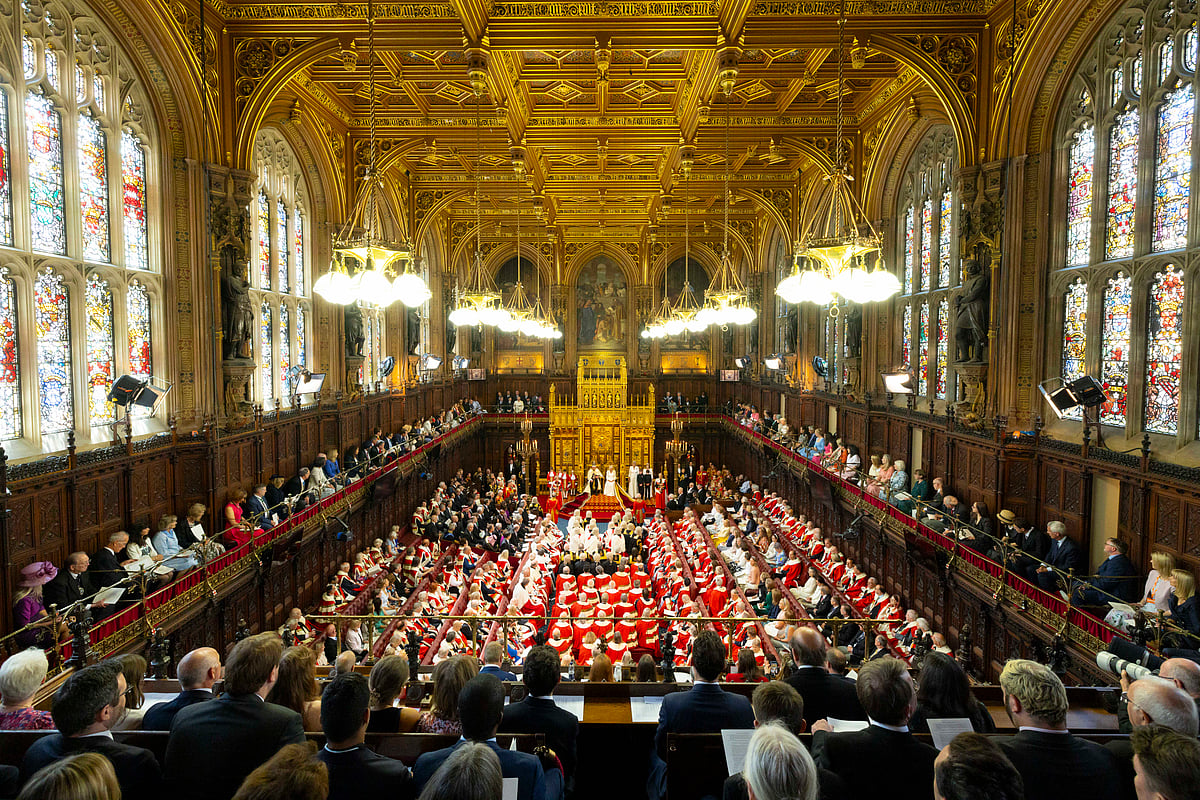
End of an Era: Hereditary Peers Lose Seats in Historic House of Lords Reform
In a landmark decision poised to reshape British democracy, the House of Lords has approved legislation ending the automatic right of hereditary peers to sit in Parliament. The move, decades in the making, marks the culmination of a long-fought battle to modernize the upper chamber and remove a vestige of the United Kingdom’s feudal past. While the principle of reform dates back to the late 1990s, the final passage of the Hereditary Peers Bill this week signals a definitive shift, with the remaining hereditary peers set to leave their positions at the conclusion of the current parliamentary session this spring. The change reflects a broader push for a more representative and meritocratic legislative system, a sentiment echoed by government officials and reform advocates alike.
The legislation, approved after securing concessions from Conservative lawmakers, will see the remaining 92 hereditary peers – including dukes, viscounts and earls – relinquish their automatic seats. A key component of the agreement involved offering life peerages to some of those affected, preventing a complete loss of their parliamentary influence. This compromise, brokered by Downing Street, allowed the bill to overcome previous objections and secure passage in the upper chamber. The move leaves the Senate of Lesotho as the only remaining legislative body in the world with a hereditary element, highlighting the UK’s commitment to modernizing its parliamentary structures. The House of Lords currently comprises 842 members, making it the second-largest legislative chamber globally, after China’s National People’s Congress.
A Long Road to Reform: From Blair to Starmer
The roots of this reform stretch back to the Labour government of Tony Blair in the late 1990s. The House of Lords Act of 1999 initially removed over 600 hereditary peers, significantly altering the composition of the chamber. However, a compromise was reached at the time to allow 92 hereditary peers to remain, a move intended to appease concerns from the aristocracy and avoid a potential rebellion. As reported by ENC Education, this initial reform was seen as a first step, with the understanding that further changes would be necessary to fully address the issue of hereditary representation.
For decades, the issue remained largely unresolved, with successive governments hesitant to tackle the politically sensitive issue head-on. However, the current Labour government, led by Keir Starmer, renewed its commitment to completing the reforms initiated by Blair. The recent success in securing Conservative support demonstrates a shift in the political landscape and a growing consensus on the need for a more modern and democratic House of Lords. Secretary of State for the Cabinet Office, Nick Thomas-Symonds, celebrated the bill’s passage, stating, “Hereditary titles of nobility are an archaic and undemocratic principle. I am proud that we have fulfilled a fundamental promise of this government’s electoral program.” He further emphasized the importance of a parliament based on talent and merit, rather than inherited privilege.
The Changing Face of the House of Lords
The House of Lords has undergone a significant transformation over the past century. While historically composed primarily of male nobles who inherited their seats, the introduction of “life peers” in the 1950s began to diversify the chamber’s membership. Life peers are individuals appointed to the House of Lords for their lifetime, typically in recognition of their achievements in fields such as politics, business, or public service. Today, life peers constitute approximately nine out of ten members of the House of Lords, reflecting a gradual shift away from hereditary representation. According to reporting from DN.PT, this evolution has been crucial in broadening the range of expertise and perspectives within the upper chamber.
The role of the House of Lords is to scrutinize legislation passed by the House of Commons, propose amendments, and delay bills. While it cannot block legislation outright, its ability to revise and challenge laws makes it an important check on the power of the elected government. The ongoing debate surrounding the House of Lords’ composition and function highlights the complexities of balancing tradition with the demands of modern democracy. Baroness Smith of Basildon, leader of the House of Lords, acknowledged the chamber’s vital role but stressed the need for reform, stating, “Nobody should be a member of the House by virtue of a hereditary title.”
Beyond Hereditary Titles: Future Reforms and Ongoing Debate
The removal of hereditary peers is widely seen as a significant step, but it is not the end of the debate surrounding the future of the House of Lords. Calls for further reforms, including the introduction of an elected upper chamber or a more streamlined appointment process, continue to gain momentum. The Labour government has indicated its intention to pursue additional changes, including provisions for the retirement of members and stricter requirements for participation. These proposals aim to address concerns about the size and effectiveness of the House of Lords, ensuring it remains a relevant and accountable legislative body.
The recent resignation of Peter Mandelson from the House of Lords, following scrutiny over his association with convicted sex offender Jeffrey Epstein, has also fueled calls for greater accountability within the chamber. While Mandelson’s resignation was voluntary, the incident prompted Prime Minister Starmer to urge the House of Lords to implement mechanisms for removing members who have engaged in misconduct. MSN reports that legal experts have noted the constitutional complexities involved in removing a life peer, highlighting the need for clear and robust procedures.
Key Takeaways
- The House of Lords has approved legislation to abolish hereditary peerages, ending a 700-year-old tradition.
- The reform is the culmination of efforts that began with the House of Lords Act of 1999 under Tony Blair.
- The current Labour government, led by Keir Starmer, secured the passage of the bill with a compromise offering life peerages to some affected hereditary peers.
- The move is part of a broader effort to modernize the House of Lords and make it more representative.
- Further reforms, including changes to member retirement and participation requirements, are anticipated.
The passage of this legislation represents a pivotal moment in the evolution of the British Parliament. As the remaining hereditary peers prepare to step down, the House of Lords embarks on a new chapter, one defined by merit, representation, and a commitment to democratic principles. The next step will be the formal granting of royal assent by King Charles III, solidifying the changes into law. The ongoing debate about the future of the upper chamber ensures that the process of reform will continue to shape the landscape of British politics for years to approach. We encourage readers to share their thoughts on this historic development in the comments below.
Worth a look