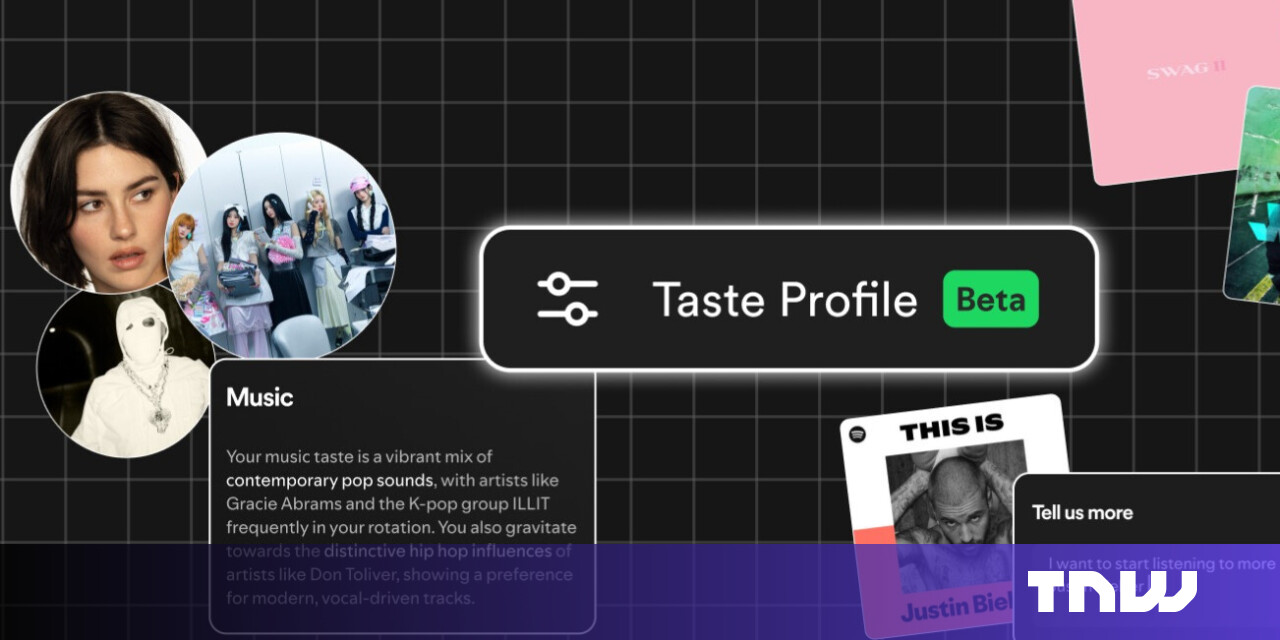
Spotify is giving its Premium users a degree of control they’ve never had before over the algorithms that curate their listening experience. The streaming giant, during a presentation at South by Southwest (SXSW) in Austin, Texas, unveiled “Taste Profile,” a new feature designed to develop its recommendation engine more transparent and responsive to individual preferences. This move comes as personalization increasingly defines the competitive landscape of music streaming, with Spotify asserting that over 80% of its listeners prioritize personalized recommendations.
Announced on March 13, 2026, by Spotify Co-CEO Gustav Söderström, Taste Profile allows users to view and directly influence the data model that drives their music, podcast, and audiobook suggestions. The initial rollout will begin in New Zealand in the coming weeks, with a wider release date yet to be announced. This isn’t simply about seeing what Spotify *thinks* you like. it’s about actively shaping those perceptions. The feature represents a significant shift in how Spotify frames its relationship with its audience, moving from a largely opaque algorithmic process to one that invites user participation.
Understanding Your Algorithmic Twin
For years, Spotify’s recommendation engine has operated as a “black box,” analyzing listening habits – what songs are played, skipped, and when – to infer taste. Taste Profile aims to lift the lid on that process. The feature aggregates a user’s behavior across all audio formats offered by Spotify – music, podcasts, and audiobooks – presenting a consolidated view of their listening patterns. This includes recently explored genres, frequently listened-to artists, and even patterns related to daily routines. Essentially, it’s a snapshot of how Spotify understands your taste, built from years of data collection.
But the key difference lies in the ability to *correct* that understanding. Users can flag inaccuracies – perhaps the profile overemphasizes music from years ago or misses a recent shift in musical preference. They can request more or less of a particular “vibe,” or provide context about their current activities, such as training for a marathon or a daily commute. This feedback loop allows Spotify to refine its recommendations in real-time, tailoring the homepage experience to better reflect the user’s evolving tastes. As Söderström stated during his SXSW presentation, “This is the next step in our vision to make personalization more transparent, responsive, and truly yours.” Spotify Newsroom
A Collaborative Approach to Personalization
Taste Profile isn’t an isolated development. It builds upon Spotify’s recent expansion of “Prompted Playlist,” a feature launched in late January 2026 in New Zealand, and subsequently rolled out to Premium users in the US, Canada, Australia, Ireland, Sweden, and the UK in February 2026. Prompted Playlist allows users to generate playlists by simply describing the desired mood or theme in natural language. Both features underscore a broader strategy: the future of streaming personalization is not passive consumption, but active collaboration between user and algorithm.
While Prompted Playlist is generative – creating something new based on user input – Taste Profile is corrective, working with the existing algorithmic model. This distinction is crucial. Spotify isn’t simply responding to requests; it’s allowing users to refine the foundation upon which those requests are built. Whether a listener has been passively accepting algorithmic suggestions or actively curating their experience, Taste Profile is designed to accommodate both approaches. Users can actively shape their profile or simply let it run in the background, enjoying Spotify as they always have.
New Zealand: A Testing Ground for AI Features
Spotify has consistently used New Zealand as a testing ground for new, AI-driven features, including the initial launch of Prompted Playlist. This strategic choice likely stems from the country’s relatively small population and tech-savvy user base, making it an ideal environment for controlled experimentation. While no timeline has been provided for a global rollout of Taste Profile, the New Zealand beta will provide valuable data and feedback to inform future iterations of the feature. Currently, Taste Profile will be exclusive to Premium subscribers, with no indication of whether it will be extended to free-tier accounts.
Gustav Söderström’s announcement at SXSW similarly coincided with Spotify’s 20th-anniversary celebrations, featuring concerts and a headline session with country artist Lainey Wilson and podcast host David Friedberg. The timing suggests a deliberate effort to position Taste Profile not just as a new feature, but as a symbol of Spotify’s ongoing commitment to innovation and user-centric design.
The Value of Personalization: Why Spotify is Investing in Control
Spotify’s emphasis on personalization isn’t merely a matter of user experience; it’s a core business strategy. The company has repeatedly highlighted the importance of personalization, citing internal data indicating that more than 80% of listeners value it as the primary reason for using the service. This statistic positions algorithmic curation not as a technical feature, but as the fundamental value proposition of Spotify.
By giving users more control over their recommendations, Spotify aims to deepen their engagement and loyalty. If personalization is the product, then empowering users to shape that personalization is a logical step towards strengthening their investment in the platform. This approach also differentiates Spotify from competitors in the increasingly crowded music streaming market.
The move towards collaborative personalization also reflects a broader trend in the tech industry, as companies grapple with concerns about algorithmic bias and the potential for filter bubbles. By making its algorithms more transparent and allowing users to exert greater control, Spotify is attempting to address these concerns and build trust with its audience.
The launch of Taste Profile comes at a time when Spotify is actively expanding its offerings beyond music. The platform has invested heavily in podcasts and audiobooks, and Taste Profile’s ability to aggregate listening data across all three formats suggests a unified approach to personalization. This holistic view of user preferences could lead to even more relevant and engaging recommendations, further solidifying Spotify’s position as a leading audio entertainment provider.
As Spotify continues to refine Taste Profile based on user feedback from the New Zealand beta, the company will likely explore additional ways to empower listeners and enhance the personalization experience. The future of music streaming may well be defined by the degree to which platforms can successfully blend algorithmic intelligence with human agency.
The next step for Spotify will be analyzing the data collected during the New Zealand beta phase of Taste Profile. The company has not yet announced a specific timeline for a wider global rollout, but updates will likely be shared through the Spotify Newsroom. What are your thoughts on having more control over your Spotify recommendations? Share your opinions in the comments below, and be sure to share this article with your fellow music lovers!
- Critical Software Vulnerabilities Leave Government Websites Exposed to Massive Cyberattacks
- Sonic Unknown Frontier Deluxe Edition for Nintendo Switch 2: Box Bonuses & Taiwan Exclusive 35th Anniversary Keychain Revealed
- Why Your Microwave Can Take Down the Wi-Fi (daybreakwire.com)
- Best Supplement Recommendations: Thorne, Transparent Labs & LMNT (archyde.com)