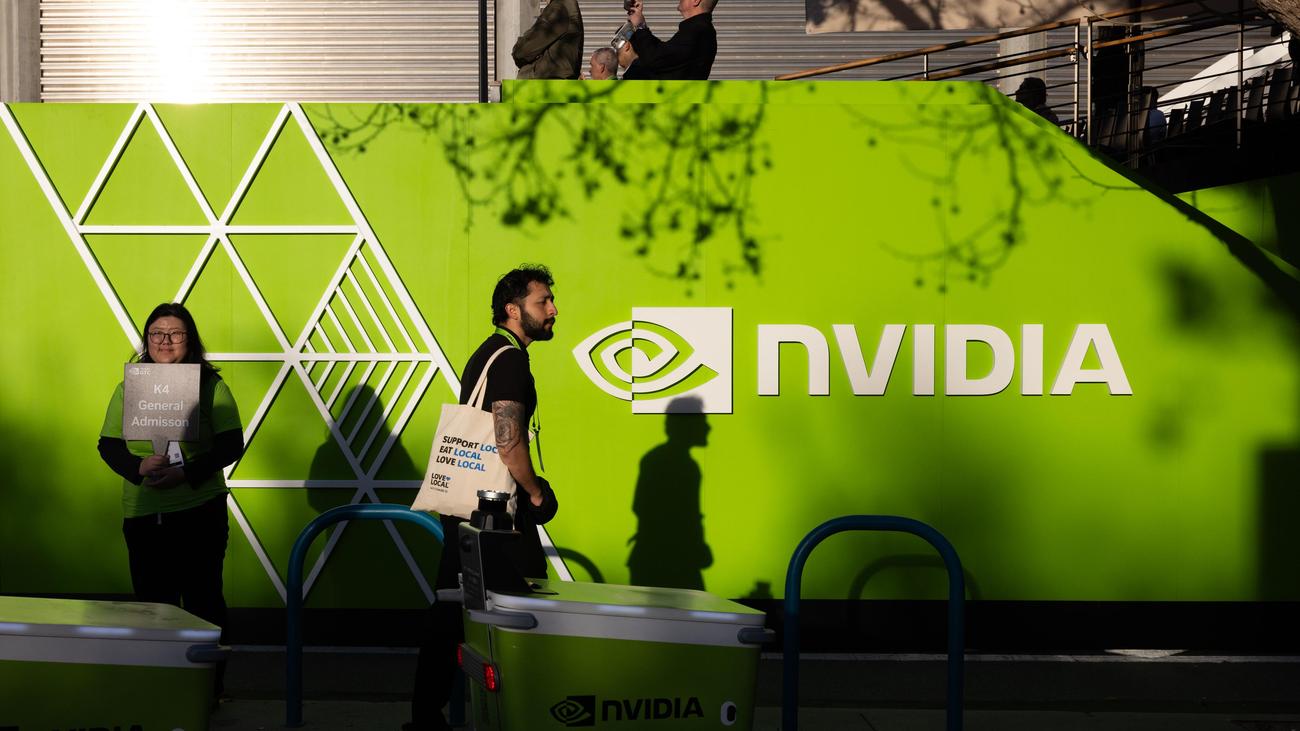
The artificial intelligence boom continues to fuel unprecedented growth for Nvidia, with CEO Jensen Huang forecasting a staggering $1 trillion in orders for the company’s Blackwell and Vera Rubin systems through 2027. This projection, revealed at the annual GTC developer conference in San Jose, California on March 16, 2026, significantly surpasses previous estimates and underscores the escalating demand for advanced computing power to support the rapidly expanding AI landscape.
Huang’s announcement signals a remarkable surge in demand, with the company anticipating that the need for computational resources will continue to accelerate. He stated his confidence that demand for computing power will only increase, a sentiment echoed by the company’s recent financial performance. This forecast comes as AI developers, including OpenAI, Google, and Meta, are making substantial investments in building data centers to power their increasingly sophisticated AI applications. A significant portion of this investment is directed towards Nvidia’s cutting-edge chip systems.
Nvidia’s Billion-Dollar Outlook and Market Position
The $1 trillion projection represents a substantial increase from Nvidia’s earlier estimate of a $500 billion revenue opportunity between Blackwell and Rubin, as reported in its recent quarterly earnings. The company’s graphics processing units (GPUs) are now central to the AI revolution, transforming Nvidia into the world’s most valuable public company, currently valued at approximately $4.5 trillion. This growth is driven by the shift from basic chatbot applications to “agentic” AI systems – complex, self-directed programs capable of performing a wide range of tasks – which require exponentially more processing power.
Nvidia’s success is not merely about hardware; it’s about building a comprehensive platform for AI development. At GTC 2026, the company unveiled advancements in its AI infrastructure, including the Vera Rubin platform, designed to connect up to 144 GPUs and fully integrated with software optimized for agentic AI systems. This vertically integrated approach aims to streamline the development and deployment of AI applications, offering a significant advantage to developers.
Focus on Inference and Modern System Architecture
Huang emphasized that a key focus for Nvidia moving forward will be on “inference,” the process of using trained AI models to make predictions or decisions. To bolster its capabilities in this area, Nvidia introduced a new AI system that divides the computational process into two distinct steps. Nvidia’s chips will initially translate language into data structures understandable by computers, while chips from Groq will then deliver the final response. This collaboration, despite the similar name, is distinct from Elon Musk’s AI, Grok.
The announcement was met with a positive reaction from investors, with Nvidia shares closing 1.6% higher on Monday, March 17, 2026, after initially experiencing a more substantial increase. However, some analysts and investors remain cautious, questioning whether the massive investments in AI will ultimately deliver a sufficient return. Huang has consistently dismissed these concerns, arguing that the primary bottleneck for AI developers is a lack of sufficient capacity. He contends that delays in expanding infrastructure translate directly into billions of dollars in lost revenue potential.
DLSS 5 and Open Source Initiatives
Beyond hardware and infrastructure, Nvidia also showcased advancements in software and open-source initiatives at GTC 2026. The company previewed DLSS 5, the next iteration of its Deep Learning Super Sampling technology, aimed at enhancing the visual fidelity of video games. While initial reactions to the preview have been mixed, with some online commentators comparing the technology unfavorably to image filters, it signals Nvidia’s continued commitment to improving the gaming experience.
Nvidia also announced Nemoclaw, an open-source operating system for agentic computers developed in partnership with OpenClaw. This initiative aims to foster collaboration and innovation in the development of AI agents, potentially accelerating the adoption of this emerging technology. The company’s commitment to open-source projects underscores its strategy of building a broader ecosystem around its core technologies.
The Rise of Agentic AI and its Implications
A central theme at GTC 2026 was the transformative potential of agentic AI. These systems, capable of autonomously performing complex tasks, are driving a fundamental shift in computing needs. As AI agents become more sophisticated, they require increasingly powerful hardware and software to process vast amounts of data and make real-time decisions. This trend is fueling demand for Nvidia’s GPUs and its broader AI platform.
The implications of agentic AI extend far beyond the technology sector. Applications range from self-driving cars and warehouse robotics, as demonstrated by Nvidia’s Alpamayo platform, to personalized healthcare and financial services. The ability of AI agents to automate complex tasks has the potential to significantly increase productivity and efficiency across a wide range of industries. However, it also raises important questions about the future of work and the need for workforce retraining.
Addressing Capacity Concerns and Future Growth
Huang acknowledged the concerns about the capacity to meet the surging demand for AI computing power. He emphasized that every month of delay in expanding infrastructure represents billions of dollars in lost revenue for AI developers. Nvidia typically fulfills orders over a period of several years, but the current level of demand is unprecedented. In the past fiscal year, the company’s revenue increased by nearly two-thirds, reaching approximately $216 billion.
The company’s ability to navigate these challenges and continue to innovate will be crucial to maintaining its leadership position in the AI market. Nvidia’s investments in new technologies, such as the Vera Rubin platform and the Nemoclaw operating system, demonstrate its commitment to addressing the evolving needs of AI developers and driving the next wave of innovation.
As the AI revolution continues to unfold, Nvidia is poised to play a central role in shaping its future. The company’s strong financial performance, its technological leadership, and its commitment to open-source initiatives position it for continued success in the years to come. Investors will be closely watching Nvidia’s progress as it seeks to capitalize on the immense opportunities presented by the rapidly growing AI market.
Nvidia’s next earnings report, scheduled for May 2026, will provide further insight into the company’s performance and its outlook for the remainder of the year. Analysts will be scrutinizing the report for any signs of slowing growth or increased competition. For those interested in following Nvidia’s journey, the company’s investor relations website offers a wealth of information, including financial statements, press releases, and presentations. Nvidia Investor Relations
The future of AI is being written now, and Nvidia is undoubtedly one of the key authors. What are your thoughts on Nvidia’s projections and the future of AI? Share your comments below.
Related reading