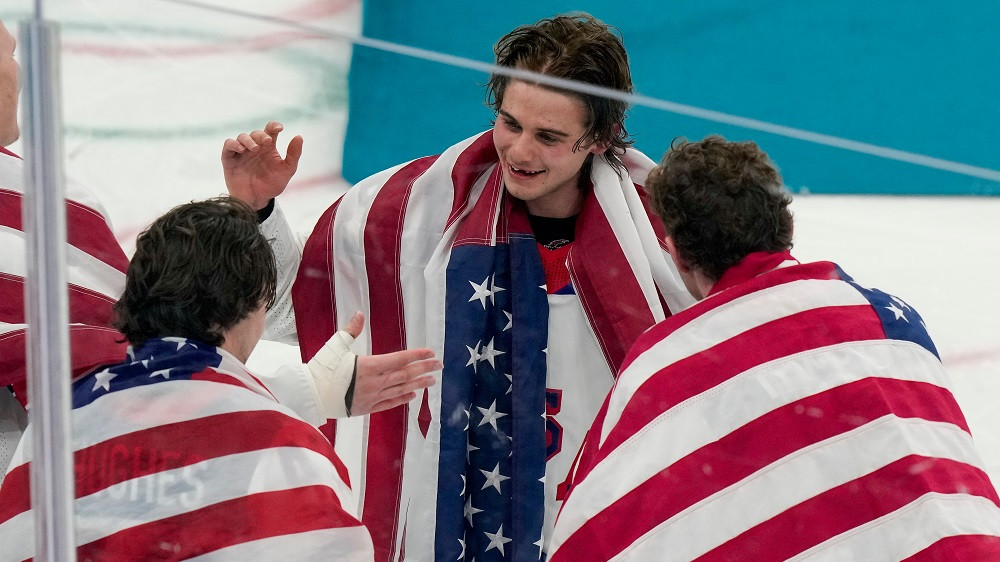
The euphoria of Olympic gold is still fresh for the United States men’s hockey team, but for Jack Hughes, the hero of the Milan-Cortina 2026 final, a tiny piece of the celebration is missing. The puck that sealed the 2-1 victory in overtime against Canada – the United States’ first Olympic title since the “Miracle on Ice” in 1980 – is not in his possession. Hughes, the 24-year-old center, is now hoping to reclaim a tangible piece of history, a memento he believes rightfully belongs with him and his family.
The dramatic finish in Milan saw Hughes score the winning goal, securing the gold medal and sparking celebrations across the United States. The victory marked a significant moment for American hockey, adding to their previous Olympic triumphs in 1960 and 1980. Yet, the joy was tempered by the realization that the game-winning puck had been taken into the custody of the Hockey Hall of Fame in Toronto, a fact Hughes was unaware of until a TNT interview on February 26th. “Honestly, I don’t know where that puck went,” Hughes said at the time, as reported by ESPN. “I know I definitely don’t have it.”
The Puck’s Journey to the Hockey Hall of Fame
Initial concerns arose that the puck had been lost, but the mystery was quickly resolved. According to a statement released to “Sportico” on February 27th by an International Ice Hockey Federation representative, the puck was intentionally transferred to the Hockey Hall of Fame to ensure its long-term preservation and historical significance. The Hall of Fame is currently exhibiting the puck as part of a display dedicated to the 2026 Olympic Winter Games, alongside the puck used by Megan Keller to score the winning goal for the U.S. Women’s hockey team.
Jamie Dinsmore, President of the Hockey Hall of Fame, explained the rationale behind the decision, stating, “Donated artifacts reflect pivotal moments on the world’s biggest stage, telling stories of national pride and hockey history at its highest level. The 2026 Olympic Games exhibit will help ensure these unforgettable Olympic moments are preserved for our guests from around the world.”
Hughes’ Desire to Possess a Lasting Memento
Despite understanding the Hall of Fame’s intentions, Hughes expressed his disappointment and desire to have the puck personally. He feels it should be in the hands of the players who created the historic moment. “I don’t understand why Megan Keller and I can’t have these pucks,” Hughes stated. He envisions the puck as a cherished family heirloom, specifically wanting to gift it to his father. “I know he’d love it, love it, love it. I don’t collect a ton of stuff, but my dad is a huge collector. It would have a special place with him,” Hughes explained.
Jack Hughes, currently playing for the New Jersey Devils in the National Hockey League (NHL), has quickly become a prominent figure in American hockey. According to his Wikipedia profile, he was drafted first overall by the Devils in the 2019 NHL Entry Draft and has since established himself as a key player for the team. He made his NHL debut on October 17, 2019, becoming the third-youngest player in Devils history to record a point. Hughes has similarly represented the United States on the international stage, including at the 2019 IIHF World Championship.
The Broader Significance of Olympic Mementos
The situation highlights a common dilemma faced by athletes after major competitions: the ownership and preservation of game-used equipment and mementos. While institutions like the Hockey Hall of Fame play a crucial role in safeguarding hockey’s history, the emotional value of these items to the athletes themselves is undeniable. The debate over who should possess these symbols of achievement often sparks discussion about the balance between public access to historical artifacts and the personal connection athletes have to their accomplishments.
The U.S. Victory in the 2026 Olympic final was a hard-fought battle. The game ended in a 1-1 tie after regulation time, with Matt Boldy scoring for the Americans in the first period and Kyle Makar equalizing for Canada in the second. Jordan Binnington, the Canadian goaltender, faced 26 shots, while Connor Hellebuyck, guarding the net for the U.S., was tested with 41 shots. The overtime period saw Binnington initially thwarting the Americans, but Hughes ultimately broke the deadlock 100 seconds into the extra frame, securing the gold medal. As reported by TV3.lv, this victory marked the third Olympic gold medal for the U.S. Men’s hockey team.
The History of U.S. Olympic Hockey Success
The United States has a rich history in Olympic hockey, with its first gold medal coming in 1960. The 1980 “Miracle on Ice” victory against the heavily favored Soviet Union remains one of the most iconic moments in sports history. The 2026 gold medal represents a continuation of that legacy, demonstrating the continued growth and competitiveness of American hockey. The 1980 team was largely comprised of amateur players, while the 2026 squad featured a roster of seasoned professionals, reflecting the evolution of the sport.
Hughes has yet to formally contact the Hockey Hall of Fame regarding the puck, but intends to do so in the near future. The outcome of those discussions remains to be seen, but Hughes’s desire to have this tangible reminder of his historic achievement is understandable. The puck represents not only a personal triumph but also a moment of national pride for the United States.
Key Takeaways
- Jack Hughes, the scorer of the gold-medal-winning goal for the U.S. Men’s hockey team at the 2026 Olympics, is seeking to retrieve the puck from the Hockey Hall of Fame.
- The Hockey Hall of Fame took possession of the puck to preserve it as a historical artifact and display it in their 2026 Olympic Games exhibit.
- Hughes wishes to gift the puck to his father, a dedicated collector, as a cherished family memento.
- The situation raises broader questions about the ownership and preservation of game-used items and their significance to athletes.
The next step in this unfolding story will likely be Hughes’s communication with the Hockey Hall of Fame. It remains to be seen whether an agreement can be reached that satisfies both the Hall’s commitment to preserving hockey history and Hughes’s personal desire to possess this unique and meaningful memento. We will continue to follow this story as it develops.
What are your thoughts on this situation? Should athletes automatically retain possession of game-winning items, or is it appropriate for institutions like the Hockey Hall of Fame to preserve them for public display? Share your opinions in the comments below and join the conversation.
Related reading