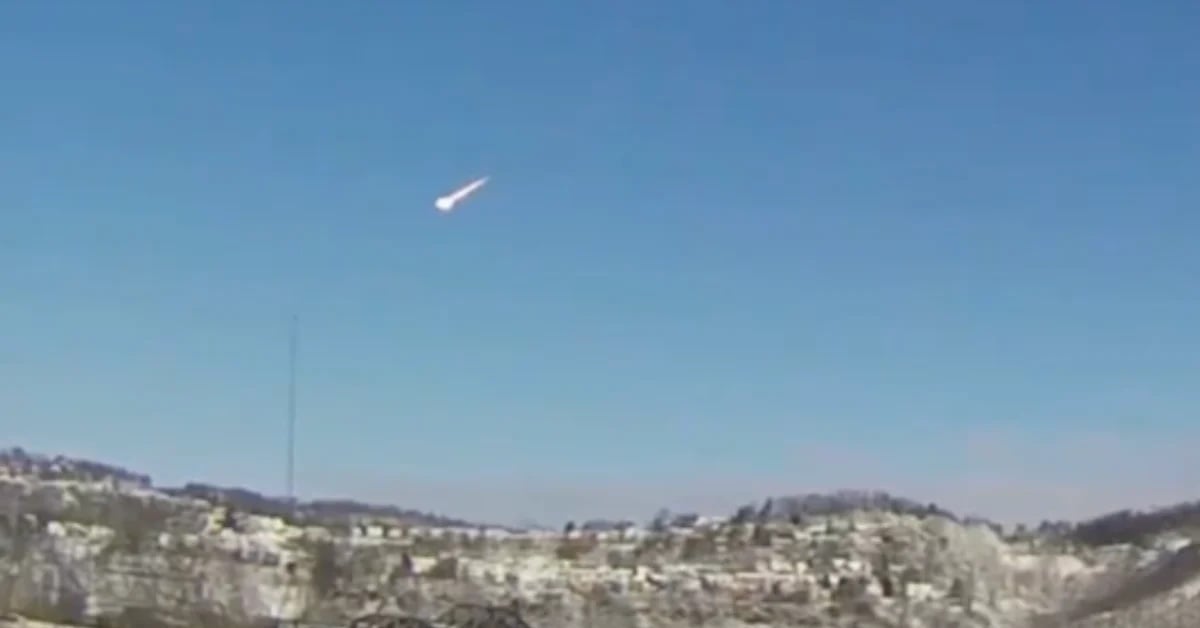
A spectacular daytime meteor event rattled communities across a wide swath of the United States on Tuesday, March 17, 2026, triggering sonic booms and reports of shaking ground as far west as Wisconsin and as far east as New York. The event, confirmed by NASA, was caused by a roughly six-foot diameter asteroid that exploded over northeastern Ohio, creating a brilliant fireball visible across ten states. The incident serves as a dramatic reminder of the constant influx of space debris into Earth’s atmosphere and the powerful forces involved.
The meteor, estimated to weigh approximately seven tons, entered the atmosphere at an astonishing speed of 45,000 miles per hour. Initial detection occurred above Lake Erie, before the object traversed over 34 miles through the upper atmosphere, ultimately fragmenting over Valley City, Ohio. The resulting explosion released energy equivalent to approximately 250 tons of TNT, generating the widespread sonic booms reported by residents. This rare daytime sighting, coupled with the audible impact, sparked widespread discussion and a flurry of reports to meteorological agencies and the American Meteor Society.
The National Weather Service (NWS) in Pittsburgh initially confirmed the event as a meteor after analyzing data from the Geostationary Lightning Mapper (GLM), a tool typically used to detect lightning strikes. The GLM detected a flash consistent with a meteor entering the atmosphere. NASA subsequently provided a more detailed analysis, confirming the size and trajectory of the asteroid. The agency stated that fragments continued southward, potentially resulting in meteorites landing in the vicinity of Medina County, Ohio, though as of Wednesday, March 18, 2026, no debris had been officially recovered.
A Rare Daytime Spectacle and Sonic Boom
Witnesses described a brilliant flash of light streaking across the sky just before 9:00 a.m. Eastern Time. James Eaker, a motorist traveling on Route 80 in Pennsylvania, captured the event on his dashboard camera, exclaiming in surprise as the meteor blazed overhead. The video, quickly shared on social media, provided compelling visual evidence of the event. Reports of the sonic boom flooded social media platforms, with many residents describing the sound as a loud explosion that rattled windows and shook homes. The sheer scale of the event – the boom being heard across multiple states – is what made it particularly noteworthy.
A photo of a fireball that appeared in the sky over the eastern United States on March 17 – Photo: NWSPITTSBURGH
Understanding Fireballs and Meteorites
The term “fireball” refers to an exceptionally bright meteoroid that produces a visible streak of light brighter than Venus. These events are relatively common, but daytime fireballs are rarer because the sunlight washes out the visibility of all but the most spectacular events. According to NASA, small meteoroids enter Earth’s atmosphere frequently, but most burn up completely before reaching the ground. Those that survive the fiery descent and impact the surface are classified as meteorites.
The composition of the Ohio meteoroid is currently unknown, but NASA scientists are analyzing data to determine its origin and characteristics. The fragmentation of the asteroid suggests it was likely a stony meteoroid, rather than an iron or stony-iron type, as these tend to break apart more easily under atmospheric stress. The potential for meteorite recovery in Medina County, Ohio, is being assessed, but the likelihood of finding substantial fragments is considered low, as much of the material likely vaporized during atmospheric entry. The American Meteor Society continues to collect reports from witnesses, which will aid in refining the meteor’s trajectory and fragmentation pattern. WTAE News reports that seven tons is equivalent to 14,000 pounds.
The Science Behind the Boom
The sonic boom experienced across multiple states was a direct result of the meteor traveling faster than the speed of sound. When an object exceeds Mach 1 (approximately 767 miles per hour), it creates a shockwave that propagates outward, producing the characteristic boom. Meteorologist Jeff Tanchak of 19 News explained that the Ohio meteor broke the sound barrier, generating the widespread audible impact. The intensity of the boom varied depending on distance from the meteor’s trajectory, with those closest to the flight path experiencing the loudest and most disruptive effects. The NWS utilized GLM imagery to confirm that the boom was indeed caused by a meteor, distinguishing it from other potential sources like explosions or aircraft.
Impact and Ongoing Monitoring
Even as the Ohio meteor event caused a momentary disruption and sparked widespread curiosity, no injuries or significant property damage have been reported. The incident underscores the importance of ongoing near-Earth object (NEO) monitoring programs, which aim to identify and track potentially hazardous asteroids and comets. NASA’s Planetary Defense Coordination Office leads these efforts, utilizing ground-based telescopes and space-based sensors to catalog and assess the risk posed by NEOs. The agency is also developing technologies to deflect or disrupt potentially threatening asteroids, though such missions are still in the planning stages.
The event also highlights the increasing role of citizen science in astronomical observations. The widespread availability of smartphones and security cameras has led to a surge in captured footage of meteors and other atmospheric phenomena. This data provides valuable insights for scientists studying these events and helps to refine our understanding of the space environment. The National Weather Service encourages the public to submit any images or videos of the event for analysis.
Key Takeaways
- A seven-ton asteroid exploded over Ohio on March 17, 2026, creating a spectacular daytime fireball.
- The event generated a sonic boom heard across ten states, from Wisconsin to New York.
- NASA confirmed the meteor’s size, speed, and trajectory, and is assessing the potential for meteorite recovery in Medina County, Ohio.
- Daytime fireballs are rare, requiring exceptionally bright meteoroids to overcome the glare of the sun.
- The incident underscores the importance of ongoing NEO monitoring and the growing role of citizen science in astronomical observations.
NASA continues to analyze data from the event and will release further findings as they develop into available. Residents in the affected areas are encouraged to report any potential meteorite fragments to local authorities or the American Meteor Society. The agency’s website provides detailed information on NEOs and planetary defense efforts. The next scheduled update from NASA regarding this event is expected within the next week, as scientists complete their initial analysis of the collected data.
What did you experience during the Ohio meteor event? Share your stories and photos in the comments below, and please share this article with your friends and family.
Worth a look