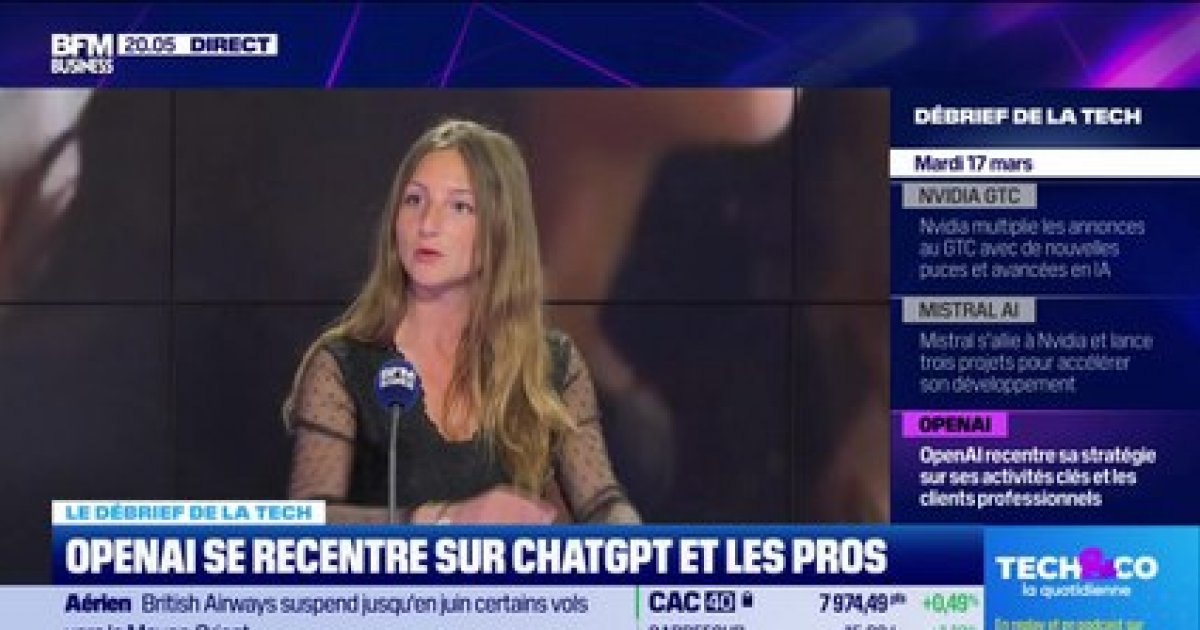
San Francisco, CA – OpenAI, the artificial intelligence research and deployment company, is reportedly shifting its focus towards its ChatGPT model and catering to professional clients. This strategic realignment comes as competition in the generative AI space intensifies and businesses increasingly seek tailored AI solutions. The discussion unfolded during a recent appearance on the French business news program, Tech &. Co, la quotidienne, on BFM Business, featuring insights from industry experts.
The move signals a potential evolution in OpenAI’s business model, moving beyond broad consumer applications towards more specialized, enterprise-level services. While ChatGPT has gained widespread popularity for its conversational abilities and content generation capabilities, a dedicated focus on professional use cases could unlock new revenue streams and solidify OpenAI’s position as a leader in the AI market. This shift likewise comes amid scrutiny of other AI companies, such as X, formerly Twitter, and the ongoing development of autonomous vehicle technology.
OpenAI’s Strategic Shift: A Deeper Dive
On Tuesday, March 17th, François Sorel hosted a panel discussion on BFM Business’s Tech & Co, la quotidienne, featuring Claudia Cohen, a journalist with Bloomberg; Frédéric Krebs, president of Krebs & Partners; and Frédéric Simottel, a journalist at BFM Business. The conversation centered on OpenAI’s evolving strategy, as well as other key developments in the tech landscape. According to reporting by BFM TV, the panelists discussed OpenAI’s recent efforts to refine ChatGPT for professional applications.
Claudia Cohen, in a LinkedIn post following the broadcast, highlighted the discussion around Anthropic’s targeting of the financial sector with its Claude Cowork software. Anthropic is positioning Claude Cowork as a competitor to OpenAI, offering specialized modules for financial analysis, investment research, and wealth management. This competition underscores the growing demand for AI tools tailored to specific industries.
The focus on professional clients isn’t entirely surprising. Businesses are increasingly recognizing the potential of generative AI to automate tasks, improve decision-making, and enhance productivity. However, they also require solutions that are secure, reliable, and compliant with industry regulations. OpenAI’s move to cater to these needs suggests a commitment to providing enterprise-grade AI services.
Musk’s Concerns Regarding X and Waymo’s Robotaxi Progress
The BFM Business discussion also touched upon Elon Musk’s recent concerns regarding the challenges facing X, the social media platform he owns. While the specifics of Musk’s concerns weren’t detailed in the initial reports, it’s widely known that X has faced difficulties attracting advertisers and maintaining user engagement since Musk’s acquisition. The platform has undergone significant changes, including rebranding from Twitter and implementing a subscription model, but its future remains uncertain.
In contrast to the challenges at X, the panel also discussed Waymo’s progress in deploying its robotaxi service. Waymo, a subsidiary of Alphabet (Google’s parent company), is taking a cautious and incremental approach to expanding its autonomous vehicle operations. The company is prioritizing safety and regulatory compliance, gradually introducing its robotaxis in select cities. This measured approach contrasts with some other companies in the autonomous vehicle space that have faced setbacks due to safety concerns.
The Broader AI Landscape and Future Implications
OpenAI’s strategic shift is part of a larger trend in the AI industry. Companies are increasingly recognizing the necessitate to specialize and focus on specific use cases to gain a competitive advantage. The generative AI market is rapidly evolving, with new models and applications emerging constantly. This creates both opportunities and challenges for businesses and consumers alike.
The European Central Bank (ECB) is also paying close attention to the use of artificial intelligence within the financial sector. As reported by Claudia Cohen on Bloomberg, the ECB has launched workshops to understand how banks are utilizing generative AI and to assess their exposure to the risks associated with this technology. The ECB’s scrutiny highlights the growing regulatory interest in AI and the need for responsible innovation.
The development of AI-powered tools like ChatGPT and Claude Cowork has the potential to transform various industries, from finance and healthcare to education and entertainment. However, it’s also important to address the ethical and societal implications of these technologies, including issues such as bias, privacy, and job displacement. Ongoing dialogue and collaboration between policymakers, researchers, and industry leaders will be crucial to ensuring that AI is developed and deployed in a responsible and beneficial manner.
Key Takeaways
- OpenAI is refocusing on ChatGPT and professional clients, signaling a shift towards enterprise-level AI solutions.
- Competition in the generative AI space is intensifying, with Anthropic emerging as a key competitor to OpenAI.
- Elon Musk has expressed concerns about the challenges facing X, while Waymo is making steady progress in deploying its robotaxi service.
- Regulatory bodies, such as the ECB, are closely monitoring the use of AI in the financial sector.
The Tech & Co, la quotidienne program, broadcast on BFM Business from Monday to Thursday, provides a platform for discussing these and other important tech trends. The program, hosted by François Sorel, features insights from a diverse range of experts and industry leaders. Listeners can access the show via podcast, offering a convenient way to stay informed about the latest developments in the tech world.
As OpenAI continues to refine its strategy and adapt to the evolving AI landscape, it will be crucial to monitor its progress and assess the impact of its decisions on the broader tech industry. The company’s success will likely depend on its ability to deliver innovative, reliable, and secure AI solutions that meet the needs of professional clients.
The next key development to watch will be OpenAI’s official announcements regarding its enterprise offerings and partnerships. Further details are expected in the coming months, providing a clearer picture of the company’s long-term vision. Stay tuned to World Today Journal for continued coverage of this evolving story.
What are your thoughts on OpenAI’s new focus? Share your comments below and let us know how you think this will impact the future of AI.
- Warner Bros. lawsuit accuses Amazon of illegally poaching executives
- What a cool ad #apple #sonicthehedgehog #hulk #mortalkombat #spongebob… – TikTok
- Best Business and Personal Credit Cards: Travel, Cash Back & No Annual Fee Options (world-today-news.com)
- OpenAI Launches $230 Codex Micro Keypad for AI Coders (time.news)