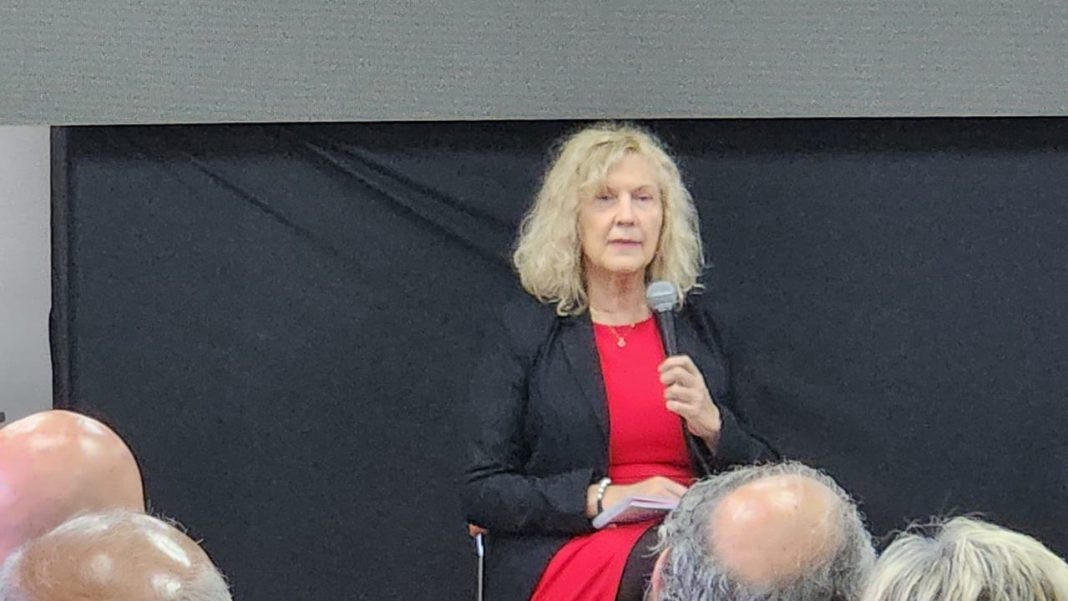
Caracas, Venezuela – In a significant reshuffling of the Venezuelan government, President Encargada Delcy Rodríguez has appointed Ana María Sanjuán as the new Minister of Higher Education. The move, announced on Wednesday, March 18, 2026, comes amidst a period of ongoing political transition following the arrest of Nicolás Maduro by U.S. Military forces in January of this year. La Radio del Sur and El Portal 24 reported on the appointment, signaling a broader effort to restructure key ministerial positions.
Sanjuán’s appointment replaces Ricardo Sánchez Mujica, who had held the position since August 27, 2024. Rodríguez framed the change as a necessary step to strengthen academic formation within the country, emphasizing the need to invest in the future of Venezuelan youth. The decision reflects a broader pattern of cabinet changes initiated by Rodríguez since assuming the interim presidency, following Maduro’s detention. ABC reported that Rodríguez announced the appointment via Telegram, highlighting Sanjuán’s qualifications and vision for the future of higher education.
A Focus on Pedagogical Values and Pluralism
Rodríguez described Sanjuán as a woman of “values” and possessing a “great pedagogical vocation,” suggesting a shift towards a more values-driven and student-centered approach to higher education. She stated that Sanjuán will be tasked with driving changes within the Venezuelan university system, with a particular emphasis on engaging and empowering the next generation of students. The new minister is expected to promote a learning environment that embraces “pluralistic thinking” and fosters transformation within the country’s universities. This emphasis on pedagogical values comes at a time when Venezuela’s education system faces significant challenges, including limited resources and political instability.
The appointment of Sanjuán is not occurring in isolation. Rodríguez also announced changes to several other ministerial positions on Wednesday, including the appointment of Tarek William Saab to lead the Gran Misión Viva Venezuela, a program focused on cultural development. Saab’s appointment follows his recent resignation as Attorney General and temporary designation as the People’s Defender. Further ministerial changes included appointments in the areas of Defense, Electric Energy, Housing, Transportation, Labor, and Culture, as well as leadership changes within the Vice Presidency for Public Works and Services, the Presidential Honor Guard, and the Directorate General of Military Counterintelligence (DGCIM). El Portal 24 detailed the scope of these broader governmental changes.
Context of Political Transition
The sweeping changes within the Venezuelan government are directly linked to the arrest of Nicolás Maduro in Caracas on January 3, 2026, by U.S. Military forces. This event triggered a power vacuum and led to Delcy Rodríguez assuming the role of President Encargada. The subsequent appointments and reshuffling of ministerial positions are widely seen as an attempt by Rodríguez to consolidate power and implement her own vision for the country’s future. The situation remains fluid, and the long-term implications of Maduro’s arrest and Rodríguez’s leadership are still unfolding.
Prior to assuming the interim presidency, Rodríguez had already initiated a series of cabinet changes, including the appointment of Paula Henao as Minister of Hydrocarbons and Luis Villegas as Minister of Industries and Commerce. These earlier changes replaced figures such as Alex Saab, a businessman with close ties to Maduro who had been detained in the United States. Changes were also made within the Ministries of Health, Communications, and Ecosocialism (Environment) following Rodríguez’s assumption of power. ABC provides a comprehensive overview of these recent governmental shifts.
Ana María Sanjuán: Background and Potential Priorities
While details regarding Ana María Sanjuán’s specific background and previous experience remain limited in publicly available sources, Rodríguez’s emphasis on her pedagogical skills and values suggests a potential focus on improving the quality of teaching and learning within Venezuelan universities. The new minister will likely be tasked with addressing critical issues such as student access, curriculum development, and faculty support. Given the current economic challenges facing Venezuela, Sanjuán will also need to navigate budgetary constraints and seek innovative solutions to ensure the sustainability of the higher education system.
The appointment of Sanjuán also comes at a time when Venezuelan universities are grappling with issues of academic freedom and political interference. It remains to be seen whether Sanjuán will prioritize the protection of academic independence and promote a more open and inclusive learning environment. Her success will depend on her ability to build consensus among stakeholders, including faculty, students, and government officials.
Con la tarea de fortalecer la formación y el futuro de Venezuela, he decidido designar a la profesora Ana María Sanjuán como ministra del Poder Popular para la Educación Universitaria.
— Delcy Rodríguez (@delcyrodriguezv) March 19, 2026
Challenges Facing Venezuelan Higher Education
Venezuela’s higher education system has faced significant challenges in recent years, exacerbated by economic instability and political turmoil. These challenges include a decline in funding, a brain drain of qualified faculty, and a lack of access to essential resources such as textbooks and laboratory equipment. The country’s economic crisis has also led to a sharp increase in student poverty, making it difficult for many to afford tuition and living expenses. Addressing these issues will require a comprehensive and sustained effort from the government, universities, and the international community.
the Venezuelan university system has been subject to increasing political interference, with reports of censorship, intimidation, and arbitrary dismissals of faculty members. These actions have undermined academic freedom and created a climate of fear within universities. Restoring academic independence and protecting the rights of students and faculty will be crucial for rebuilding trust and fostering a vibrant intellectual environment.
The appointment of Ana María Sanjuán represents a potential opportunity to address these challenges and revitalize Venezuelan higher education. Yet, her success will depend on her ability to navigate the complex political landscape, secure adequate funding, and prioritize the needs of students and faculty. The coming months will be critical in determining whether Sanjuán can deliver on the promise of a stronger and more inclusive higher education system for Venezuela.
The next key development to watch will be Sanjuán’s initial policy announcements and her plans for addressing the immediate challenges facing Venezuelan universities. Further updates on the situation will be provided as they become available. Readers are encouraged to share their thoughts and perspectives on this critical development in the comments section below.
Keep reading