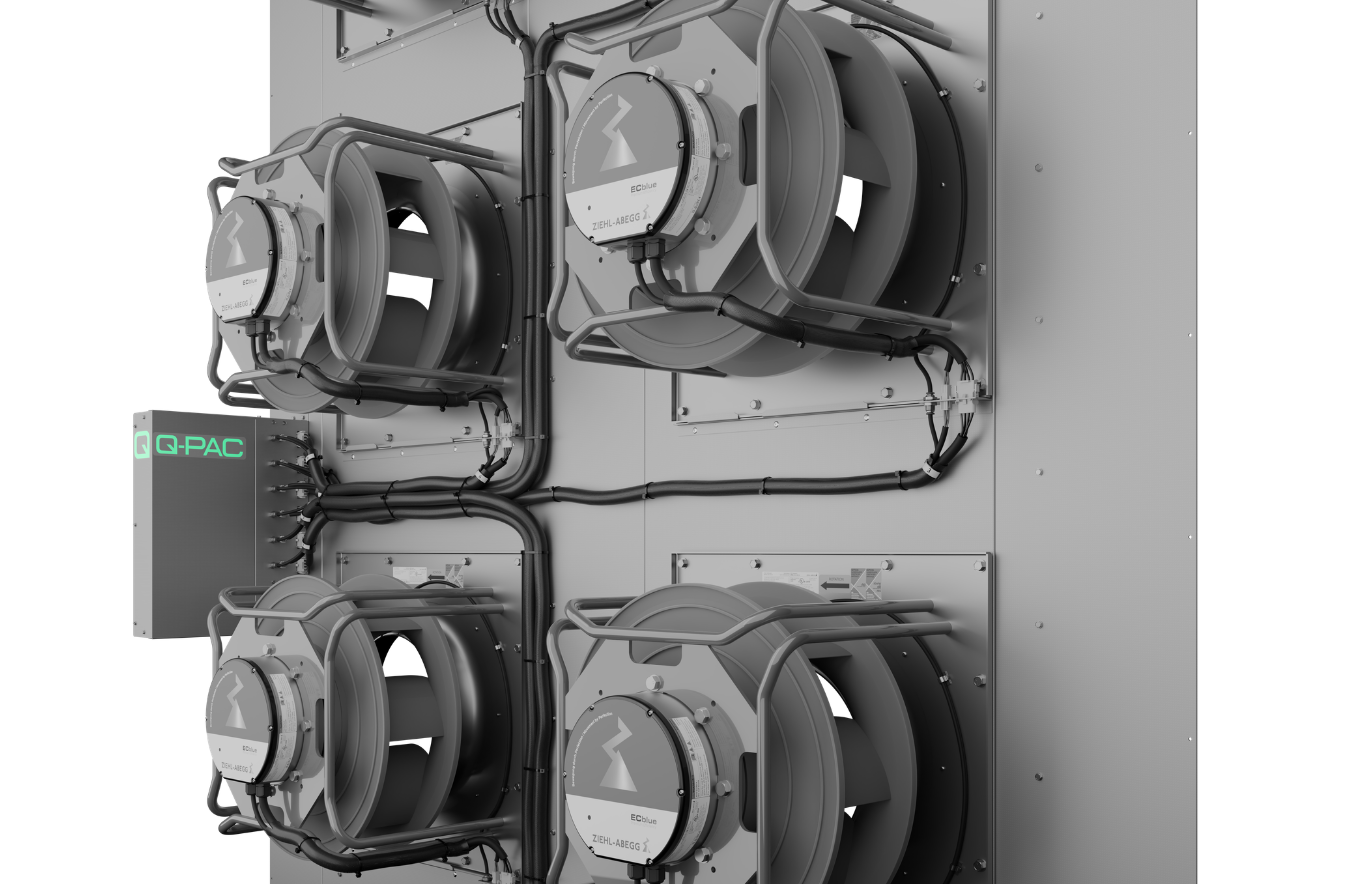
California healthcare facilities are bolstering their seismic preparedness with a new certification for critical ventilation systems. Q-PAC, a manufacturer of commercial HVAC fan systems, has announced that its Multimotor Plenum Fan (MPF) is now covered under the HCAI Special Seismic Certification Preapproval OSP-0875. This certification provides engineers with a seismically certified fan option for essential facilities located in high-seismic regions, a crucial step towards ensuring operational continuity during and after earthquakes.
The certification, granted by the Health Facilities Committees Association, Inc. (HCAI), signifies that the Q-PAC MPF system – encompassing all plug fan models, the supporting frame, and the associated control panel – has successfully undergone rigorous testing. This testing, conducted at the University of Nevada, Reno, met the stringent criteria outlined in ICC-ES AC156, a widely recognized standard for seismic performance evaluation. The system is certified to both the International Building Code (IBC) 2024 and the California Building Code (CBC) 2025, demonstrating compliance with the latest building safety regulations.
The Growing Need for Seismic Resilience in Healthcare Infrastructure
California, situated along the Pacific Ring of Fire, faces a significant earthquake risk. The state’s healthcare infrastructure is particularly vulnerable, as the failure of essential systems during a seismic event can have life-threatening consequences. Hospitals, laboratories, and other critical facilities require robust systems capable of withstanding strong ground motion and maintaining functionality to provide uninterrupted care. The HCAI’s OSP program, and certifications like the one achieved by Q-PAC, are designed to address this critical need.
The OSP program itself is a voluntary initiative for equipment manufacturers, allowing them to seek preapproval of their non-structural components’ seismic performance. As detailed on the HCAI website, the program focuses on components requiring special seismic certification as defined by CBC Section 1705.14.3, 1705A.14.3, or ASCE 7 Section 13.2.2. This preapproval process streamlines the building permitting process and provides assurance to healthcare facility operators and regulators that the equipment meets established safety standards. The HCAI’s recent updates to preapprovals reflect changes in the ASCE 7-22 Chapter 13, as noted in PIN 55.
Q-PAC MPF: A Code-Compliant Solution for New and Existing Facilities
The Q-PAC Multimotor Plenum Fan isn’t simply a newly certified product; it’s designed to be a versatile solution for both new construction projects and the retrofit of existing air handling systems. The OSP-0875 certification allows engineers to confidently integrate the MPF into designs for facilities needing to meet stringent seismic requirements. This is particularly important as California approaches its 2030 hospital seismic deadline, a mandate requiring hospitals to meet specific seismic safety standards.
The benefits of a seismically certified fan system extend beyond simply preventing catastrophic failure. Maintaining operational capacity during and after an earthquake is paramount. A functioning ventilation system is vital for maintaining air quality, controlling infection, and supporting life-sustaining medical equipment. The Q-PAC MPF’s certification demonstrates its ability to withstand earthquake shaking and continue operating at specified seismic demands, minimizing disruption to critical healthcare services.
Understanding the HCAI OSP Program
The HCAI Special Seismic Certification Preapproval (OSP) program, formerly known as the OSHPD program, plays a vital role in ensuring the safety of healthcare facilities in California. The program, as outlined on the HCAI website, is a voluntary process for manufacturers to have their non-structural components pre-approved for seismic performance. This preapproval simplifies the review and inspection process for building projects, reducing delays and ensuring compliance with California’s stringent building codes. The program covers a wide range of equipment, including emergency power systems, elevator components, and exhaust/smoke control fans. A comprehensive list of preapproved components is available through the HCAI’s eServices Portal (eSP).
The OSP program’s focus on non-structural components is crucial, as these elements can pose significant risks during an earthquake. Falling debris, malfunctioning equipment, and disrupted utility services can all contribute to injuries and hinder emergency response efforts. By pre-certifying these components, the HCAI helps to mitigate these risks and protect the safety of patients, staff, and visitors.
Testing and Certification Details
The Q-PAC MPF system underwent full-scale three-dimensional shake table testing to achieve its seismic certification. This testing, conducted at the University of Nevada, Reno, simulated the ground motions expected during a major earthquake. The system was evaluated against the ICC-ES AC156 criteria, a widely accepted standard for assessing the seismic performance of non-structural components. Pre Compliance certified the system for both IBC 2024 and CBC 2025, confirming its adherence to the latest building codes.
The shake table testing involved subjecting the complete MPF system – including the plug fans, frame, and control panel – to a series of simulated earthquake events. Engineers monitored the system’s performance, assessing its ability to withstand the forces imposed by the shaking and maintain its structural integrity. Successful completion of this testing demonstrates the robustness of the Q-PAC MPF design and its ability to perform reliably in a seismic event.
Looking Ahead: Continued Focus on Seismic Safety
The certification of the Q-PAC Multimotor Plenum Fan represents a positive step towards enhancing the seismic resilience of California’s healthcare infrastructure. As the state continues to face the ongoing threat of earthquakes, ongoing investment in seismic safety measures will be essential. The HCAI’s OSP program, along with the efforts of manufacturers like Q-PAC, will play a critical role in ensuring that healthcare facilities are prepared to withstand the challenges posed by future seismic events.
The demand for seismically certified equipment is expected to grow as California approaches its 2030 hospital seismic deadline. Facilities will need to upgrade their systems to meet the new standards, creating opportunities for manufacturers of compliant products. The Q-PAC MPF, with its OSP-0875 certification, is well-positioned to meet this growing demand and contribute to a safer healthcare environment.
The next step for healthcare facilities is to review their seismic preparedness plans and identify areas where upgrades are needed. Engineers and facility managers should consult with the HCAI and equipment manufacturers to ensure that they are utilizing the latest certified products and adhering to the most current building codes. Ongoing monitoring and maintenance of seismic safety systems are also crucial to ensure their continued effectiveness.
What are your thoughts on the importance of seismic preparedness in healthcare? Share your comments below, and let’s continue the conversation.
Keep reading