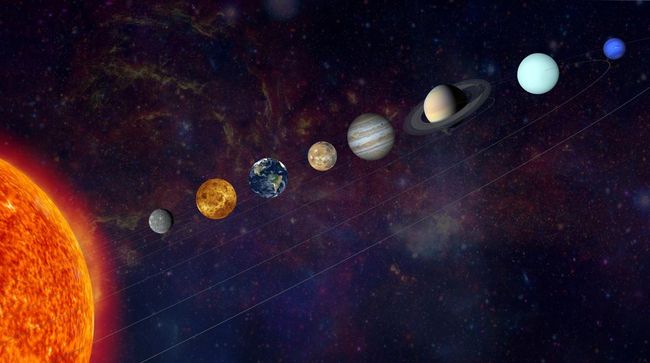
The planet Mercury, a world of extremes, holds a unique place in our solar system. Often overlooked due to its proximity to the sun and small size, Mercury presents a fascinating subject for study, and a compelling introduction to planetary science for young minds. Understanding its characteristics not only expands our knowledge of the cosmos but also highlights the diverse conditions that can exist within our own celestial neighborhood. This article delves into the key features of Mercury, providing a comprehensive overview suitable for educational purposes.
As the smallest planet in our solar system, and the closest to the Sun, Mercury is a captivating world of stark contrasts. Its swift orbit, extreme temperatures, and heavily cratered surface make it a truly remarkable celestial body. While often overshadowed by its more prominent planetary siblings, Mercury offers a wealth of scientific insights into the formation and evolution of our solar system. Let’s explore the defining characteristics of this intriguing planet.
A Speedy Orbit and Extreme Temperatures
One of the most notable features of Mercury is its rapid orbital period. According to NASA, Mercury completes one orbit around the Sun in just 88 Earth days. NASA’s Mercury page provides detailed information on its orbital characteristics. This swift journey is a direct result of its proximity to the Sun and its relatively low mass. However, this closeness also leads to dramatic temperature fluctuations. Because Mercury lacks a substantial atmosphere to regulate heat, its surface experiences some of the most extreme temperature variations in the solar system.
During the day, temperatures on Mercury can soar to a scorching 430°C (800°F), hot enough to melt lead. Conversely, nighttime temperatures plummet to a frigid -180°C (-290°F). This drastic difference, exceeding 600°C (1100°F) between day and night, is a defining characteristic of the planet. The lack of an atmosphere means there’s no mechanism to distribute heat around the planet, resulting in these extreme conditions. This is further explained in a comprehensive article on Mercury’s characteristics published by Kompas.com. Karakteristik Planet Merkurius details these temperature extremes.
A Heavily Cratered Surface
Mercury’s surface is heavily cratered, resembling that of our Moon. These craters are the result of billions of years of impacts from asteroids, and comets. Unlike Earth, Mercury has very little geological activity to erase these impact scars. The planet’s surface is dominated by impact craters of varying sizes, ranging from small bowl-shaped depressions to large, multi-ringed basins. The Caloris Basin, one of the largest impact craters in the solar system, spans approximately 1,550 kilometers (960 miles) in diameter.
The presence of these craters provides valuable insights into the early history of the solar system and the frequency of impacts that occurred during its formation. The Wikipedia entry for Mercury Merkurius – Wikipedia details the extensive cratering and geological features of the planet’s surface. Interestingly, some craters exhibit unusual features, such as “hollows,” which are small, shallow, irregularly shaped depressions that are thought to be relatively young geological formations.
Size and Composition
Mercury is the smallest planet in our solar system, with a diameter of approximately 4,880 kilometers (3,032 miles). This is only slightly larger than Earth’s Moon. Its mass is also relatively small, about 5.5% of Earth’s mass. Despite its small size, Mercury is a dense planet, with a high iron content. Scientists believe that Mercury’s core makes up about 85% of its radius. This large core is thought to be responsible for the planet’s weak magnetic field.
The composition of Mercury’s surface is primarily rocky, with a significant amount of iron. The planet’s surface is covered in a layer of dust and rock fragments, known as regolith. The regolith is the result of billions of years of impacts from micrometeoroids and other space debris. Analysis of Mercury’s surface composition has been conducted by missions like MESSENGER, providing detailed data on the elements present.
A Thin Exosphere
Mercury does not have a true atmosphere in the traditional sense. Instead, it possesses a very thin exosphere, which is a tenuous layer of gases that surrounds the planet. This exosphere is composed primarily of oxygen, sodium, hydrogen, helium, and potassium atoms, which are released from the planet’s surface by solar wind and micrometeoroid impacts. The exosphere is constantly being replenished and lost to space, resulting in a dynamic and ever-changing environment.
The composition of Mercury’s exosphere was determined by observations from the MESSENGER spacecraft. The presence of these elements suggests that they are derived from the planet’s crust and mantle. The exosphere is so thin that it provides virtually no protection from solar radiation or micrometeoroid impacts.
Magnetic Field
Despite its small size and sluggish rotation, Mercury possesses a global magnetic field. This magnetic field is about 1% as strong as Earth’s magnetic field, but it is still significant enough to deflect some of the solar wind. The origin of Mercury’s magnetic field is not fully understood, but it is thought to be generated by a dynamo effect within the planet’s liquid outer core.
The dynamo effect is a process in which the motion of electrically conductive fluid generates a magnetic field. In the case of Mercury, the liquid outer core is thought to be driven by heat escaping from the planet’s interior. The magnetic field plays an important role in protecting Mercury from the harmful effects of the solar wind.
Rotation and Day Length
Mercury’s rotation is unique in the solar system. It rotates very slowly, taking approximately 59 Earth days to complete one rotation on its axis. However, due to its rapid orbital speed, a solar day on Mercury – the time it takes for the Sun to return to the same position in the sky – is about 176 Earth days long. This is longer than Mercury’s year, which is only 88 Earth days.
This unusual relationship between Mercury’s rotation and orbit is due to a phenomenon called spin-orbit resonance. This resonance occurs when the planet’s rotation period is related to its orbital period by a simple ratio. In the case of Mercury, the ratio is 3:2, meaning that the planet rotates three times for every two orbits around the Sun.
Water Ice in Permanently Shadowed Craters
One of the most surprising discoveries about Mercury is the presence of water ice in permanently shadowed craters near its poles. These craters never receive direct sunlight, allowing temperatures to remain extremely cold, even on the sunlit side of the planet. Radar data from the MESSENGER mission confirmed the presence of large deposits of water ice in these craters.
The origin of the water ice is thought to be from comets and asteroids that impacted Mercury over billions of years. The ice has been preserved in the permanently shadowed craters because the extreme cold prevents it from sublimating into gas. The discovery of water ice on Mercury has significant implications for the planet’s potential habitability and the possibility of future resource utilization.
Exploring Mercury: Past and Future Missions
Our understanding of Mercury has been greatly enhanced by a series of space missions. The Mariner 10 spacecraft flew by Mercury three times in 1974 and 1975, providing the first close-up images of the planet’s surface. The MESSENGER spacecraft orbited Mercury from 2011 to 2015, conducting detailed studies of its surface, atmosphere, and magnetic field. NASA’s MESSENGER mission page provides a wealth of information about this groundbreaking mission.
Currently, the BepiColombo mission, a joint project between the European Space Agency (ESA) and the Japan Aerospace Exploration Agency (JAXA), is en route to Mercury. BepiColombo is expected to arrive at Mercury in 2025 and will conduct even more detailed studies of the planet, including its interior structure and magnetic field. This mission promises to unlock further secrets about this enigmatic world.
Key Characteristics Summarized
To recap, Mercury is a planet defined by its extremes. Here’s a quick overview of its key characteristics:
- Smallest Planet: With a diameter of 4,880 km.
- Fastest Orbit: Completes an orbit in just 88 Earth days.
- Extreme Temperatures: Ranging from 430°C during the day to -180°C at night.
- Heavily Cratered: Surface dominated by impact craters.
- Thin Exosphere: A tenuous layer of gases surrounding the planet.
- Magnetic Field: Possesses a weak, but detectable, magnetic field.
- Water Ice: Found in permanently shadowed craters near the poles.
Mercury, despite its harsh conditions, continues to fascinate scientists and inspire exploration. Its unique characteristics provide valuable insights into the formation and evolution of our solar system. As future missions continue to unravel its mysteries, we can expect to learn even more about this remarkable planet.
The BepiColombo mission is expected to provide a wealth of new data in the coming years, furthering our understanding of Mercury’s composition, structure, and history. Stay tuned for updates as this exciting mission progresses. What questions do you have about Mercury? Share your thoughts in the comments below!
Keep reading