
The revival of vinyl has transformed from a niche hobby into a global cultural movement. For many, the appeal lies in the tactile nature of the medium—the act of sliding a record from its sleeve and carefully lowering a needle into the groove. However, as collectors move beyond their first few albums, they often encounter a critical distinction in hardware: the difference between a basic record player and a dedicated turntable.
While the terms are often used interchangeably in casual conversation, for the serious listener, they represent two entirely different philosophies of sound. Understanding why audiophiles choose turntables over record players comes down to a commitment to precision engineering and the pursuit of sonic purity. In 2026, the gap between mid-range and high-end equipment has narrowed, making professional-grade playback more accessible, but the fundamental engineering priorities remain the same.
An audiophile turntable is not simply a more expensive version of a mass-market player; This proves a specialized tool designed to minimize interference and maximize the extraction of detail from the vinyl groove. From vibration isolation to speed stability, every component is scrutinized to ensure that the listener hears the recording exactly as it was pressed, without the coloration or distortion common in entry-level all-in-one systems.
1. Precision Groove Tracking and Tonearm Quality
The most critical point of contact in any analog system is where the stylus meets the record. Mass-market record players often apply generic tonearms that lack the stability and adjustability required for high-fidelity playback. In contrast, audiophile turntables prioritize accurate groove tracking to ensure that every nuance and spatial cue is preserved.
High-end models often utilize premium materials to reduce resonance and increase rigidity. For example, the Pro-Ject Debut EVO 2 features a carbon fiber tonearm, a material chosen for its strength-to-weight ratio, which helps the needle track the groove with greater precision. Other reference-grade systems, such as the Technics SL-100C, offer advanced features like 6mm VTA (Vertical Tracking Angle) adjustment, allowing the user to fine-tune the angle of the tonearm for optimal contact with the vinyl.
This level of control prevents the stylus from skipping or putting undue pressure on the record, which not only improves sound quality but also protects a priceless record collection from premature wear. By focusing on the geometry and material of the tonearm, audiophiles can unlock a level of detail and frequency response that all-in-one players simply cannot reproduce.
2. Advanced Vibration Isolation and Resonance Control
Vinyl playback is an incredibly sensitive process; even the slightest vibration from a nearby speaker or a footstep in the room can be picked up by the stylus and amplified as audible distortion. This is why audiophiles emphasize low-resonance plinths and specialized platter materials.
While budget players often use lightweight plastic chassis, audiophile turntables employ heavy, dense materials to dampen external vibrations. The Fluance RT81 Elite, for instance, utilizes a solid MDF (medium-density fibreboard) wood plinth to provide a stable, vibration-resistant foundation. The choice of platter material plays a significant role in speed stability and resonance; the Fluance RT85N employs an acrylic platter, which is favored by many enthusiasts for its ability to minimize harmonic resonance compared to aluminum or plastic.
By isolating the record from the environment, these machines ensure that the only thing the cartridge is reading is the music pressed into the groove, rather than the mechanical noise of the turntable itself or the surrounding room.
3. Superior Speed Stability and Motor Engineering
For a record to sound correct, it must rotate at a perfectly consistent speed. Any variation in rotation leads to a phenomenon known as “wow and flutter,” which manifests as a slight wavering in pitch that can be distracting to a trained ear. Audiophiles prioritize speed stability as a non-negotiable metric of performance.
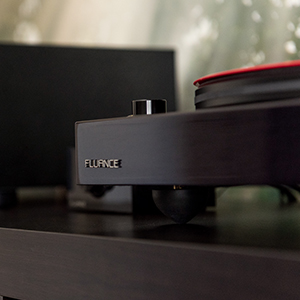
To combat this, high-end turntables use sophisticated motor systems. The Audio-Technica AT-LP120XUSB utilizes a direct-drive DC servo motor to maintain a consistent rotation speed. For those seeking the highest level of precision, the Fluance RT85N has been measured with a wow and flutter rate of just 0.07%, a testament to the engineering required for reference-grade playback. This stability ensures that the tonal nuances and timing of the original recording remain intact.
Whether using a belt-drive system to isolate the motor’s vibration from the platter or a coreless direct-drive motor like that found in the Technics SL-100C, the goal is the same: the elimination of speed fluctuations to provide a stable, lifelike listening experience.
4. Component Customization and Cartridge Compatibility
Perhaps the most significant difference is that high-end turntables are rarely “plug-and-play” devices. While a budget record player comes with a fixed, permanent setup, an audiophile turntable is a modular system. This allows the user to tailor the equipment to their specific taste in music and their existing hi-fi components.
According to What Hi-Fi?, high-end turntables often require the buyer to visit a specialist retailer to choose their own cartridge and, in some cases, the tonearm. This customization is essential because different cartridges extract different characteristics from the vinyl. For example, a listener might choose a Nagaoka MP-110 cartridge for its specific tonal balance or a Sumiko Rainier cartridge for its detail retrieval.
This modularity extends to the preamp. While some budget-friendly audiophile options like the Fluance RT81 Elite include a built-in Texas Instruments preamp for convenience, many serious collectors prefer external preamps to further refine the signal before it reaches the amplifier. This ability to swap and upgrade individual components ensures that the system can evolve as the collector’s ears and library grow.
Comparing Basic Record Players vs. Audiophile Turntables
| Feature | Mass-Market Record Player | Audiophile Turntable |
|---|---|---|
| Plinth Material | Lightweight Plastic | Solid MDF, Acrylic, or Heavy Metals |
| Tonearm | Fixed, Generic | Carbon Fiber or Adjustable Precision Arms |
| Speed Control | Basic Motor | DC Servo or Coreless Direct Drive |
| Customization | Plug-and-Play (Fixed) | Modular (User-selected cartridges/arms) |
| Performance Metric | General Playback | Measured Wow/Flutter & Frequency Response |
the choice to invest in a turntable over a standard record player is a choice to prioritize the integrity of the audio signal. While the entry cost is higher, the reward is a listening experience that reveals the full dynamic range and spatial cues of a vinyl recording. As technology continues to evolve in 2026, these precision tools remain the gold standard for those who view music not just as background noise, but as an art form to be experienced in its purest possible state.
For those looking to begin their journey into high-fidelity audio, the next step is often consulting with a specialist retailer to determine which cartridge and tonearm combination best suits their acoustic environment.
Do you prefer the convenience of all-in-one players or the precision of a modular turntable? Share your setup and experiences in the comments below.